Malaysia is hosting the International Regulatory Conference (IRC) 2026 this week, a significant gathering aimed at forging consensus on how the nation should regulate its rapidly evolving digital landscape. Organised by the Malaysian Communications and Multimedia Commission (MCMC) under the banner 'Shaping the Next Digital Era: Regulation, Resilience and Trust,' the two-day event brings together regulators, policymakers, technology executives and civil society experts from over seven countries to grapple with pressing challenges from artificial intelligence deployment to child safety online.
Communications Minister Datuk Seri Fahmi Fadzil will officially open proceedings, with MCMC Commission member Derek John Fernandez delivering a keynote address. The timing reflects Malaysia's determination to position itself as a thoughtful regulator within Southeast Asia, moving beyond reactive responses to emerging threats toward proactive policy architecture that balances innovation with protection. This positioning matters significantly for the region, as Malaysia's regulatory choices often influence broader ASEAN approaches to digital governance.
The conference's opening substantive session tackles online safety with particular emphasis on platform accountability and child protection. The dialogue brings together the Human Rights Commission of Malaysia (SUHAKAM) children's commissioner Dr Farah Nini Dusuki, United Nations Children's Fund (UNICEF) Malaysia's chief of child protection Saskia Blume, and Australian High Commissioner to Malaysia Danielle Heinecke to examine how digital platforms can be redesigned to minimise harm to vulnerable users. This reflects growing international concern about algorithmic content curation, social media's psychological impacts on young people, and the inadequacy of current safeguarding mechanisms.
A parallel discussion explores data sovereignty and privacy, themes particularly resonant for Malaysia as it aspires toward becoming a regional digital economy hub. The session, moderated by MCMC's chief of National Sovereign AI Cloud Che Juhan Che Mat, features perspectives from major telecommunications and technology firms including Maxis, T&G Digital and Ericsson. The underlying tension being examined—how Malaysia can leverage data-driven innovation whilst protecting citizen privacy and maintaining sovereignty over national digital infrastructure—represents a central policy dilemma across Southeast Asia as nations balance competitiveness against control.
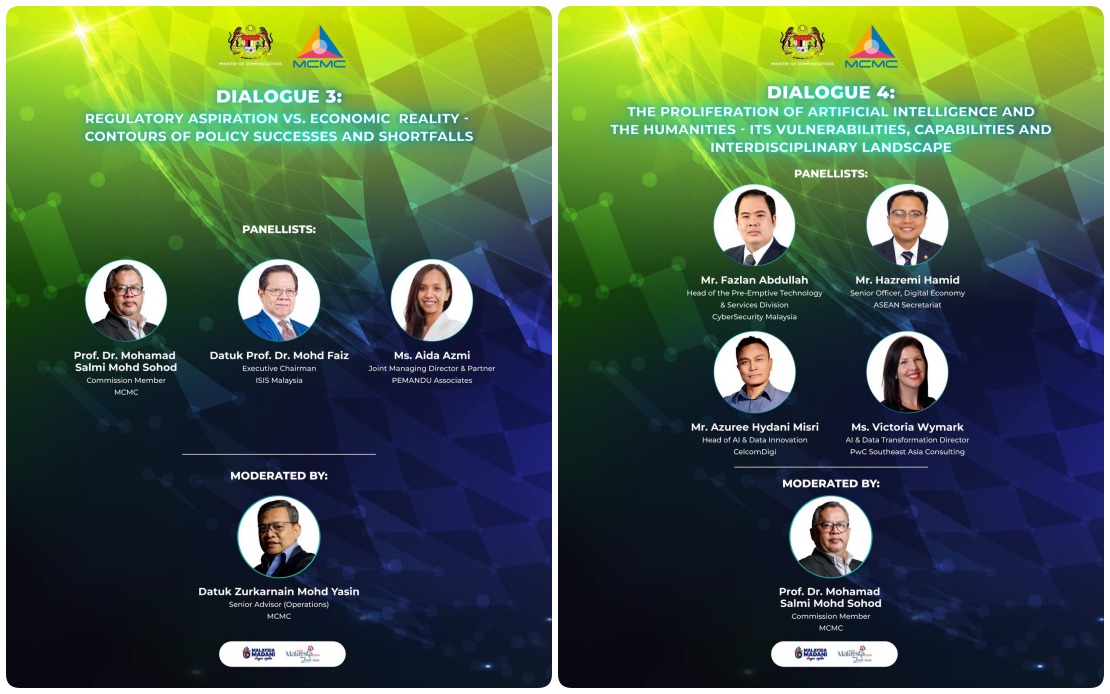
A crucial afternoon session addresses the perpetual friction between regulatory ambition and economic pragmatism. Featuring experts from the Institute of Strategic & International Studies (ISIS) Malaysia and PEMANDU Associates, this dialogue acknowledges that overly restrictive rules risk driving innovation and investment elsewhere, whilst inadequate regulation permits harmful practices. This calibration challenge will likely shape Malaysia's enforcement posture under the recently implemented Online Safety Act 2025, which entered force on January 1 this year and represents the nation's most comprehensive attempt to govern digital conduct.
The conference also explores artificial intelligence through a humanities lens, bringing technical specialists from the ASEAN Secretariat, PwC Southeast Asia Consulting and local universities together with cybersecurity professionals. This interdisciplinary framing recognises that AI regulation cannot remain confined to technologists and compliance officers—its implications for employment, education, social cohesion and cultural identity demand input from philosophers, social scientists and community representatives.
The second day pivots toward emerging technologies likely to reshape Malaysia's digital infrastructure within the next decade. A dedicated session on quantum technology and communication architecture brings together IBM Quantum's Asia Pacific and Japan sales leadership with academic experts from Universiti Teknologi Malaysia, Universiti Malaya and Universiti Kebangsaan Malaysia. Quantum computing threatens to obsolete current encryption standards, creating both defensive and offensive cybersecurity implications that Malaysian regulators must anticipate.
Robotics regulation features prominently, acknowledging the imminent deployment of autonomous systems across Malaysian manufacturing, logistics and service sectors. The cross-sector focus signals recognition that robotics governance cannot be siloed within manufacturing policy but demands coordinated input from labour, safety, technology and social welfare authorities. Similarly, a session on digital dependency and mental wellbeing examines how constant connectivity reshapes human psychology and social structures, an issue gaining urgency as smartphone penetration and social media usage intensify across Malaysia.
IRC 2026 represents the third iteration of this conference since its 2024 inception, indicating Malaysia's commitment to establishing regulatory deliberation as an ongoing institutional practice rather than episodic crisis response. The escalating sophistication of topics tracked across the conference editions mirrors the accelerating pace of technological change itself. That Deputy Communications Minister Teo Nie Ching will formally close proceedings underscores the government's high-level engagement with these issues.
The international composition of attendees and panellists suggests Malaysia is positioning itself within global regulatory networks rather than attempting to construct isolated domestic frameworks. This reflects pragmatic recognition that digital challenges transcend borders—misinformation, data breaches, and harmful content originate internationally, whilst talent and capital flow across jurisdictions. Malaysian regulators drawing on international expertise whilst contributing regional perspectives strengthens the nation's voice within emerging global digital governance structures.
The conference's emphasis on trust, resilience and accountability reflects a conceptual shift in how Malaysia approaches regulation. Rather than purely prohibitive approaches focused on blocking harmful content or activities, the framework acknowledges that sustainable digital governance requires building institutional trust between government, platforms and users. The Online Safety Act 2025 embodied this philosophy through provisions requiring platforms to demonstrate accountability mechanisms and content policies aligned with Malaysian community standards.
For Malaysian businesses and citizens, the IRC 2026 discussions will likely prefigure regulatory directions across the next two to three years. Technology companies operating in Malaysia should monitor emerging consensus around AI governance, data localisation requirements and platform responsibility standards. Simultaneously, the conference's child protection focus signals intensified enforcement around content safeguards, whilst the quantum technology discussions flag that cybersecurity considerations will increasingly shape infrastructure investment decisions across both public and private sectors.

