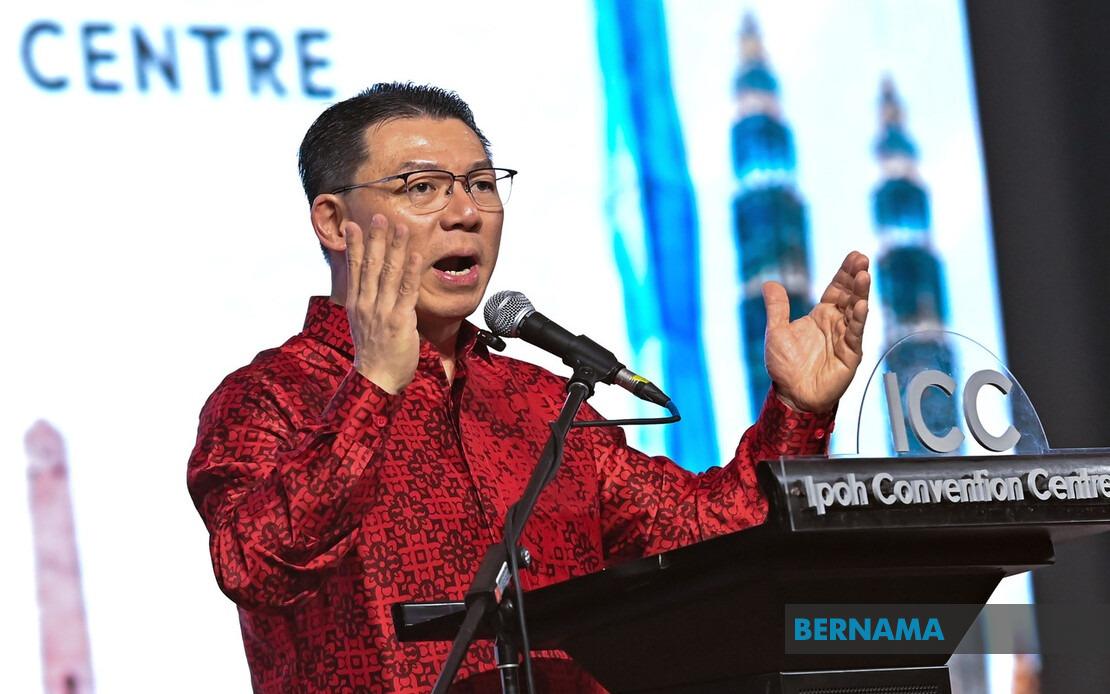
Malaysia's Housing and Local Government Ministry (KPKT) has unveiled an ambitious initiative to overhaul the nation's public spaces, drawing on international expertise and best practices to create facilities that are safer, more inclusive, and better suited to the aspirations of Malaysia's urban communities. Minister Nga Kor Ming announced the MY Public Space initiative during the opening of the 2026 National Landscape Day Celebration at Hang Jebat Stadium in Melaka, with Prime Minister Datuk Seri Anwar Ibrahim officiating the event alongside Melaka Chief Minister Datuk Seri Ab Rauf Yusoh.
The programme represents a strategic partnership between KPKT's National Landscape Department and UN-Habitat, the United Nations agency focused on human settlements. This collaboration signals Malaysia's growing engagement with international standards in urban development and reflects the country's recognition that quality public spaces are foundational to community wellbeing and sustainable cities. The initiative addresses a critical gap in Malaysia's urban infrastructure, where inconsistent standards across municipalities and rapid urbanisation have sometimes compromised the quality and accessibility of communal areas.
According to Nga, the MY Public Space initiative operates through four interconnected pillars. The first involves establishing a national recognition framework aligned with the Rosa Sinensis Award, creating benchmarks against which public spaces can be evaluated and celebrated. The second focuses on piloting the MY Public Space Toolkit, a practical instrument designed to guide the development and management of public spaces. The third pillar targets strengthening existing management practices across the country, building institutional capacity within local authorities and communities. The fourth seeks to embed these toolkit principles into national landscape development guidelines, ensuring they become standard practice rather than exceptional cases.
The collaboration with UN-Habitat carries symbolic and practical significance for Malaysia. As the current President of the UN-Habitat Assembly, Malaysia is positioned to lead global conversations about sustainable urban development. This initiative demonstrates that commitment in tangible form, translating international dialogue into domestic action. The partnership also positions the country as a leader in creating liveable, inclusive urban environments that can serve as models for other developing and middle-income nations grappling with rapid urbanisation and the need to balance growth with quality of life.
Beyond the MY Public Space framework, Nga announced an aggressive expansion of green recreational facilities through the MADANI Parks programme. The government aims to develop 1,000 such parks nationwide by 2035, ensuring that every community, whether in urban centres or secondary towns, has access to quality green spaces. This target reflects an understanding that public parks are not luxury amenities but essential infrastructure for public health, social cohesion, and environmental quality. The MADANI Parks initiative also addresses equity concerns, as such facilities are often disproportionately concentrated in wealthier areas.
Progress on the MADANI Parks programme has exceeded initial projections. Between 2024 and 2025, the government developed 217 recreational parks across the country, surpassing the original annual target of 100 parks. In Melaka alone, ten of these parks have been established, with three additional projects underway in Ayer Keroh and Masjid Tanah. This acceleration suggests genuine political commitment and improved implementation capacity, though the challenge of maintaining quality across such a large portfolio while ensuring equitable geographic distribution remains substantial. The Melaka examples indicate that secondary cities are receiving meaningful investment rather than concentration of resources in Klang Valley or other major metropolitan areas.
The initiative also positions Malaysia's landscape sector as an economic growth driver. The government targets the industry to contribute up to RM40 billion to GDP by 2035, a significant increase from current contributions. This reflects recognition that landscape services and products represent a legitimate export sector with growth potential. Malaysia already exported landscape products valued at RM534.3 million in 2025 to sophisticated markets including Singapore, Japan, Australia, and the United States, demonstrating existing demand and competitive capability. Expanding this sector requires coordinated action across workforce development, technology adoption, and quality standardisation.
To support sector growth, KPKT is preparing the Malaysian Landscape Industry Blueprint as a long-term strategic guide. This document will address workforce capacity building, ensuring Malaysia has sufficient skilled professionals in landscape design and management. It will also coordinate industry standards, preventing the fragmentation that currently characterises the sector. The blueprint prioritises green technology innovation, positioning Malaysian companies to compete in markets increasingly demanding sustainable solutions. Additionally, it focuses on strengthening the landscape value chain, from raw material suppliers through to design and installation firms, ensuring local companies capture value rather than competing primarily on labour costs.
For Malaysian readers, the MY Public Space initiative carries several implications. Urban residents can expect gradual improvements in the quality of communal areas, from parks to streetscapes, with greater emphasis on safety, accessibility, and inclusive design. This matters particularly for elderly residents, people with disabilities, and families with young children, who often struggle with poorly maintained or inadequately designed public spaces. The MADANI Parks expansion means that secondary cities and smaller towns are receiving investment previously concentrated in major metropolitan areas, potentially improving liveability in Klang Valley suburbs, Penang, Johor Bahru, and regional centres.
The economic dimension is equally significant. For professionals in landscape architecture, horticulture, and urban design, the expansion of public space investment and the emphasis on industry standardisation creates new career opportunities and pathways for professional development. For businesses, the landscape sector represents a growth industry with both domestic and export potential. For communities, the parks and public spaces represent venues for social interaction, physical activity, and environmental connection that increasingly researchers associate with better mental health and community cohesion outcomes.
The initiative also reflects Malaysia's evolving approach to urban governance. By explicitly adopting international best practices while tailoring them to Malaysian conditions, the government acknowledges that both local context and global standards matter. Public space design that ignores tropical climate, monsoon patterns, or local cultural preferences will fail regardless of its international pedigree. Conversely, purely local approaches that ignore research on safety, accessibility, and community use patterns miss opportunities to learn from others' experience. The MY Public Space framework attempts to navigate this tension systematically.
Looking forward, success will depend on consistent implementation and sustained funding. Public space initiatives often suffer from uneven execution across municipalities with varying capacities and resources. Ensuring that the MY Public Space Toolkit actually shapes development decisions in smaller towns and kampung areas, rather than remaining an urban-focused initiative, will require ongoing support and capacity building. The MADANI Parks target of 1,000 parks by 2035 is ambitious; sustaining the current pace of development while maintaining quality standards presents a genuine management challenge. Regular evaluation and course correction will be essential as the programme unfolds.

