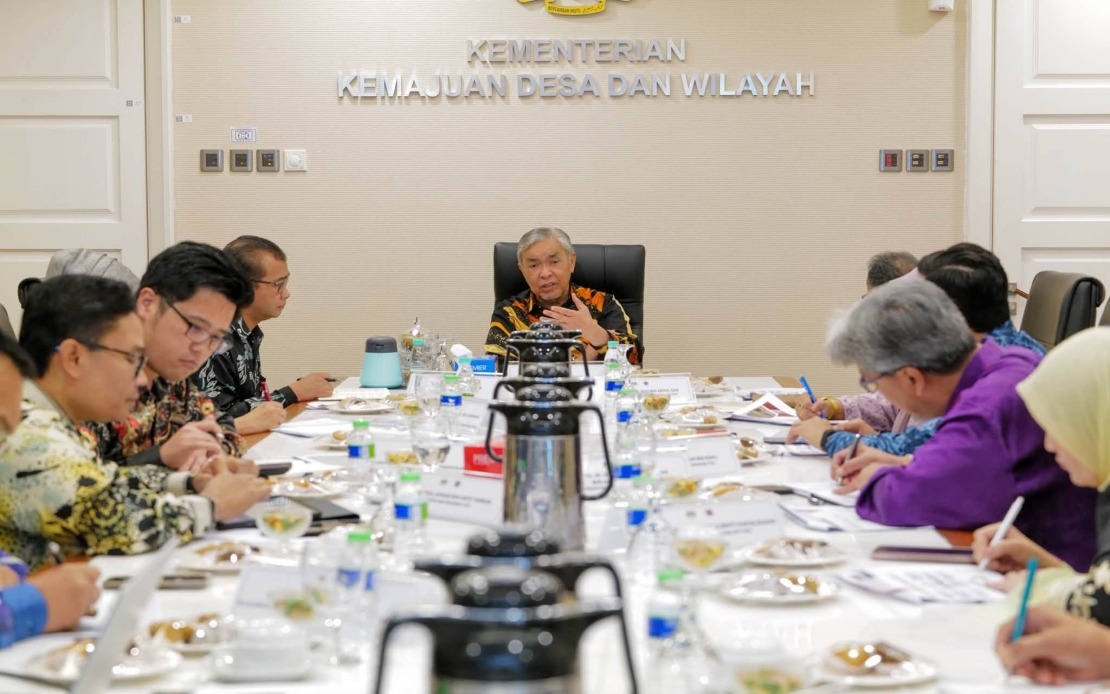
Malaysia is embarking on a comprehensive reformation of its technical and vocational education landscape with the launch of the Strategic TVET 2.0 Task Force 2026-2035, alongside ten dedicated strategic committees designed to reshape how the country prepares workers for emerging economic opportunities. Deputy Prime Minister Datuk Seri Dr Ahmad Zahid Hamidi, speaking in Putrajaya on August 6, unveiled the structural overhaul as part of the government's broader commitment to modernising skills development in an increasingly complex global economy.
The formation of this governance framework represents a deliberate shift towards more coordinated, comprehensive implementation of vocational training initiatives across Malaysia. Rather than operating in silos, the new architecture aims to create an integrated ecosystem where policy decisions, institutional reform, industry engagement, and financial sustainability operate in concert. This represents an acknowledgment that previous TVET efforts, while well-intentioned, lacked the institutional coordination needed to respond dynamically to rapid shifts in labour market demands. The task force will function as the central coordinating body, with each of the ten committees addressing specific dimensions of the vocational education ecosystem.
Heading the Strategic TVET 2.0 Task Force is Emeritus Professor Datuk Dr Siti Hamisah Tapsir, president and vice-chancellor emeritus of UCSI University, signalling an attempt to ground the initiative in academic expertise and institutional credibility. The committee structure encompasses critical operational pillars: the TVET Governance and Institutional Reform Committee under Datuk Dr Asyraf Wajdi Dusuki will tackle structural reorganisation; the TVET Industry and Employers Committee, chaired by Datuk Khairul Azwan Harun, bridges the often-problematic gap between educational institutions and corporate sector needs; the TVET Financing and Sustainability Committee led by Ramelle Ashram Ramli addresses the persistent challenge of ensuring adequate resources; and the Women Empowerment in TVET Committee, helmed by Datuk Dr Masilla Kamalrudin, tackles gender disparities in technical fields.
The emphasis on industry alignment marks a critical juncture in Malaysia's vocational strategy. For Southeast Asian nations competing for manufacturing and technology investments, workforce capabilities directly influence foreign direct investment decisions and economic competitiveness. The inclusion of an employers-focused committee recognises that skills training divorced from workplace realities produces graduates unable to command market-competitive wages. This committee structure allows continuous feedback loops where industry leaders can signal emerging skill requirements, enabling education providers to adjust curricula and training methodologies accordingly.
The financing committee assumes particular importance given Malaysia's budgetary constraints and the substantial capital investments required to modernise training facilities and instructor qualifications. Sustainable funding mechanisms—whether through public-private partnerships, industry levies, or outcome-based financing—determine whether vocational institutions can maintain quality and relevance. Countries like Singapore and South Korea have demonstrated that dedicated, stable funding for TVET produces superior workforce outcomes compared to systems where vocational education receives residual resources after academic priorities are funded.
The women's empowerment dimension reflects global recognition that vocational fields, particularly engineering and skilled trades, remain heavily male-dominated despite offering competitive salaries and career progression. Malaysia's working-age female population represents an underutilised human capital resource; expanding women's participation in technical fields could meaningfully address labour shortages in priority sectors. This committee's work might include addressing cultural perceptions, designing supportive infrastructure within training institutions, and creating mentorship pathways that increase female retention in technical professions.
Ahmad Zahid, who simultaneously holds the Rural and Regional Development portfolio, contextualised the initiative within the broader MADANI (Memperkayakan Rakyat) development framework emphasising inclusive growth. This positioning suggests TVET reform extends beyond urban manufacturing hubs to equip rural and underserved communities with skills for knowledge economy participation. For Malaysia's distributed population, ensuring TVET accessibility beyond major metropolitan centres addresses longstanding regional inequality while expanding the talent pool available to employers nationwide.
The 2026-2035 timeframe represents a deliberate long-term commitment, acknowledging that systemic educational transformation requires sustained investment across multiple government cycles and policy administrations. This decade-long horizon allows for comprehensive curriculum redesign, instructor retraining, infrastructure development, and institutional culture change. The specific start date in 2026 provides a transition period for detailed planning while immediate work on governance structures and stakeholder coordination can commence.
For Malaysian employers facing persistent skills shortages in sectors ranging from advanced manufacturing to digital technologies, the task force potentially offers relief through better-aligned graduate competencies. However, success depends critically on implementation rigour. Previous Malaysian initiatives have foundered when coordination breaks down between committees or when institutions fail to implement prescribed reforms. The appointment of high-profile chairs and clear committee mandates suggests increased accountability, though sustained political support through inevitable implementation challenges will prove essential.
Regional context matters significantly. Vietnam, Thailand, and Indonesia are simultaneously upgrading TVET capabilities, intensifying competition for manufacturing investment and talent. Malaysia's decision to systematise and professionalise its vocational education governance positions it to differentiate through quality and responsiveness. Countries that produce graduates with genuinely market-aligned skills gain competitive advantage in attracting investment seeking reliable supply of capable workers.
The establishment of this task force also signals implicit recognition that Malaysia must move beyond treating TVET as remedial education for academic underperformers. International best practice increasingly frames vocational training as an equally valid educational pathway to sustained employment and prosperity. Changing social perceptions of vocational careers—particularly elevating their status relative to purely academic credentials—requires cultural messaging alongside institutional reform, a dimension the task force framework does not explicitly address but will likely require complementary communication strategies.
Implementation monitoring will prove decisive. Clear performance indicators, regular public reporting on progress, and accountability mechanisms distinguishing between substantive reform and rhetorical commitment will determine whether the TVET 2.0 initiative delivers genuine workforce transformation or remains another governance reorganisation with limited practical impact. The coming months will reveal whether this structural foundation translates into classroom-level improvements in graduate competencies and employment outcomes.

