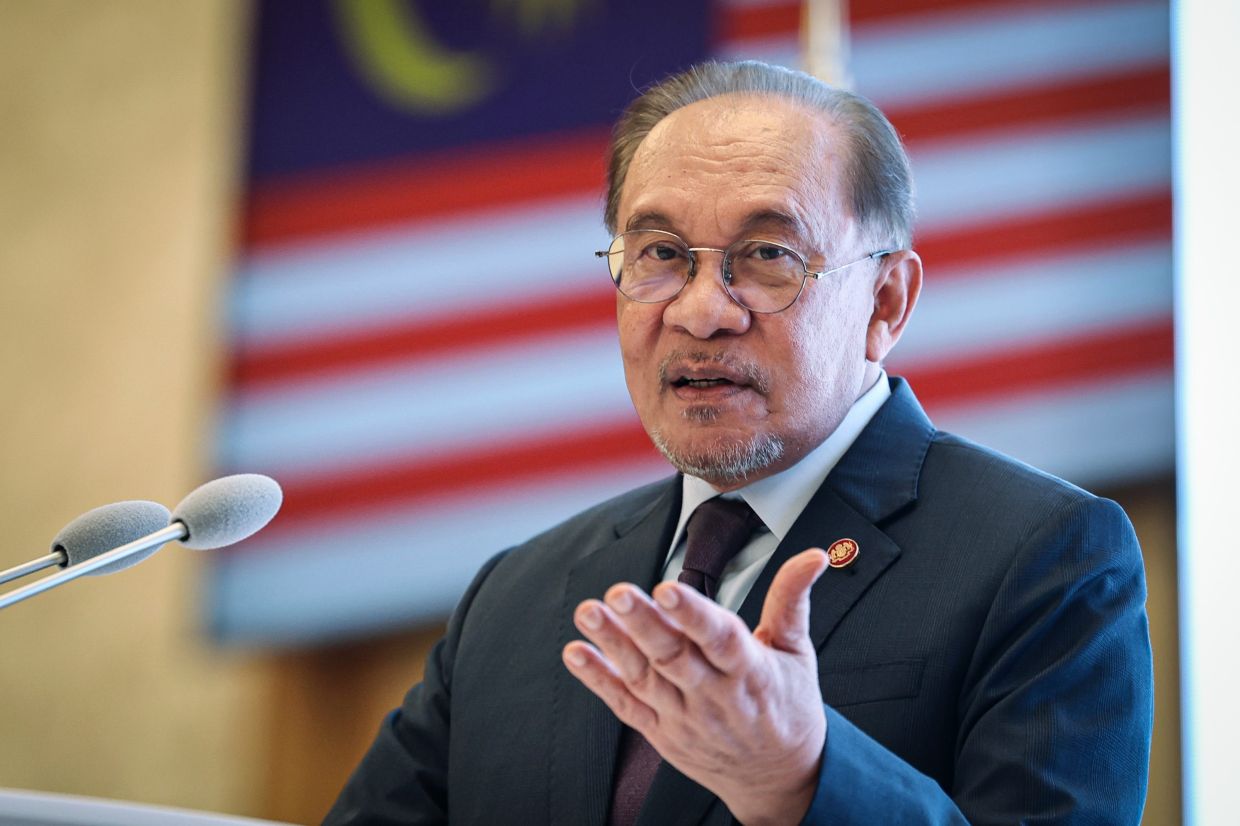
Malaysia's strategic position along vital international trade corridors and within crucial supply chains forms the bedrock of the nation's economic diplomacy agenda, Prime Minister Datuk Seri Anwar Ibrahim stated at the 39th Asia-Pacific Roundtable. Speaking in his capacity as both Prime Minister and Finance Minister, Anwar articulated how Malaysia's geographical and economic positioning translates into tangible influence in global commerce, a reality that shapes the government's broader approach to international relations and bilateral engagement.
Over successive years, Malaysia has deliberately cultivated deeper economic connections with its longstanding trading and investment counterparts, recognising that such relationships provide stability and predictability in an often volatile international marketplace. This foundational work has created networks of trust and institutional frameworks that Malaysia continues to build upon, even as global circumstances shift and new opportunities emerge across different regions and sectors.
Malaysia has positioned itself prominently within the complex architecture of regional and multilateral trade agreements that now govern commerce across Asia-Pacific and beyond. Through frameworks including the ASEAN Free Trade Area, the Regional Comprehensive Economic Partnership, and the Comprehensive and Progressive Agreement for Trans-Pacific Partnership, Malaysia has advocated for tariff rationalisation, expanded market access and more balanced investment arrangements. This multilayered engagement reflects a sophisticated understanding that trade benefits and supply chain stability flow from coordinated, rule-based systems rather than ad-hoc bilateral arrangements.
The primacy of ASEAN in Malaysia's strategic calculations cannot be overstated, according to Anwar, who emphasised that Malaysia's future remains fundamentally intertwined with the bloc's collective trajectory. Despite occasional doubts and friction within the organisation, ASEAN centrality must remain the anchoring principle of Malaysian foreign policy, he argued. Through this regional platform, Malaysia advances not merely its own narrow economic interests but contributes to broader objectives of regional peace, prosperity and institutional stability—outcomes that ultimately benefit all member states.
Yet Malaysia is not content to confine its economic diplomacy to established relationships and familiar markets. The government is actively pursuing trade expansion into less-exploited territories spanning West Asia, Central Asia, Latin America and the African continent. This geographic diversification represents a conscious strategy to reduce concentration risk and avoid over-dependence on any single region or set of partners, particularly important for a mid-sized economy navigating geopolitical tensions and potential trade disruptions.
This outward expansion demonstrates how contemporary economic diplomacy interweaves with broader geopolitical considerations. Malaysia's approach emphasises genuine, reciprocal collaboration rather than extractive transactions, focusing on sectors where both parties possess comparative advantages or complementary capabilities. The halal industry exemplifies this philosophy—a domain where Malaysia possesses established standards, market recognition and sectoral expertise that can be leveraged internationally. Similarly, digital economy development, agricultural modernisation and green technology represent growth areas where partnership yields mutual technological advancement and market access.
Energy security occupies particular strategic importance in this framework, Anwar emphasised, noting that hydrocarbon resources remain crucial for both current economic needs and long-term development aspirations. The recent official visit to Turkmenistan exemplified how high-level diplomatic engagement translates into substantive economic outcomes. During this trip, state oil company Petronas formalised agreements with Turkmen entities targeting exploration and development of two significant gas fields—concrete projects that will generate revenue, create employment opportunities and strengthen bilateral ties across multiple years of implementation.
Complementing these field-development projects, Malaysia and Turkmenistan established a long-term hydrocarbon development framework establishing the foundation for sustained cooperation. Notably, this arrangement extends beyond simple resource extraction to encompass human capital development and technical knowledge transfer. Such provisions recognise that sustainable energy partnerships require building local expertise and institutional capacity within partner nations, a commitment that distinguishes genuine strategic partnerships from transactional commodity deals.
The Malaysian government's explicit articulation of diversification as a national necessity rather than merely an economic preference reflects sober assessment of contemporary global conditions. Increasing uncertainty characterises international affairs, from shifting geopolitical alignments to climate volatility affecting commodity markets and supply chain resilience. A concentrated portfolio of trading relationships and investment sources exposes Malaysia to disproportionate disruption should difficulties emerge with any single partner or region. Conversely, a geographically and sectoral diverse economic foundation provides buffers and alternative pathways should disruptions occur.
Anwar's emphasis on maintaining broad-based, resilient and forward-looking economic ties articulates a vision of Malaysia as an adaptable trading nation capable of pivoting between opportunities while maintaining core commitments to established partners. This balancing act requires sophisticated diplomatic management and requires that Malaysian leadership maintain relationships across multiple regions and ideological contexts without appearing to abandon historical partnerships or fundamental principles. The challenge intensifies as great power competition reshapes regional dynamics and third parties seek to draw countries into exclusive arrangements incompatible with existing commitments.
The remarks delivered at the 39th Asia-Pacific Roundtable, organised by the Institute of Strategic and International Studies Malaysia over three days from June 30 to July 2, represent continuity with established Malaysian strategic doctrine while signalling expansion into emerging markets. Malaysia's approach demonstrates that economic diplomacy encompasses far more than tariff negotiations or bilateral trade agreements—it constitutes a comprehensive national strategy linking commerce to statecraft, positioning the country to influence regional outcomes while capturing opportunities arising from structural shifts in global commerce and geopolitics.

