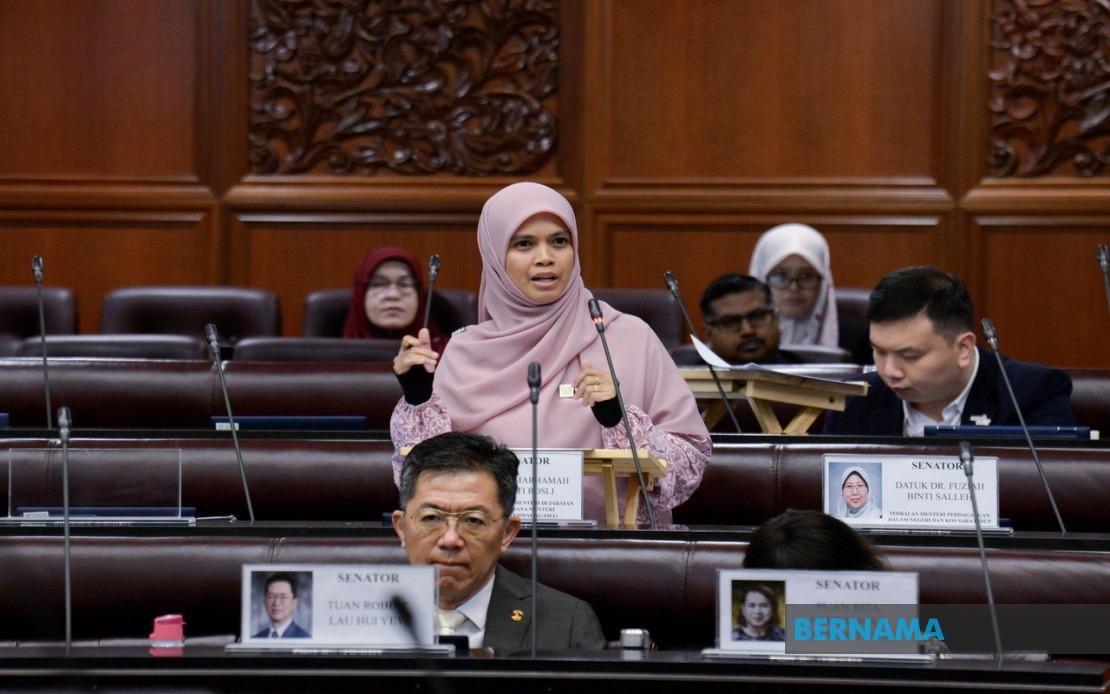
The Malaysian government has approved funding for 92 mosque construction projects valued at RM160.82 million between 2023 and June 2024, marking a substantial infrastructure push under the MADANI administration. Deputy Minister in the Prime Minister's Department (Religious Affairs) Senator Marhamah Rosli disclosed the progress during parliamentary proceedings in Kuala Lumpur on August 3, revealing that 54 of these projects have reached completion whilst 16 are actively advancing through construction phases. The remaining 22 projects remain in earlier planning stages or are navigating procurement procedures, indicating a pipeline of activity set to unfold over the coming months.
The allocation framework reflects a coordinated approach involving state authorities, with decisions grounded in specific demographic and infrastructural assessments. Marhamah explained that new mosque approvals depend upon recommendations and validation from state religious departments, considering factors including Muslim population growth and concentration in particular locales, existing mosque capacity and accessibility, site suitability, land tenure arrangements, and financial commitments pledged by respective state administrations. This methodical vetting process ensures that development priorities align with genuine community requirements rather than responding to ad hoc demands.
A pivotal shift in project financing occurred following the 139th Conference of Menteri Besar and Chief Ministers held on June 28, 2022, when both federal and state governments agreed to jointly shoulder mosque development expenses. This partnership model fundamentally altered the funding landscape, distributing financial responsibility across multiple tiers of governance and potentially accelerating project delivery. The shared cost arrangement suggests recognition that mosque infrastructure serves not merely religious purposes but functions as essential community infrastructure demanding comprehensive funding support.
Beyond construction metrics, the MADANI government has positioned mosques as focal points for broader social welfare initiatives. Marhamah outlined an extensive network of assistance programmes delivering aid to vulnerable populations through collaborative efforts spanning the Department of Islamic Development Malaysia (JAKIM), state Islamic religious departments and councils, non-governmental organisations, and allied stakeholders. These initiatives extend far beyond spiritual functions, encompassing distribution of welfare support to designated beneficiary categories, provision of food parcels, establishment of community kitchen operations, emergency financial relief for households in distress, educational assistance schemes, counselling provision, funeral management services, and temporary accommodation facilities.
The expansion of mosque-centred welfare infrastructure carries particular relevance for Malaysia's urban landscape, where concentrations of homeless individuals, economically disadvantaged populations, and low-income communities face persistent challenges accessing basic services. Mosques have historically functioned as community anchors, and leveraging these spaces for coordinated welfare delivery represents pragmatic utilisation of existing infrastructure. The food basket distributions and community kitchen operations directly address food insecurity affecting marginalised urban groups, whilst emergency financial assistance and education support programmes target households struggling with immediate hardship.
From a regional perspective, Malaysia's mosque infrastructure expansion demonstrates commitment to religious institutional development within a multicultural Southeast Asian context. The scale of investment—over RM160 million for 92 projects—reflects substantial prioritisation of Islamic facilities during a period when competing developmental demands vie for limited government resources. This commitment to religious infrastructure differs markedly from patterns in some neighbouring nations and signals confidence in the stability of Malaysia's plural democratic framework.
The construction timeline and completion rates suggest efficient project management, though the significant proportion remaining in pre-implementation phases (22 of 92 projects) indicates bottlenecks potentially stemming from procurement processes or site-related complexities. As Malaysia's urban and suburban populations continue expanding, particularly in high-growth corridors surrounding Kuala Lumpur, Selangor, Penang, and Johor Bahru, mosque infrastructure demand will likely intensify. The current approval pipeline may require augmentation to maintain pace with demographic shifts.
The integration of welfare functions within mosque development strategy reflects evolved understanding of how religious institutions contribute to social cohesion and community resilience. By anchoring poverty alleviation, educational support, and counselling services within mosque infrastructure, the government leverages existing community trust and accessibility advantages. This approach proves particularly effective in kampung settings and urban village communities where informal social networks remain strong and religious spaces command respect and regular footfall.
Financial sustainability of these expanded welfare functions merits consideration, as the construction budgets represent capital expenses whilst ongoing welfare operations demand recurring expenditure. Whether federal and state governments have aligned long-term operational funding commitments alongside infrastructure investments remains an open question. Malaysian readers familiar with public sector capacity constraints may recognise risks associated with funding programme expansion without corresponding resource provisions.
The parliamentary exchange also illuminated how religious affairs administration operates within Malaysia's federal structure, with religious authority residing at state level whilst the federal government increasingly co-finances infrastructure development. This fiscal partnership model potentially strengthens federal-state cooperation on religious matters, though it may also create ambiguities regarding maintenance responsibilities, welfare programme oversight, and accountability frameworks.
Moving forward, the MADANI government's mosque development programme signals recognition that modern religious infrastructure must serve multifaceted community functions. Rather than viewing mosques exclusively as prayer venues, contemporary strategic thinking positions them as community hubs delivering welfare, education, counselling, and emergency support. This holistic conception aligns with global trends in faith-based institutional development and acknowledges shifting demographics and urbanisation patterns reshaping Malaysian society. The success of this initiative will likely depend upon sustained funding commitment, effective coordination between federal and state agencies, and community engagement ensuring programmes genuinely address identified needs rather than reflecting bureaucratic assumptions.

