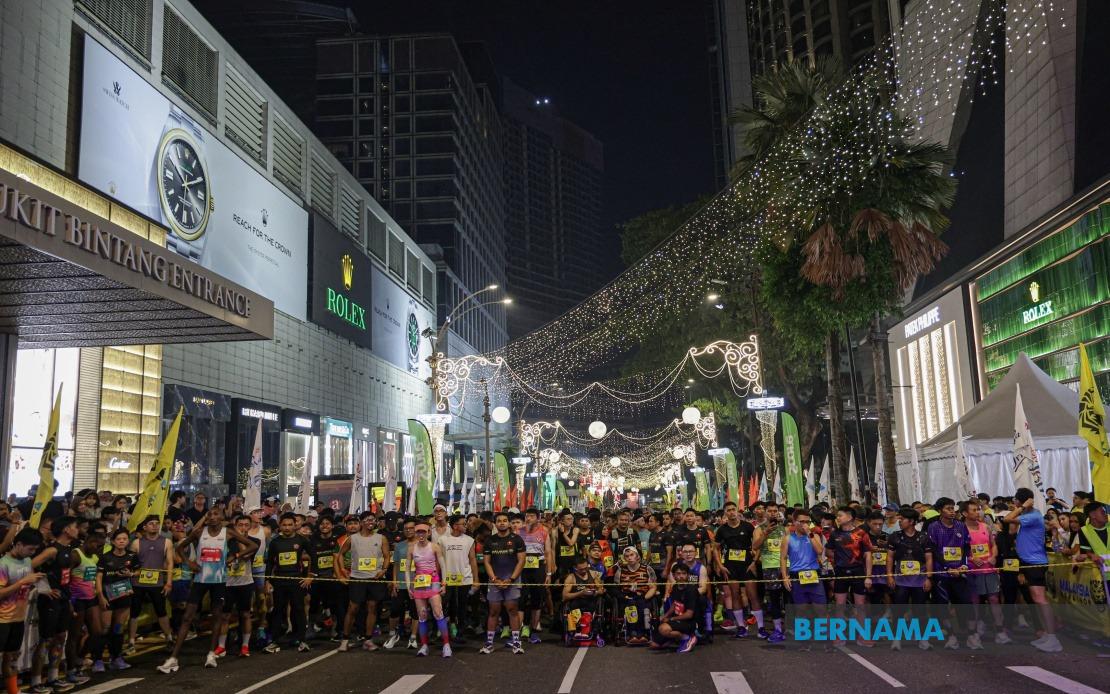
The Malaysia Marathon 2026 commenced just after midnight on 30 August, bringing together an unprecedented 25,000 local and international participants across multiple race distances as the centrepiece of Malaysia's 69th National Day festivities. Minister of Tourism, Arts and Culture Datuk Seri Tiong King Sing presided over the opening ceremony at Pavilion Kuala Lumpur, officially flagging off the Full Marathon division at 12:30 am with 2,000 elite and recreational runners preparing to tackle the 42-kilometre course. The overnight timing and carefully sequenced start times for each category reflected organisers' ambitions to create a memorable nationwide event that blended athletic competition with patriotic commemoration.
The staggered start schedule demonstrated sophisticated event management, with the 21-kilometre Half Marathon commencing at 2:00 am and drawing 8,000 participants eager to test their endurance on Kuala Lumpur's urban landscape. Following at 3:30 am, the 10-kilometre category welcomed 5,000 runners, while a separate 5-kilometre Fun Run shifted to daytime, beginning at 7:30 am and accommodating 10,000 participants of varying fitness levels. This structure allowed the organisers to manage crowd density whilst maintaining momentum throughout the early morning hours and into daylight, ensuring safety and accessibility for competitors across age groups and abilities.
A notable departure from convention involved relocating the traditional finishing point from Dataran Merdeka to the Kuala Lumpur City Centre precinct. This shift carried symbolic weight, repositioning Malaysia's marathon conclusion within one of the country's most iconic modern landmarks rather than its historical independence square. The decision reflected contemporary urban development patterns and offered spectators enhanced access to modern facilities whilst maintaining the race's patriotic significance. The KLCC finish line created a striking visual narrative for a nation celebrating seven decades of independence through the lens of contemporary achievement and progress.
The physical demands placed on Full Marathon competitors were substantial, with the 42-kilometre route incorporating a challenging 900-metre elevation gain as participants traversed the Ampang-Kuala Lumpur Elevated Highway. This demanding topography tested competitors' cardiovascular fitness and mental resilience whilst showcasing the Greater Kuala Lumpur metropolitan region's varied terrain. The decision to route marathon runners through major arterial highways including AKLEH and SUKE reflected both logistical necessity and an opportunity to highlight infrastructure connecting the capital to surrounding areas.
One of the marathon's most distinctive features involved an HONOR-manufactured humanoid robot participating in the 10-kilometre category alongside human runners from Japan, Nigeria, and other nations. This technological integration represented a forward-looking approach to sports events, merging traditional athletic competition with artificial intelligence demonstration. For Malaysia, the participation of an advanced humanoid robot underscored the nation's openness to technological innovation within cultural and sporting contexts, potentially positioning the event as a platform where cutting-edge technology enhances rather than replaces human athletic endeavour.
The race achieved formal recognition from World Athletics, the international governing body overseeing track and field competition globally. This accreditation lent legitimacy to the Malaysia Marathon 2026 within the international athletic community and suggested adherence to rigorous standards regarding course certification, timing, and competition integrity. For Malaysian athletes and the domestic sporting sector, World Athletics recognition elevated the event's standing, attracting elite international competitors and positioning Malaysia within the global marathon circuit more prominently than previous editions.
The infrastructure burden on Kuala Lumpur during the 24-hour event window proved substantial, necessitating comprehensive traffic management strategies implemented by Kuala Lumpur Police. Phased road closures commenced overnight and extended through the afternoon of 30 August, affecting major thoroughfares including Jalan Bukit Bintang, Jalan Ampang, Jalan Sultan Ismail, and Jalan Raja Chulan, alongside both the AKLEH and SUKE highway systems. These closures represented significant disruptions to normal urban mobility patterns, requiring advance coordination with affected commuters, businesses, and public transport operators to minimise inconvenience.
The simultaneous closure of multiple highway corridors central to Kuala Lumpur's traffic network highlighted both the event's scale and the organisational complexity inherent in hosting a 25,000-person endurance race through an active metropolitan environment. Traffic diversion strategies required careful calibration to maintain essential flows whilst ensuring course integrity and participant safety. For commuters, the disruptions represented a tangible civic contribution to the National Day commemoration, though the substantial transport implications underscored the ongoing tension between hosting major public events and maintaining urban functionality.
The Malaysia Marathon 2026 represented more than a sporting competition; it functioned as a coordinated expression of national identity timed to coincide with Malaysia's independence anniversary. The integration of international participants, technological innovation through the humanoid robot, World Athletics recognition, and patriotic significance through the KLCC finish location created a multifaceted event appealing to athletes, technology enthusiasts, and citizens seeking collective celebration. The overnight staging and unusual finishing point distinguished this edition from previous marathons, signalling organisers' willingness to reimagine traditional race formats.
For Southeast Asia more broadly, the Malaysia Marathon 2026 demonstrated regional capacity to host large-scale international sporting events with contemporary amenities and technological features. The event's magnitude—25,000 participants—positioned it within the upper echelon of regional marathons and suggested growing ambitions for Malaysia's event tourism sector. The combination of elite athletic competition, mass participation categories, and technological innovation reflected evolving consumer expectations around sports experiences, where passive spectatorship increasingly merged with active participation across multiple distance categories.
The nighttime commencement of the Full Marathon presented an innovative approach to managing heat stress in Malaysia's tropical climate, allowing elite competitors to perform under cooler conditions whilst maintaining the daylight Fun Run's accessibility for family participation. This temperature-conscious scheduling demonstrated organisational sophistication and understanding of Malaysia's environmental constraints. The staggered timing also allowed international participants from various time zones to adjust gradually to local conditions, enhancing their competitive experience and recovery prospects.
As Malaysia continues positioning itself as a destination for international sporting events, the Malaysia Marathon 2026 provided evidence of growing technical capability and logistical sophistication. The coordination required to manage 25,000 runners, implement sophisticated traffic strategies, integrate emerging technologies, and maintain World Athletics standards reflected institutional learning from previous events and increasing professional standards within Malaysia's events management sector. The successful execution of such an event carried implications for future hosting opportunities and contributed to Malaysia's broader tourism and sporting development objectives.

