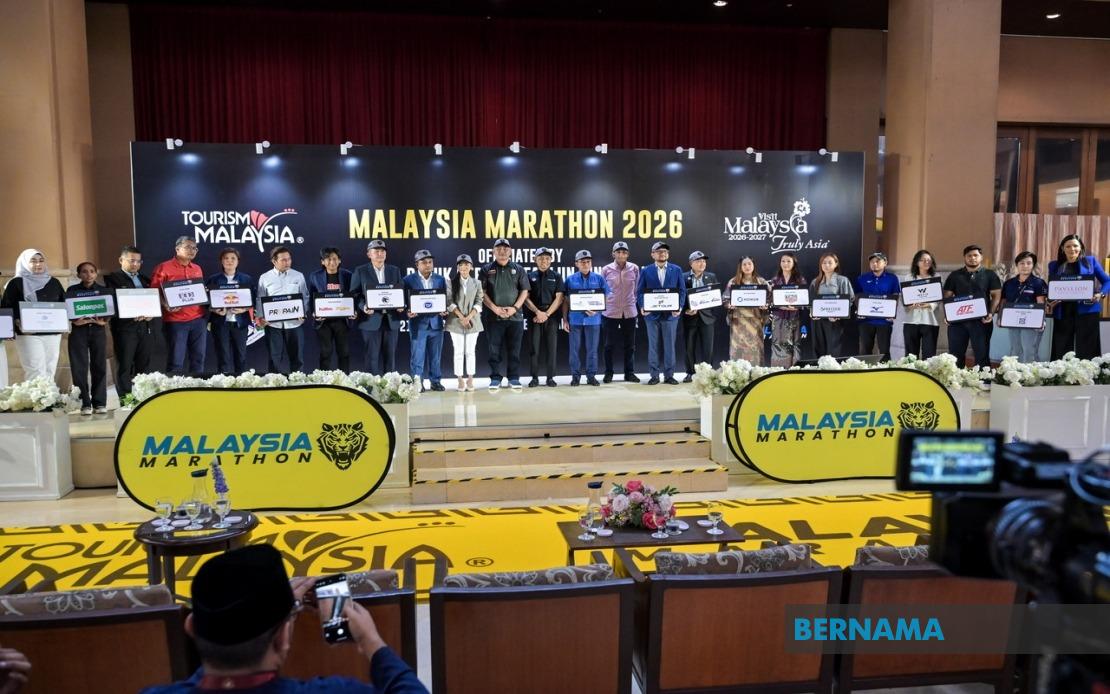
The inaugural Malaysia Marathon 2026 will dangle a substantial carrot before the nation's elite distance runners: a RM50,000 prize for anyone who shatters the national records in either the 21-kilometre or full 42-kilometre categories during the race scheduled for August 30. Organisers have designed this financial incentive specifically to attract Malaysia's top endurance athletes and position the inaugural event as a genuine platform for record-hunting ambitions at a time when regional running competitions are intensifying across Southeast Asia.
Eddy Casmady, president of the Malaysia Marathon, revealed the prize structure as part of a broader strategy to energise local participation among elite competitors. The monetary reward targets Malaysian nationals exclusively, reflecting organisers' determination to nurture homegrown talent and challenge the dominance of international runners who typically set benchmarks at major regional marathons. By concentrating the prize on national record-breaking rather than finishing positions, the event signals confidence in the calibre of Malaysian distance runners and their potential to elevate domestic standards.
Beyond the financial incentive, the race's credibility has been bolstered through official World Athletics recognition. The course underwent rigorous measurement procedures overseen by the international governing body, and organisers secured the necessary certification confirming the route's legitimacy. This accreditation matters enormously for elite athletes, as times recorded on World Athletics-certified courses carry official status and become eligible for international rankings and qualification standards—a technical requirement that elevates Malaysia Marathon 2026 from a local event to one with genuine global significance.
The route itself presents a formidable test of endurance and tactical racing. Departing from Pavilion Kuala Lumpur and concluding near KLCC, the 42km course traverses two major highways and incorporates a particularly demanding climbing section spanning approximately 900 metres in elevation gain. This uphill segment, stretching from AKLEH onwards, will prove decisive for both distance categories, particularly the full marathon where cumulative fatigue compounds the challenge of gaining altitude. Such topographical features traditionally favour runners with superior strength and mental resilience, potentially reshaping competitive dynamics compared to flat urban marathons prevalent elsewhere in the region.
Anticipation surrounding the event extends beyond traditional competitive rivalry. Organisers have incorporated an unusual element by inviting HONOR, a humanoid robot, to participate in the 10-kilometre category. While the robot's participation appears primarily novelty-oriented, it reflects growing convergence between sporting events and technological demonstration, a trend increasingly visible at major international competitions seeking media attention and social engagement.
The inaugural edition will accommodate 25,000 total participants distributed across five distance categories, with the marathon proper (42km) attracting 2,000 runners, the half-marathon (21km) drawing 8,000 competitors, the 10km race hosting another 5,000 participants, and a casual 5km leisure run recruiting 10,000 walkers and recreational runners. This tiered structure enables organisers to simultaneously cater to elite athletes pursuing records, competitive intermediate runners seeking personal bests, and recreational participants prioritising participation over performance—a model that maximises inclusivity while maintaining racing integrity across ability levels.
International participation carries particular significance for a debut national marathon. Over 2,300 foreign participants will travel to Kuala Lumpur, among them elite distance runners from Japan and Nigeria who bring proven pedigree and competitive sharpness. Nigerian distance running has produced numerous sub-elite and professional athletes, while Japanese marathoners consistently achieve competitive standards. Their presence elevates the overall standard and transforms Malaysia Marathon 2026 from a domestic showcase into a regionally attractive event capable of drawing serious international competitors.
From a strategic perspective, Malaysia's motorsport-dominated sporting calendar has historically overshadowed endurance athletics despite the nation possessing considerable running talent. Establishing a marquee marathon with international recognition and credible prize incentives signals ambition to develop distance running infrastructure and elevate Malaysia's profile within global athletics circuits. The RM50,000 record-breaking prize, while modest by international standards, demonstrates meaningful local commitment to athlete development at precisely the moment when neighbouring countries intensify running event offerings.
The timing and scale of Malaysia Marathon 2026 also reflects broader Southeast Asian patterns where urban marathons increasingly become cultural and economic events attracting tourism, media coverage, and sponsor investment beyond traditional athletics audiences. By positioning the starting point at a major commercial landmark and finishing near an iconic tourism destination, organisers leverage the race's logistics to enhance visitor experiences and integrate sporting competition within wider Kuala Lumpur tourism strategies.
For Malaysian runners contemplating the RM50,000 prize, breaking national records will require exceptional performances. The current national records across marathon distances were typically established by dedicated professional runners competing at international events or older standards set decades ago. Achieving this threshold demands not merely competitive victory but elite-level execution across an entire race distance—a requirement that will test whether Malaysia's domestic talent pool contains athletes capable of delivering World Athletics-standard performances on home soil. The prize thus functions simultaneously as motivational target and realistic assessment of current national athletic capacity.

