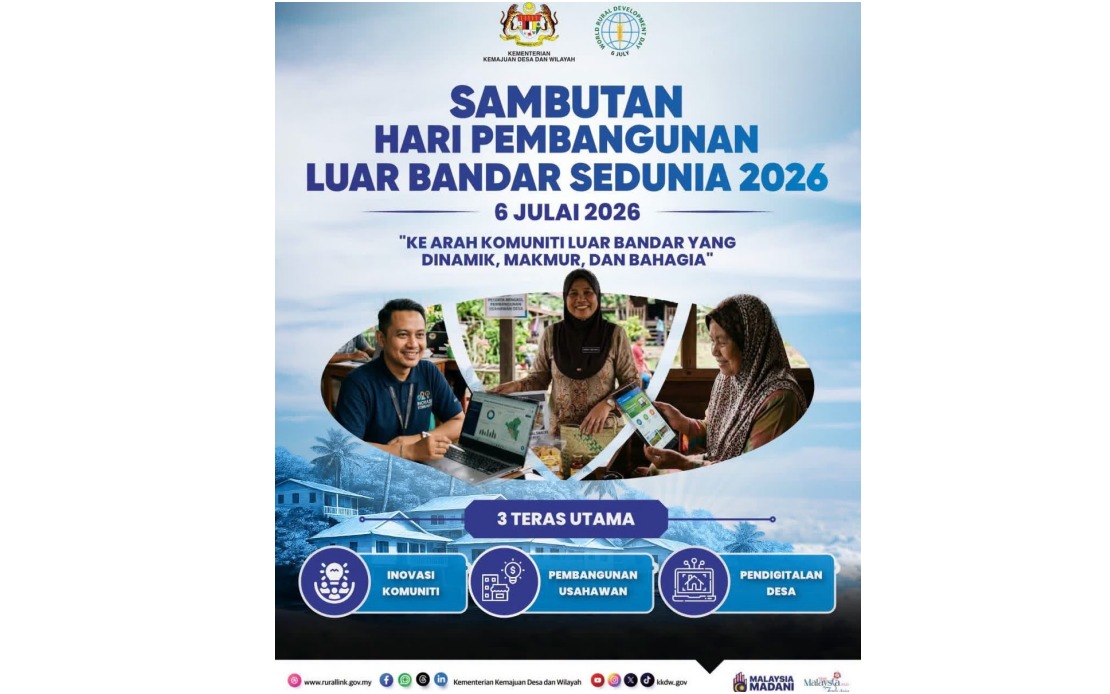
Malaysia steps into a new chapter of rural nation-building as it becomes one of the first countries to formally observe World Rural Development Day, joining a global movement that only commenced in 2025. The inaugural national celebration takes place at Tun Abdul Razak Stadium in Jengka near Maran, Pahang, with Deputy Prime Minister and Minister of Rural and Regional Development Datuk Seri Dr Ahmad Zahid Hamidi scheduled to lead proceedings. The timing reflects Malaysia's determination to align with an international observance that gained formal recognition just months ago when the United Nations General Assembly designated July 6 as an annual focal point for acknowledging rural communities' contributions to national and global progress.
The United Nations established World Rural Development Day by resolution in September 2024, anchoring the celebration to July 6 in recognition of the Centre on Integrated Development for Asia and the Pacific's founding. This institutional connection underscores the day's relevance to Asia-Pacific nations, where rural populations remain central to economic and social development strategies. Malaysia's adoption of the observance demonstrates the government's responsiveness to international development frameworks while signalling domestic commitment to addressing rural advancement as a strategic priority rather than a peripheral concern.
Driven by the theme "Toward Vibrant, Prosperous and Happy Rural Communities," the celebration articulates a vision extending beyond basic infrastructure or poverty alleviation. The Ministry of Rural and Regional Development has positioned the event as recognition of the rural constituencies whose efforts sustain national development and facilitate progress toward the Sustainable Development Goals. This framing reorients how policymakers and urban populations perceive rural areas, moving beyond deficit narratives toward narratives of agency, productivity and shared prosperity.
Three foundational pillars structure Malaysia's approach to rural development moving forward: community innovation, rural digitization and rural entrepreneur development. These pillars reflect contemporary understanding that rural advancement requires more than traditional agricultural support or subsidy schemes. Community innovation acknowledges that rural populations generate localized solutions to their own challenges, requiring platforms and recognition rather than top-down interventions alone. Rural digitization addresses the persistent digital divide that constrains economic opportunity and access to services in non-urban areas, a critical gap given Malaysia's aspirations toward a digital economy.
Rural entrepreneur development, the third pillar, recognises that sustainable prosperity emerges when rural residents possess skills, capital and market access to establish viable enterprises. Together, these three thrusts form an integrated strategy recognizing that economic expansion, technological inclusion and human capacity development must advance simultaneously. The initiatives translating these thrusts are designed to create tangible opportunities for rural residents to participate in broader economic growth rather than remaining dependent on government transfers or extractive industries.
The celebration programme encompasses several significant announcements and awards ceremonies that showcase existing rural development initiatives. The Rural Aspiration Award MADANI will recognise outstanding contributions from rural communities, while the Felda Plan Excellence Award acknowledges performance within Malaysia's established rural development framework. The launch of the My Rural Insight Journal signals investment in documentation and knowledge-sharing around rural experiences and innovations. These elements combine formal recognition with institutional commitment, signalling that rural development remains elevated within government priorities rather than confined to niche portfolios.
Felcra Bhd's announcement of its interim distributable profit distribution for 1/2026 carries particular significance for smallholder farmers and rural communities dependent on cooperative structures for market access and economic stability. Such announcements at the inaugural celebration underscore the government's intent to use the observance as a platform for communicating tangible benefits flowing to rural constituencies. The financial distribution demonstrates that rural development encompasses not merely aspirational goals but concrete mechanisms transferring resources and wealth to rural populations.
For Malaysia, hosting this inaugural celebration positions the nation as an active participant in reshaping global development discourse around rural advancement. Southeast Asian nations face comparable challenges regarding rural-urban disparities, agricultural sustainability and youth migration from countryside to cities. Malaysia's approach, emphasising innovation and digitization rather than nostalgic preservation of traditional rural life, provides a model potentially relevant to regional peers navigating similar transitions. The celebration thus extends beyond domestic symbolism to carry implications for how developing economies in Asia address rural transformation.
The public invitation to participate broadens the celebration beyond government announcements and official ceremonies. Exhibition booths from the Ministry of Rural and Regional Development and partner agencies will showcase practical programmes and opportunities available to rural communities. This participatory approach aims to demystify government rural development initiatives and foster dialogue between policymakers and constituents. Such engagement proves essential given that policy effectiveness ultimately depends on rural communities' awareness of and willingness to participate in available programmes.
Malaysia's embrace of World Rural Development Day reflects accumulated recognition that rural prosperity remains foundational to national cohesion and economic resilience. As urbanisation accelerates and agricultural sectors modernise, rural areas require deliberate, resourced strategies ensuring they remain economically vibrant and socially integrated. The government's elevation of this observance suggests such strategies will increasingly emphasise empowerment and opportunity creation rather than welfare provision alone, positioning rural Malaysia as an engine of innovation and entrepreneurship rather than a recipient of charitable intervention.

