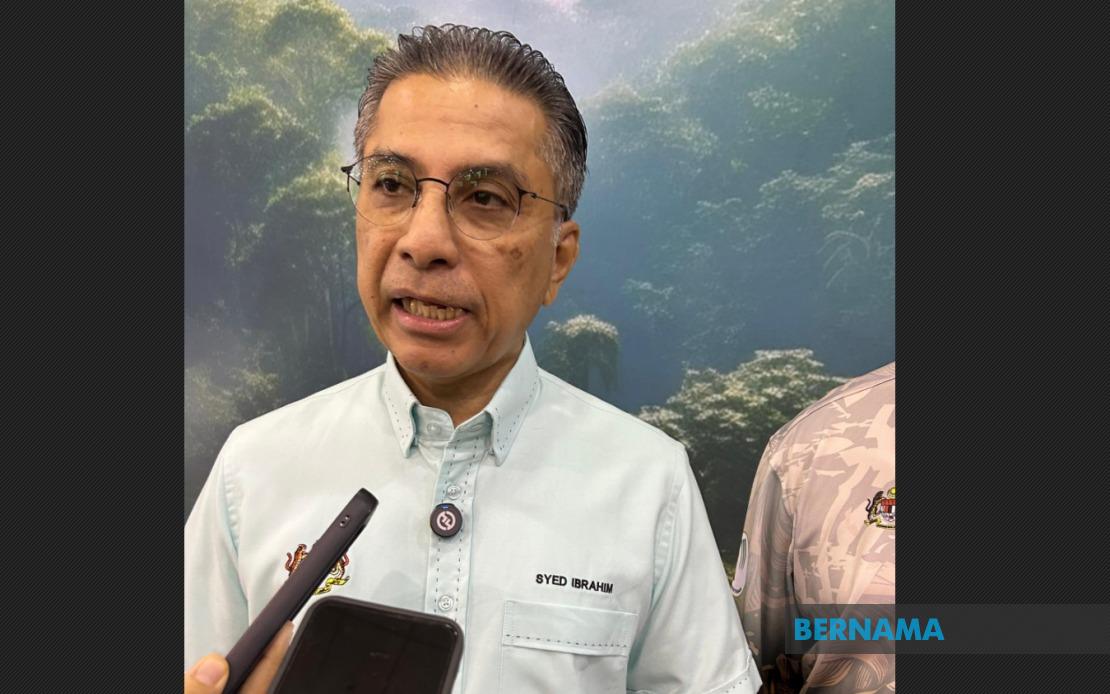
The Malaysian government is maintaining close oversight of three Asian elephants currently residing at Tennoji Zoo in Osaka, following their relocation in March as part of an extended wildlife conservation initiative. Deputy Minister of Natural Resources and Environmental Sustainability Syed Ibrahim Syed Noh confirmed that the Ministry of Natural Resources and Environmental Sustainability (NRES) is systematically tracking the health and wellbeing of the three animals—identified as Dara, Amoi and Kelat—who have been stationed at the Japanese facility since the beginning of the year.
The transfer of these elephants represents a significant commitment to regional wildlife management through a 25-year strategic partnership between Taiping Zoo and Night Safari (ZTNS) and Tennoji Zoo. This collaboration reflects Malaysia's broader approach to biodiversity conservation, moving beyond traditional in-situ efforts to embrace international ex-situ programmes that leverage resources and expertise across borders. Such arrangements have become increasingly common in Southeast Asian wildlife management, where zoos recognised as meeting international standards can contribute meaningfully to species preservation and research.
Before approving the relocation, the Department of Wildlife and National Parks (Perhilitan) undertook rigorous evaluation procedures to safeguard the elephants' interests. The assessment process examined both physical and psychological dimensions of the animals' prospective environment, verifying that Tennoji Zoo adhered to globally recognised standards for wildlife care and management. This comprehensive vetting reflects Malaysia's commitment to ensuring that any international elephant placements meet stringent welfare criteria, addressing concerns that sometimes arise when animals are moved across significant distances and cultural contexts.
To facilitate the elephants' transition and acclimatisation to their new surroundings, Perhilitan deployed seven experienced mahouts to Tennoji Zoo on a rotating schedule for the first two months following the animals' arrival. These trained handlers, whose expertise encompasses elephant behaviour and care practices developed over decades in Malaysian facilities, have played a crucial role in helping the animals adapt to their new environment. Their presence has been instrumental in maintaining familiar care routines and emotional support during a period when the elephants faced substantial environmental changes.
Following the initial two-month transition phase, the government has sustained its monitoring commitment by stationing two additional mahouts at the zoo from June onwards for an extended period. This ongoing deployment underscores Malaysia's recognition that elephant acclimatisation is not a brief process but rather an extended journey requiring consistent attention and expert observation. The continued presence of Malaysian handlers ensures that any complications or welfare concerns can be identified promptly and addressed through channels familiar to both the animals and their caretakers.
When questioned about public and civil society demands to bring the three elephants back to Malaysia, Syed Ibrahim emphasised the government's measured approach that balances multiple considerations. The Ministry's priority centres on ensuring that the cooperation programme operates transparently, adheres to legal frameworks governing international animal transfers, and preserves the diplomatic relationship between Malaysia and Japan. This position reflects the complexities inherent in international wildlife agreements, where repatriation decisions cannot be made unilaterally but must navigate contractual obligations and bilateral negotiations.
Any future modifications to the arrangement, including potential early repatriation of the elephants or changes to their status, will be subject to official discussions conducted under the master agreement governing the relationship between ZTNS and Tennoji Zoo. The government has indicated flexibility regarding independent verification of the elephants' welfare, signalling openness to having observers or non-governmental organisations visit the facility, provided that both institutions consent and existing contractual frameworks permit such arrangements. This willingness to facilitate external oversight represents a constructive response to public concerns while respecting institutional agreements.
The Ministry also addressed historical questions regarding Malaysian elephants previously sent abroad, clarifying discrepancies in publicly circulated figures. According to official Perhilitan records, only 10 elephants have been exported internationally since 1977—significantly fewer than the 19 animals referenced in some public discussions. This distinction between official documentation and informal estimates underscores the importance of accessing verified government records when assessing Malaysia's elephant export history. The clarification helps establish a factual baseline for evaluating whether international placements represent prudent conservation strategy or unsustainable extraction.
The elephants' relocation within the context of formal conservation partnerships reflects evolving approaches to species management in an era when wild populations face accelerating habitat loss and fragmentation. Osaka's Tennoji Zoo, like several institutions across Japan, operates research and breeding programmes contributing to broader knowledge about elephant genetics, behaviour and health. For Malaysia, participation in such initiatives offers opportunities to advance conservation science while maintaining oversight of animals previously under domestic care.
Regionally, Malaysia's experience with the Tennoji Zoo elephants carries implications for how Southeast Asian nations approach international wildlife cooperation. As other countries increasingly contemplate international placements for their own species, Malaysia's framework—emphasising pre-transfer assessments, on-site monitoring through trained personnel, and maintained government oversight—provides a model combining conservation objectives with animal welfare protections. The arrangement demonstrates that international transfers need not diminish a nation's commitment to its wildlife, provided that proper safeguards and transparency mechanisms are embedded from the outset.
For Malaysian wildlife advocates and the broader public, the ongoing monitoring programme represents a pragmatic acknowledgement that some conservation objectives can be achieved through international collaboration while maintaining meaningful oversight. The presence of Malaysian mahouts, regular welfare assessments, and government engagement through official channels suggests a serious commitment to ensuring that Dara, Amoi and Kelat experience appropriate care throughout their tenure in Japan. Whether this model proves satisfactory to stakeholders invested in elephant welfare will likely influence how Malaysia structures international wildlife partnerships in coming years.

