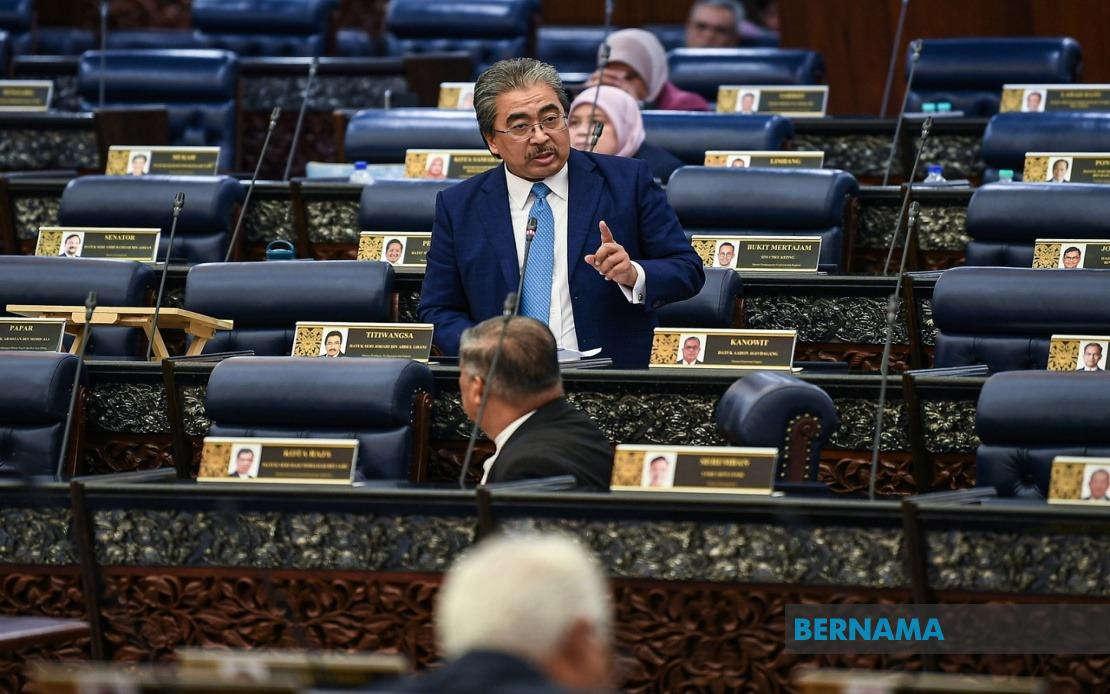
Malaysia is moving swiftly to develop a framework that would prevent the entry of goods manufactured using forced labour, marking a significant policy shift in response to mounting international pressure and potential trade penalties. Investment, Trade and Industry Minister Datuk Seri Johari Abdul Ghani disclosed during parliamentary proceedings that the government recognises the urgency of this matter, particularly given mounting concerns from key trading partners about Malaysia's current lack of formal legal mechanisms to block such imports.
The government has created an Inter-Agency Task Force on Forced Labour to coordinate the development of this import restriction mechanism. Led by the Ministry of Investment, Trade and Industry, the task force brings together six government ministries and multiple enforcement agencies. This sprawling coordination effort includes the Ministry of Finance, Ministry of Foreign Affairs, Ministry of Home Affairs, Ministry of Human Resources, and Ministry of Transport, alongside the Attorney-General's Chambers, Royal Malaysian Customs Department, Malaysian Border Control and Protection Agency, Royal Malaysian Police, Malaysian Investment Development Authority, and Malaysian External Trade Development Corporation. The breadth of this institutional apparatus underscores how seriously the government views the challenge and how deeply it intersects with Malaysia's trade, immigration, and labour frameworks.
Currently, Malaysia operates without specific legal restrictions preventing the importation of goods produced through forced labour. This regulatory gap has proven increasingly problematic in an era where global supply chain scrutiny is intensifying and major trading partners are demanding stronger safeguards. The absence of such legislation has left Malaysia vulnerable to criticism from developed economies that view forced labour imports as both an ethical violation and an unfair trade advantage that distorts market competition.
The timing of this initiative is directly tied to American trade action. The United States recently completed preliminary findings on an investigation spanning sixty countries to assess their enforcement of bans on forced labour goods. In June 2026, the US announced that Malaysia fell into a concerning category: among fifty-four nations identified as lacking specific legal structures to restrict such imports. Six additional countries possessed relevant laws but allegedly failed to enforce them adequately. Malaysia's inclusion in the larger group, while perhaps slightly preferable to being flagged for enforcement failures, still constitutes an embarrassing position for a middle-income nation aspiring to advanced development status.
More immediately troubling for Malaysian exporters and the broader economy is the threatened financial consequence. The US has signalled that effective July 24, it intends to impose a preliminary ten per cent tariff on Malaysian goods in connection with the forced labour investigation. This punitive measure represents a substantial economic threat to Malaysian manufacturers and exporters who depend on the American market. The potential tariff would increase costs for businesses and could disrupt established supply chains, affecting everything from electronics and automotive components to textile and agricultural products that form significant portions of Malaysia's export portfolio.
The forced labour investigation is described as nearly finalised, distinguishing it from the parallel US investigation into market access issues, which remains ongoing. This suggests the tariff threat constitutes an imminent concern rather than a distant possibility. The government appears to be responding to this deadline pressure, attempting to demonstrate sufficient regulatory progress to either negotiate relief from the punitive tariffs or at minimum show American authorities that Malaysia is taking corrective action.
The mechanism under development will necessarily incorporate several complex elements. Authorities must establish clear definitions of what constitutes forced labour under international standards, likely aligning with International Labour Organization conventions. They must create detection systems to identify goods potentially produced under exploitative conditions, a genuinely difficult technical challenge given the opacity of many global supply chains and the prevalence of subcontracting arrangements. The framework must also delineate enforcement procedures, including powers of inspection, investigation, and seizure, while respecting traders' due process rights and avoiding excessive disruption to legitimate commerce.
Beyond the immediate American pressure, Malaysia faces broader reputational and practical considerations. Reports of forced labour in Malaysia's own labour sectors, particularly in palm oil, aquaculture, and construction, have drawn scrutiny from international non-governmental organisations and ethical supply chain initiatives. Malaysian businesses increasingly encounter demands from multinational clients and supply chain partners for credible assurances regarding labour practices. A domestic mechanism that prevents the importation of forced labour goods while Malaysian authorities simultaneously strengthen enforcement against such practices domestically would reinforce the consistency of Malaysia's position and improve the credibility of its commitments.
The establishment of this task force also signals recognition that forced labour issues transcend traditional trade policy boundaries. These questions intersect with labour law, immigration enforcement, border security, and criminal justice. The involvement of the Ministry of Home Affairs and Royal Malaysian Police suggests the government understands that some forced labour violations may constitute criminal activity warranting investigation and prosecution, not merely administrative action. This broader institutional engagement may ultimately produce more robust mechanisms than would emerge from trade authorities working in isolation.
For Malaysian businesses, the implications extend beyond tariff avoidance. Multinational corporations increasingly face pressure from shareholders, consumers, and civil society organisations to demonstrate clean supply chains. Companies sourcing from Malaysia will need assurance that Malaysia is genuinely preventing forced labour goods from entering its territory, as this provides broader verification that legitimate Malaysian suppliers are competing on a level field against ethical competitors. The mechanism therefore potentially supports Malaysian firms' market access by reducing risks to their international buyers.
The government faces a genuine timeline challenge in translating this task force mandate into operational regulations. The July 24 tariff deadline provides roughly one month to demonstrate sufficient progress. While developing comprehensive legislation typically requires longer periods, Malaysia might accelerate progress through executive orders, regulatory guidance, or provisional enforcement protocols that signal serious intent while permanent legal frameworks undergo formal legislative processes. Such interim measures could potentially open negotiations with the US regarding tariff postponement pending full implementation.
The forced labour import mechanism represents Malaysia's attempt to align with international standards on labour rights while simultaneously protecting its economic interests. The initiative reflects understanding that in an interconnected global economy, Malaysia's development aspirations depend not merely on competitive pricing or productivity, but on demonstrating genuine commitment to labour standards and ethical supply chains. Whether the mechanism proves effective depends on both legislative clarity and bureaucratic capacity for serious enforcement, a substantial test for institutions managing complex supply chain monitoring.