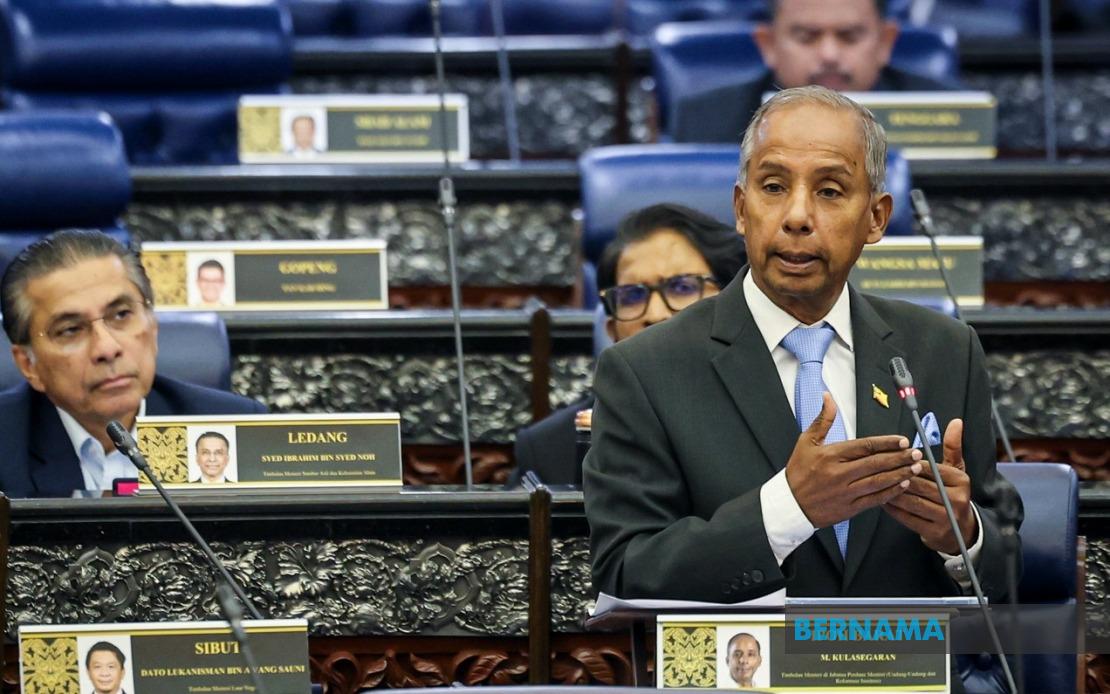
The Malaysian government has initiated a comprehensive review of Section 97 of the Child Act 2001 with the aim of introducing clearly defined detention periods for individuals convicted of serious offences while still children. M. Kulasegaran, Deputy Minister in the Prime Minister's Department (Law and Institutional Reform), outlined this policy direction during parliamentary Question Time, emphasizing the need to balance competing interests: delivering justice to victims, protecting public safety, and creating genuine rehabilitation pathways for young offenders.
The legislative examination follows significant criminal law reforms undertaken in 2023, when parliament abolished the mandatory death penalty and automatic life imprisonment. That landmark shift prompted authorities to establish a specialized committee tasked with reviewing related provisions that had become inconsistent with Malaysia's evolving approach to juvenile justice. Kulasegaran indicated that the committee has convened multiple times and is moving toward concrete legislative proposals that would amend Section 97 and establish what he characterized as a "fixed detention period" framework.
Central to the government's reasoning is a troubling reality that has emerged during prison inspections and inmate interviews. During recent visits to correctional facilities in Semporna and Sandakan in Sabah, Kulasegaran encountered individuals who entered the system as teenagers but have now spent nearly two decades behind bars with no knowledge of when they might be released. One particularly striking case involved an inmate who was only 17 years old when convicted and has now served almost 25 years in detention. Kulasegaran emphasized the human cost of this indefinite incarceration, noting that such long-term detainees have become entirely disconnected from contemporary life, lacking familiarity with basic modern technology and society.
Presently, 40 individuals remain incarcerated under Section 97 provisions. These offenders were convicted of crimes serious enough to warrant capital punishment under normal circumstances, but the law protects minors from execution. Instead, courts impose detention at the pleasure of the King or State Ruler—a discretionary mechanism that creates uncertainty about release dates and rehabilitation milestones. This legal framework, while intended to provide protective oversight, has resulted in cases where young offenders effectively serve sentences with no defined endpoint, creating both humanitarian concerns and questions about rehabilitation effectiveness.
The original statutory language of Section 97 reflects principles established decades ago, when capital punishment for juvenile offenders was routine across many jurisdictions. The provision mandates that courts cannot impose death sentences on individuals who were children at the time of committing their offence. Instead of execution, the court orders detention during the pleasure of the monarchy—a formulation borrowed from Commonwealth legal traditions but one that has produced unintended consequences when combined with Malaysia's existing sentencing practices. The absence of sentencing guidelines or maximum detention periods has left many such offenders in legal limbo.
This initiative aligns with Malaysia's international human rights commitments, particularly obligations under the Convention on the Rights of the Child (CRC), which emphasizes rehabilitation and proportionate detention for juvenile offenders. The review acknowledges that while public safety and victim protection remain paramount, the current indefinite detention approach may not serve the long-term interests of either society or the offenders themselves. The government has framed the amendment process as seeking equilibrium among these sometimes competing priorities rather than prioritizing any single objective.
The policy discussion emerged during parliamentary exchanges focused on implementation challenges surrounding Section 97. Dr Abd Ghani Ahmad, representing the PH-Jerlun constituency, raised questions about how the government was managing the tension between victim-centered justice and child rehabilitation principles, while also meeting international treaty obligations. His question reflected broader concerns within civil society about whether Malaysia's juvenile justice system adequately balances punishment with the developmental needs of young offenders and their potential for eventual reintegration.
For Malaysia and the broader Southeast Asian region, this legislative review represents a significant moment in criminal justice evolution. Many countries in the region are grappling with similar questions about how to treat serious crimes committed by juveniles—a category that includes everything from gang-related violence to drug trafficking. Malaysia's approach, which explicitly links sentencing reform to treaty obligations and practical human outcomes, offers a model that other nations might study. The emphasis on fixed detention periods addresses a key criticism leveled at discretionary systems: they can produce vastly different outcomes for similar crimes based on factors unrelated to the offence or offender characteristics.
The practical implementation of clearer detention frameworks will require detailed legislative drafting. Policymakers must determine appropriate maximum sentences for different offence categories, establish mechanisms for sentence review and early release consideration, and create rehabilitation programming that actually functions within correctional settings. The committee's deliberations will likely examine international comparative law, examining how other Commonwealth nations and developed democracies have structured juvenile sentencing following abolition of capital punishment.
Kulasegaran's comments signal that the MADANI Government views this review as integral to its broader human rights agenda. By explicitly connecting juvenile justice reform to Malaysia's international commitments and to practical observations from prison visits, the government has positioned the amendment as serving national interests in creating a more rational, humane, and effective criminal justice system. The emphasis on "striking a balance" suggests that the final legislative proposals will not swing dramatically toward either lenient or punitive extremes, but rather seek a middle ground supported by evidence and comparative international practice.
The timing of this initiative also reflects changing public attitudes. Older conceptions of juvenile crime punishment emphasized deterrence and retribution; contemporary approaches increasingly recognize that most young offenders—even those convicted of serious crimes—possess genuine rehabilitation potential. By fixing detention periods while maintaining public protection mechanisms, Malaysia can signal that it takes juvenile crime seriously while also acknowledging that indefinite incarceration serves neither justice nor rehabilitation objectives. This recalibration will likely influence how courts approach sentencing, as judges will have clearer guidance about appropriate durations and release eligibility criteria.

