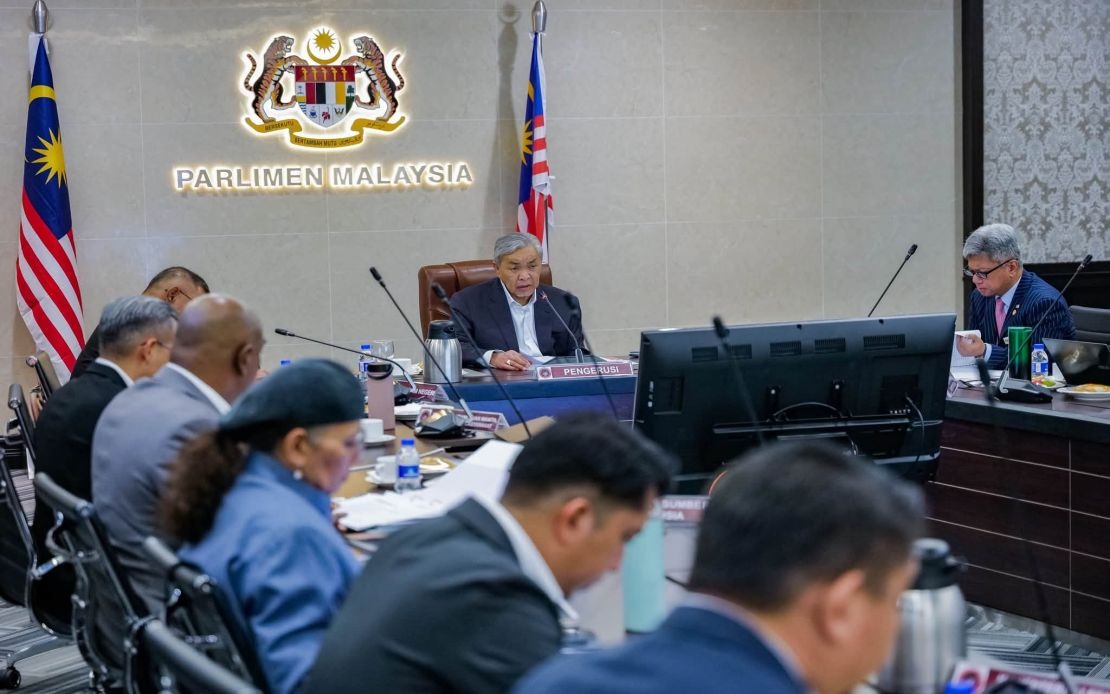
Malaysia faces mounting pressure to refine its approach to refugee management, balancing compassionate obligations with pressing security imperatives, according to Deputy Prime Minister Datuk Seri Dr Ahmad Zahid Hamidi. Speaking after overseeing a high-level policy review, he underscored the urgency of establishing clearer frameworks as the world grapples with unprecedented displacement figures. His remarks reflect growing recognition within Kuala Lumpur's policymaking circles that hosting refugee populations—while a humanitarian responsibility—demands equally rigorous safeguarding mechanisms to protect citizens and maintain public stability.
The global context underscoring his position is starkly troubling. More than 122 million individuals have been forcibly uprooted from their homes due to escalating conflicts and regional instability, a figure that continues to climb with little prospect of reversal. This represents one of the most severe humanitarian crises of the modern era, with implications stretching far beyond conflict zones. For Southeast Asian nations like Malaysia, which sits on major migration corridors and shares porous borders with multiple countries, the ripple effects are tangible and immediate. The region has become an unintended destination for populations fleeing Myanmar, Afghanistan, Syria, and other volatile regions, placing substantial strain on already stretched government resources and public services.
Ahmad Zahid's framing of refugee management as inseparable from national security reflects a recalibration in how Kuala Lumpur views its obligations. Rather than treating humanitarian concerns and security interests as opposing forces, his comments suggest officials now recognize these dimensions as mutually reinforcing. Sound refugee policies, properly administered and carefully monitored, can simultaneously honour international humanitarian law and protect communities from legitimate security vulnerabilities. This nuanced positioning matters for Southeast Asia, where policymakers have historically struggled to articulate how refugee hosting duties align with border management and counterterrorism operations.
The Deputy Prime Minister's recent oversight of the 6th Meeting of the High-Level Committee on the Management of Refugees and Asylum Seekers signals active governmental engagement with these complex questions. The committee's agenda centred on evaluating existing policy implementations and evaluating whether current mechanisms serve Malaysia's strategic interests adequately. This institutional focus suggests the government recognises gaps in current arrangements and is pursuing targeted reforms rather than wholesale policy overhauls. For refugee advocacy groups and humanitarian organisations operating in Malaysia, such reviews offer both opportunities and risks—the chance to influence policy direction against potential tightening of access provisions.
A specific priority emerging from the committee's deliberations involves the Refugee Registration Document (DPP), which serves as the primary mechanism for identifying and tracking displaced populations within Malaysian territory. Strengthening this system's effectiveness addresses multiple government concerns simultaneously: it enables better demographic tracking, facilitates access to services, and provides authorities with improved visibility into who is present in Malaysian communities. For Malaysia's often-overwhelmed immigration and social services infrastructure, more efficient registration processes could translate into reduced administrative burden while simultaneously enhancing overall public administration.
Education and healthcare access for refugee populations represent another focal point in the government's reassessment. Currently, guidelines governing these essential services remain fragmented across multiple agencies, creating inefficiencies and inconsistencies. The committee's intention to streamline these provisions—ensuring legal compliance while improving administrative clarity—reflects a pragmatic recognition that confused, overlapping regulations serve neither refugees nor government authorities effectively. For children in refugee families particularly, clearer pathways to schooling could mean the difference between educational opportunity and generational stagnation. Similarly, coordinated healthcare access reduces public health risks while ensuring vulnerable populations receive necessary treatment.
The intersection of refugee policy with Malaysia's broader sovereignty concerns cannot be overlooked. Ahmad Zahid's emphasis on preserving national sovereignty while honouring humanitarian responsibilities reflects anxieties about whether international pressure might eventually compel Kuala Lumpur to adopt policies inconsistent with domestic preferences. Malaysia remains one of the few Southeast Asian nations not formally signatory to the 1951 Refugee Convention, a deliberate choice reflecting concerns about sovereignty limitations. The current policy review thus occurs within this broader context of Malaysia seeking to craft refugee arrangements that feel domestically legitimate while maintaining some engagement with humanitarian principles and international norms.
For Malaysian citizens, the government's latest positioning on refugee matters carries practical implications across multiple domains. Housing pressures, labour market competition, and public service accessibility all intersect with refugee population distributions. Communities hosting significant refugee concentrations often report strain on local infrastructure and services, yet simultaneously benefit from labour contributions and economic activity. The government's attempt to develop more systematic management frameworks aims partly to ensure refugee populations integrate sustainably rather than creating pressure points that alienate host communities or strain local capacity.
Regional dynamics further complicate Malaysia's refugee equations. Neighbouring countries including Thailand and Indonesia face similar pressures, though with varying policy responses and institutional capacities. Malaysia's approach increasingly influences regional refugee management standards, particularly as ASEAN nations face demands from international bodies to harmonise humanitarian practices. Any Malaysian policy evolution, whether restrictive or expansive, sends signals throughout Southeast Asia that either normalise or challenge particular approaches to displaced populations.
The government's emphasis on legal compliance and coordinated agency action suggests recognition that ad hoc, inconsistent refugee management creates more problems than it solves. Refugee populations existing in legal grey zones become vulnerable to exploitation, traffickers, and labour abuse, while simultaneously complicating government enforcement efforts. Systematic registration, clear service pathways, and coordinated inter-agency protocols represent investments in order and predictability—outcomes benefiting both state administration and refugee welfare simultaneously.
Looking forward, Ahmad Zahid's comments indicate the government intends pursuing incremental refinement of existing frameworks rather than dramatic policy reversals. This gradualist approach may frustrate humanitarian advocates seeking more expansive refugee access provisions, yet reflects political calculations about public acceptance and administrative capacity. For Malaysia, the challenge remains threading a needle between honouring humanitarian impulses and managing legitimate security and administrative concerns—an equilibrium that remains perpetually precarious in an era of unprecedented global displacement.

