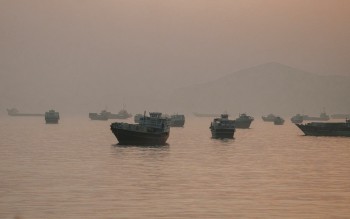
Economy Minister Akmal Nasrullah Mohd Nasir has sounded an urgent alert to Malaysian households and the business community, urging them to drop any sense of complacency over the renewed closure of the Strait of Hormuz by Iran. Speaking through a video message on his official TikTok account on July 15, the minister cautioned that the nation's economic exposure to geopolitical turmoil in distant regions cannot be ignored, notwithstanding scattered reports that a handful of commercial vessels continue to navigate the vital waterway.
The warning comes in the wake of United States military strikes on Iran on July 8, which prompted Tehran's fresh blockade declaration. While the actual enforcement remains partial—with limited shipping traffic still passing through—Akmal Nasrullah emphasised that such intermittent activity should not lull policymakers, businesses, or citizens into a false sense of security. The reality, he underscored, is that Malaysia's tightly integrated economy remains vulnerable to shocks originating thousands of kilometres away, a fundamental truth that demands serious strategic consideration rather than wishful thinking.
The minister outlined the cascading pressures that would likely materialise across multiple economic dimensions. Crude oil prices, already subject to volatile trading in global markets, would face fresh upward momentum. Transportation costs would climb due to longer shipping routes and extended transit times forced on vessels unable to pass through Hormuz. The prices of raw materials sourced internationally would surge, compressing margins for domestic manufacturers and producers. Food import costs, particularly critical for a nation that depends heavily on foreign agricultural supplies, would inch higher, directly affecting affordability for ordinary Malaysians at the supermarket checkout.
Akmal Nasrullah stressed that the government, private sector, and individuals must collectively adopt a vigilant posture and develop adaptive strategies. Complacency, he cautioned, was a luxury no stakeholder could afford when geopolitical conflict and military operations in West Asia showed no signs of de-escalation. The minister's framing suggests that preparation is not merely prudent but essential—a civilisational call to readiness rather than a routine policy advisory.
One of the minister's most instructive warnings concerned the intricate, interconnected nature of modern supply chains—a reality often poorly understood by the general public and sometimes underestimated by policymakers. He illustrated this complexity through a concrete example: if plastic manufacturers face sustained pressure from supply disruptions or cost inflation, the effects do not remain confined to that single sector. Instead, they radiate outward like ripples across a pond, affecting food packaging manufacturers dependent on plastic inputs, electronics and electrical component suppliers, automotive producers relying on plastic parts, medical device fabricators, construction material suppliers, agriculture-related businesses, and exporters of finished manufactured goods.
This systemic interdependence means that a disruption in one seemingly minor input can trigger a domino effect of cascading failures across seemingly unrelated industries. A shortage of plastic feedstock, for instance, could simultaneously constrain food safety through packaging shortages, delay vehicle production through missing interior components, complicate agricultural output through greenhouse film scarcity, and throttle export competitiveness through logistics and packaging cost inflation. The minister's analysis suggests that Malaysia's policymakers must move beyond sector-specific thinking and adopt an integrated, ecosystem-level approach to economic resilience.
The minister argued that if the West Asian crisis extends over a prolonged period, the mounting pressures on global supply chains would intensify substantially. Industries accustomed to just-in-time manufacturing, minimal inventory buffers, and efficient cross-border logistics would face mounting strain. Without deliberate countermeasures, these pressures would eventually transmit to consumers through higher prices for goods ranging from food to electronics to automobiles—effectively functioning as a hidden tax on household purchasing power and living standards.
Akmal Nasrullah called for a strategic pivot toward supply chain ecosystem resilience. This implies that Malaysian businesses and policymakers must examine not merely their direct suppliers and customers, but the entire web of dependencies that support their operations. Such scrutiny should identify critical vulnerabilities, assess alternative sourcing arrangements, and consider selective inventory positioning for essential materials. The minister's implicit message was that reducing dependence on external circumstances—whether through supply diversification, localisation of critical inputs, or strategic stockpiling—represents a rational economic strategy in an increasingly turbulent geopolitical environment.
For Malaysia specifically, the Hormuz crisis underscores a strategic vulnerability rooted in the nation's deep integration into global trade networks. As a major petrochemicals exporter, electronics hub, and agricultural importer, Malaysia sits at the intersection of multiple supply chains that depend heavily on uninterrupted Middle Eastern oil flows and secure shipping routes. The Strait of Hormuz, through which approximately one-third of globally-traded seaborne oil transits, represents a critical chokepoint whose disruption reverberates across energy costs, manufacturing inputs, and ultimately consumer prices throughout Southeast Asia.
The minister's warning also reflects Malaysia's learning from past crises. The 2022 energy shock following Russia's invasion of Ukraine demonstrated that geopolitical events thousands of kilometres away can rapidly inflate domestic fuel and food prices, compress household budgets, and complicate monetary policy choices for the central bank. The Hormuz closure risk, while originating from a different region and conflict, follows a similar pattern of distant instability producing immediate local economic consequences.
Moving forward, Malaysia's response will likely involve both precautionary measures and structural adjustments. On the immediate front, relevant agencies may coordinate with businesses to ensure strategic reserves of critical inputs and to communicate contingency plans. Longer-term, the crisis underscores the value of supply chain diversification, investment in alternative logistics routes, support for import-substitution in critical sectors, and enhanced coordination between government, industry, and financial institutions. The Strait of Hormuz episode, whether it resolves quickly or persists, serves as a timely reminder that in an interconnected world, economic security demands constant vigilance and proactive adaptation.

