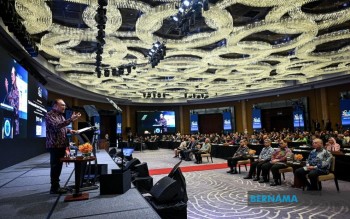
Malaysia must urgently construct its own sovereign cloud infrastructure to shield critical security data and personal information from foreign access, according to Prime Minister Datuk Seri Anwar Ibrahim, who outlined the strategy as Southeast Asia grapples with deepening reliance on digital technologies and the geopolitical tensions they create. Speaking at the 39th Asia-Pacific Roundtable in Kuala Lumpur on July 2, Anwar positioned the sovereign cloud as a pragmatic middle path—one that would allow the country to maintain its commitment to global digital investment and openness while protecting Malaysian interests in an era of competing tech superpowers.
The Prime Minister's remarks zeroed in on the US Cloud Act, a 2018 legislation that grants American authorities broad powers to demand data from US-based technology companies operating anywhere in the world. Anwar highlighted President Trump's assertion that companies incorporated in the United States retain the right to access and retrieve data from countries in which they operate, a position that has rattled policymakers across Asia who fear their citizens' information and government secrets could be intercepted without legal recourse. Rather than condemn such practices as illegitimate, Anwar adopted a pragmatic tone, suggesting that while such decisions reflect American sovereignty, Malaysia cannot remain passive and must take defensive measures to protect its own strategic interests.
The sovereign cloud concept Anwar described would function as a walled garden of sorts, equipped with firewalls and security protocols designed to isolate Malaysia's most sensitive information from overseas scrutiny. This infrastructure would create a digital fortress for data classified as critical to national security and personal information of Malaysian citizens, ensuring that such records remain under Malaysian jurisdiction and control. The approach reflects a growing awareness among Southeast Asian governments that data sovereignty—the principle that data generated within a nation's borders should remain subject to that nation's laws—is rapidly becoming a cornerstone of national security strategy in the digital age.
Yet Anwar was careful to frame this defensive posture within a broader commitment to economic openness and technological progress. He acknowledged that the world has become too interconnected for any nation to achieve complete digital isolation, and that attempting to do so would be economically counterproductive and fundamentally at odds with Malaysia's identity as a free, democratic society. The sovereign cloud would therefore coexist with continued acceptance of global digital investments and cross-border data flows in non-sensitive sectors. This nuanced position reflects the delicate balancing act that middle-income Southeast Asian nations must perform: protecting sovereignty without sacrificing the economic benefits of participating in the global digital economy.
The Prime Minister also drew attention to the darker side of digital openness, noting that while the free exchange of information and ideas remains vital, it has simultaneously enabled new forms of abuse. Social media platforms and digital networks have become vectors for political manipulation, economic fraud, sexual exploitation, and other harms that disproportionately affect vulnerable populations including young Malaysians. Anwar stressed that governments have a legitimate responsibility to establish safeguards against such abuses, framing digital governance not as a restriction on freedom but as a necessary complement to it—akin to how societies regulate physical spaces to prevent harm while preserving liberty.
This multifaceted approach to digital governance reflects Malaysia's positioning within the broader strategic competition between the United States, China, and other technological powers. Anwar noted that Malaysia remains an attractive investment destination for technology companies and capital from the US, China, and Germany, suggesting that the country's neutral stance and openness to engagement with multiple partners enhances its appeal. The sovereign cloud initiative can be understood partly as a signal to all foreign investors that Malaysia welcomes their participation while insisting on maintaining ultimate control over its most sensitive assets—a message designed to reassure investors that political risk remains manageable.
Central to Anwar's vision is the principle of ASEAN centrality, which he emphasized must extend beyond traditional foreign policy frameworks to encompass digital governance and technological sovereignty. For Malaysia and other ASEAN members, collective strength matters as much as individual capability. Rather than each Southeast Asian nation attempting to build competing sovereign cloud systems or digital infrastructure independently, regional cooperation could reduce costs and increase effectiveness. This framing also positions Malaysia as a responsible middle power committed to regional integration rather than zero-sum competition with neighbours—an important consideration given the trust issues that have sometimes complicated ASEAN technological cooperation.
Anwar explicitly rejected the notion that Malaysia should aspire to great-power status, a refreshing departure from nationalist rhetoric that sometimes pervades Southeast Asian political discourse. Instead, he characterized Malaysia as a small country whose strength derives not from unilateral military or economic might but from its deep integration within ASEAN and its ability to maintain productive relationships with all major powers. This philosophy has practical implications for digital policy: rather than attempting to rival the technological capabilities of China or the United States, Malaysia should focus on building resilient, secure systems adapted to regional needs and values.
The sovereign cloud proposal also addresses anxieties that have surfaced across Southeast Asia regarding the concentration of data power in the hands of a few Western and Chinese technology corporations. By ensuring that certain categories of data remain under local control, Malaysia would reduce its dependency on foreign platforms and create space for the development of homegrown digital services and expertise. This could stimulate local innovation in cloud computing, cybersecurity, and related fields, generating economic opportunities while enhancing national security. The initiative aligns with broader Southeast Asian efforts to develop indigenous digital capabilities and reduce technological dependency.
Looking forward, the implementation of a Malaysian sovereign cloud will require significant investment in digital infrastructure, cybersecurity expertise, and legal frameworks governing data management and privacy. It will also demand close coordination between government agencies, private sector technology companies, and regional partners. The success of such an initiative depends not only on technical competence but also on establishing public trust that the government will manage sensitive data responsibly and in accordance with democratic principles and the rule of law. Any perception that sovereign cloud infrastructure could be weaponized for political surveillance or repression would undermine the initiative's legitimacy and effectiveness.
Anwar's remarks signal that Malaysia intends to navigate the digital geopolitical landscape with both eyes open—acknowledging the benefits of global connectivity while refusing to surrender control over critical assets and personal information to foreign governments or corporations. The sovereign cloud represents a practical tool for achieving that balance, though its ultimate success will depend on execution, regional cooperation, and the maintenance of public confidence in institutions. As Southeast Asia continues to digitalize rapidly, other nations in the region are likely watching closely to see whether Malaysia's sovereign cloud model proves viable and worthy of emulation.

