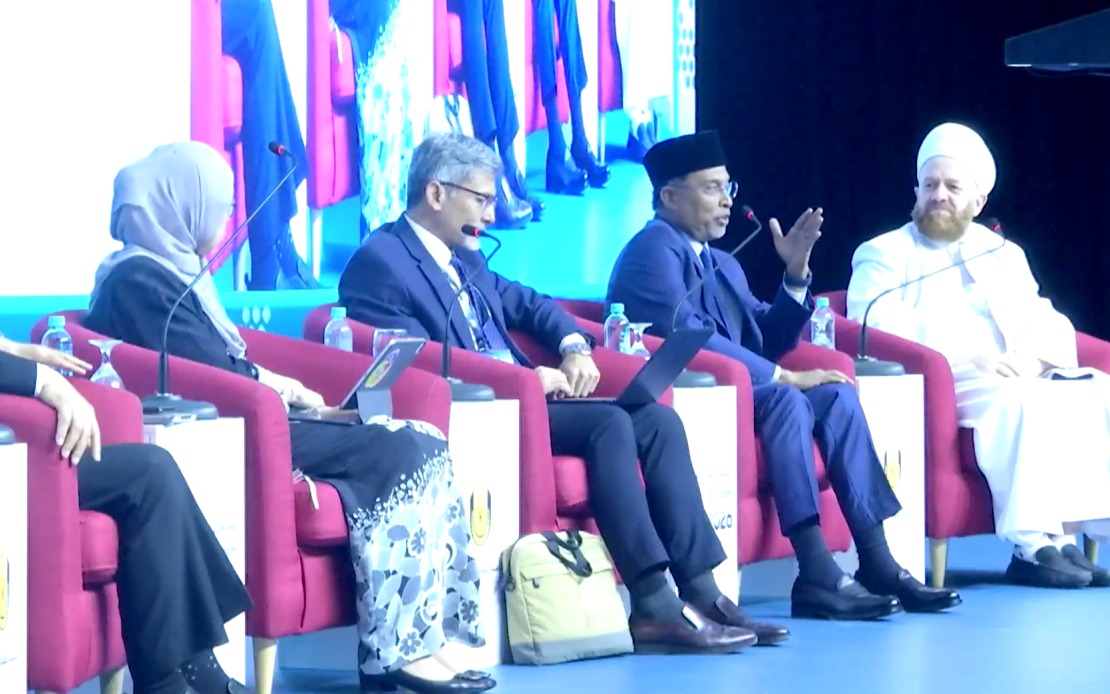
Higher Education Minister Datuk Seri Dr Zambry Abd Kadir has underscored the strategic importance of embedding artificial intelligence and cutting-edge technologies into Malaysia's university system, framing technological adoption as inseparable from building the nation's human and intellectual resources. Speaking at the 8th World Conference on Islamic Thought and Civilisation in Ipoh, Zambry stressed that as global uncertainties persist and innovation accelerates, Malaysian institutions must position themselves to develop graduates who understand both the capabilities and limitations of emerging technologies.
The Ministry of Higher Education has responded to this imperative by drafting an ambitious roadmap spanning 2026 to 2035, designed to orchestrate equilibrium between three interconnected pillars: technological innovation, workforce development, and the cultivation of ethical foundations. This long-term strategic framework reflects recognition that technological advancement divorced from moral grounding risks producing technically proficient but ethically adrift professionals. The blueprint signals Malaysia's determination to compete globally while maintaining values-driven education.
Zambry's remarks highlighted a critical tension within modern higher education: the extraordinary power of AI systems to process data, generate solutions, and optimize outcomes stands in stark contrast to their inherent inability to instil character, judgment, or moral reasoning. While algorithms can deliver precision and speed, they cannot teach integrity or conscience. This distinction underpins the minister's call for educational institutions to resist the temptation to chase technological capability at the expense of human formation. The challenge, he suggested, lies in designing curricula that harness AI's analytical power while prioritizing the philosophical and ethical questions that define responsible innovation.
The shift from traditional STEM to STEAM frameworks exemplifies the practical direction this philosophy is taking. By incorporating the arts and liberal studies alongside science, technology, engineering, and mathematics, universities can nurture graduates with technical competence grounded in humanistic understanding. Zambry cited Universiti Teknologi Petronas as a case study, where engineering programmes deliberately require students to pursue coursework beyond their technical specialization. Such interdisciplinary exposure shapes personality and fosters the kind of critical thinking that enables professionals to question not merely how technology works, but whether it should be deployed in particular contexts.
For Malaysian educators and policymakers, the integration challenge extends beyond curriculum design. It demands institutional buy-in from leadership, faculty retraining, and resource allocation toward programmes that might seem tangential to technical training but prove essential for ethical decision-making. Universities must create spaces where engineering students engage with philosophy, where computer scientists study history and ethics, and where business graduates examine the social implications of their decisions. This represents a wholesale reconceptualization of what constitutes a complete education.
The regional context amplifies these considerations. Southeast Asia is experiencing rapid digital transformation, attracting substantial AI investment and talent. Malaysia, as a middle-income nation with aspirations to become a technology hub, faces mounting pressure to produce graduates competitive in this landscape. Yet competition based solely on technical credentials risks a race to the bottom, where nations vie to produce cheaper, faster-trained programmers without the reflective capacity to address AI's societal challenges—algorithmic bias, privacy erosion, labour displacement, and digital inequality. The ministerial approach suggests Malaysia is opting for a differentiated strategy: positioning its graduates as ethically informed technologists capable of responsible innovation.
The emphasis on moral and ethical integration into AI education also reflects Malaysia's particular social and religious context. At a conference dedicated to Islamic thought and civilisation, Zambry's remarks resonated with longstanding Islamic intellectual traditions emphasizing that knowledge and ethics are inseparable. The integration of values into technical education thus aligns with both contemporary global concerns about AI governance and Malaysia's cultural and spiritual heritage, potentially offering a distinctive positioning for Malaysian institutions in the global education marketplace.
Implementing this vision demands concrete mechanisms. Universities will need to revise admissions criteria to attract educators comfortable with interdisciplinary teaching, develop assessment frameworks that measure ethical reasoning alongside technical proficiency, and establish forums where technologists and ethicists collaborate on curriculum design. Professional bodies and industry partners must signal that they value graduates combining technical skill with moral clarity, creating labour market incentives for the educational system to persist with this demanding approach even when purely technical alternatives appear faster and cheaper.
The 10-year horizon itself merits attention. This timeframe suggests ministry planners recognize that educational reform cannot be rushed; embedding new values and approaches throughout the higher education ecosystem requires sustained commitment and resources. By 2035, Malaysia's universities should be producing cohorts of AI specialists, engineers, and technologists who navigate ethical dilemmas with sophistication, who understand the historical and social contexts of technological change, and who can articulate why certain innovations should or should not be pursued. Such graduates would represent genuine intellectual capital—professionals capable of driving innovation while also questioning and guiding it responsibly.
For Malaysian employers across sectors from finance to manufacturing to defence, this educational reorientation offers significant advantages. A workforce trained to think critically about technology's implications, rather than simply implementing systems, proves more adaptive to unexpected challenges and better positioned to identify risks before they metastasize into crises. As Malaysia competes for regional leadership in the digital economy, the cultivation of ethically informed technological expertise may prove a sustainable competitive advantage that commoditized technical credentials alone cannot provide.

