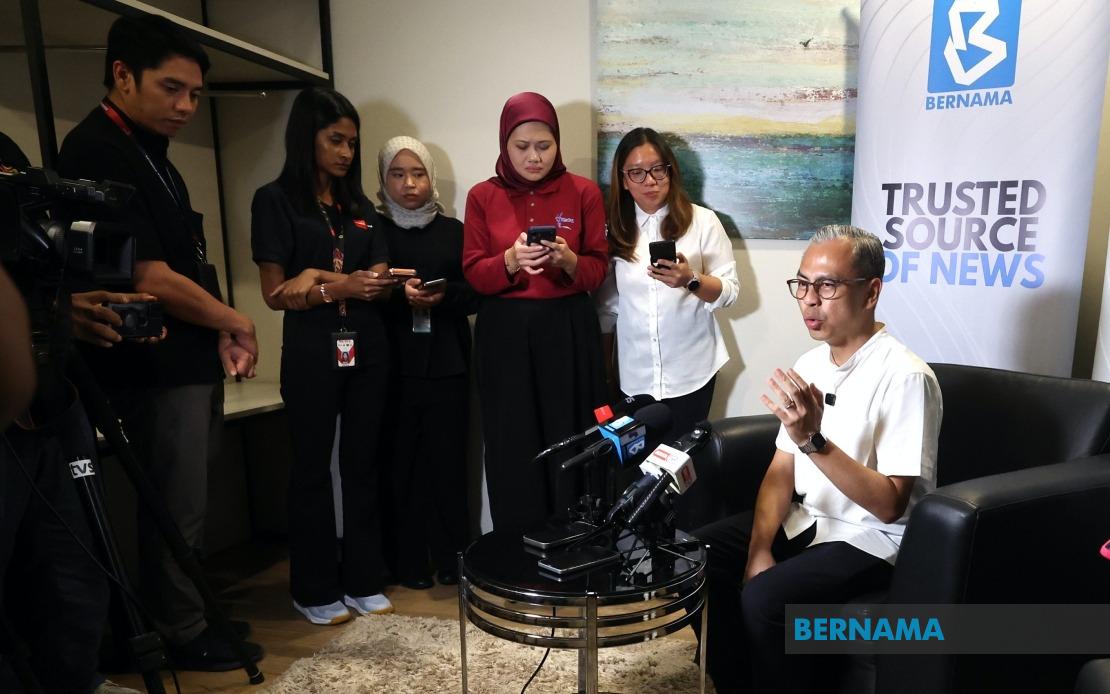
The Malaysian Media Council must be developed into a robust self-regulatory institution capable of maintaining ethical standards across the country's media landscape, Communications Minister Datuk Fahmi Fadzil said during a visit to the Bernama operations centre in Johor Bahru on July 7. The government intends to provide targeted support during the formative years of the newly established council, recognising that self-regulation requires institutional capacity-building and industry cooperation to function effectively.
Fahmi's call comes as Prime Minister Datuk Seri Anwar Ibrahim has restructured how complaints against journalists from recognised media organisations will be processed. Rather than triggering automatic investigations or legal proceedings, allegations must now be directed to the Malaysian Media Council first, establishing a preliminary review mechanism designed to ensure fairness and transparency in how media practitioners are evaluated. This procedural shift represents a significant departure from previous approaches and aims to shield journalists from unwarranted prosecution while maintaining accountability standards.
The government strategy centres on expanding the council's membership base, viewing wider participation from both traditional and digital media organisations as fundamental to the body's credibility and effectiveness. A larger membership creates multiple advantages: it distributes responsibility for ethical oversight across the industry itself rather than concentrating authority with state institutions, it allows media organisations to influence standards through peer dialogue, and it generates collective pressure for compliance through industry norms rather than regulatory force alone. Fahmi emphasised that more extensive membership would enable media-related disputes to be resolved through industry mechanisms rather than court systems or government intervention.
A critical dimension of this framework involves bringing social media platforms into Malaysia's self-regulatory architecture. Unlike traditional news organisations, which typically employ editorial staff trained in journalistic ethics, social media companies operate globally standardised content policies that often fail to account for Malaysia's specific cultural, religious, and political sensitivities. Fahmi noted that while most recognised media outlets adhere to established ethical principles, social media content frequently circulates without consideration for local context or potential harm.
The minister illustrated this concern with a recent case in Banting, where a teenager stabbed a student and graphic images of the victim alongside investigative details were rapidly shared across social media platforms. Such incidents demonstrate how digital platforms, despite maintaining their own community standards, frequently distribute sensitive information that violates journalistic norms and can compromise police investigations while causing distress to victims and families. By integrating social media companies into the Malaysian Media Council, the government hopes to encourage these platforms to develop mechanisms that account for Malaysian legal and cultural requirements when moderating content distributed within the country.
This push toward industry self-regulation rather than government censorship aligns with international efforts to enhance media freedom while maintaining standards. Malaysia has faced criticism in international media freedom rankings, with rankings influenced by perceptions of government pressure on journalists and media organisations. By establishing a credible, industry-led regulatory system, Malaysia aims to demonstrate that media accountability can operate independently of state control, potentially improving the country's standing in indices such as the Media Freedom Index. Fahmi explicitly linked the council's development to this strategic objective, viewing self-regulation as a pathway toward improved international perception of Malaysian press freedoms.
The involvement of Bernama as a venue for this announcement carries symbolic weight. As Malaysia's national news agency, Bernama has historically served as a bridge between government information flows and public discourse. The agency's operations centre provides a platform where communications policy and media infrastructure development can be discussed with journalists and media professionals, underscoring the government's framing of this initiative as industry-collaborative rather than state-imposed. The presence of Bernama's chief executive officer and editorial leadership alongside Communications and Multimedia Commission officials reinforced this message of institutional coordination.
Implementing this self-regulatory framework presents practical challenges. Social media platforms operate within business models fundamentally different from traditional news organisations, prioritising engagement metrics and algorithmic distribution over editorial judgment. Convincing these companies to adopt country-specific content standards requires either regulatory incentives or commercial pressures that make compliance profitable. Additionally, determining which platforms qualify for Malaysian Media Council membership and establishing enforcement mechanisms for council decisions remain unresolved questions that will shape the framework's real-world effectiveness.
The strategic timing of this initiative reflects broader government priorities regarding information governance. As Malaysia approaches electoral cycles and navigates complex political transitions, controlling misinformation while protecting legitimate journalism becomes increasingly important. A self-regulatory council offers the government a mechanism to influence media standards without appearing to impose direct censorship, meeting international expectations for press freedom while maintaining leverage over content narratives. For media organisations themselves, council membership provides protection against arbitrary state action while establishing boundaries on acceptable journalism practices.
For Southeast Asian observers, Malaysia's approach demonstrates how governments in the region are developing alternatives to either completely unrestricted media environments or heavy-handed direct regulation. The Malaysian Media Council model suggests that industry self-regulation, when properly resourced and genuinely independent, may offer a middle path. However, its success depends entirely on whether the council functions with genuine autonomy or becomes a vehicle through which government preferences are formalised as industry standards. This distinction will determine whether the council strengthens press freedom or merely provides more sophisticated constraints on media independence.
The inclusion of social media platforms represents the most innovative element of this framework. Digital platforms have consistently resisted national regulation, arguing that global policies prevent country-specific exceptions. By framing platform participation in the Malaysian Media Council as voluntary self-regulation rather than legal requirement, the government creates incentives for compliance without triggering the regulatory resistance that mandatory approaches encounter. Whether platforms will genuinely embrace this participation or merely maintain symbolic membership while continuing existing practices remains uncertain, but the attempt reflects evolving global discussions about platform accountability in specific national contexts.

