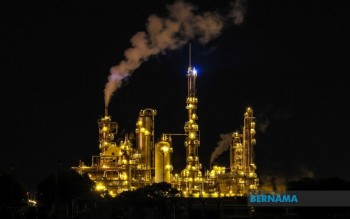
Prime Minister Datuk Seri Anwar Ibrahim has signalled the government's intention to examine options for creating a national petroleum reserve stock as part of efforts to fortify Malaysia's energy security in an increasingly unstable global environment. This announcement has prompted economists to weigh in on how such an initiative should be structured, with caution emerging as the dominant theme among policy analysts concerned about fiscal sustainability.
Mohd Sedek Jantan, director of investment strategy and country economist at IPPFA Sdn Bhd, has cautioned against pursuing the type of expansive strategic petroleum reserves maintained by developed economies. Countries such as the United States and Japan operate reserves of enormous scale, reflecting their massive capital resources and strategic positioning in global energy markets. Malaysia, by contrast, operates under tighter budgetary constraints and faces a distinct set of energy security vulnerabilities that demand a customized approach rather than imitation of foreign models.
The fundamental tension underlying Malaysia's petroleum reserve decision centres on opportunity costs within a constrained fiscal envelope. Public funds directed toward energy infrastructure represent resources unavailable for other pressing national priorities including healthcare, education infrastructure and food security programmes. This allocation challenge is particularly acute given Malaysia's development priorities and the competing demands placed on government revenue. Any petroleum reserve project must therefore satisfy rigorous economic justification rather than proceeding on strategic intuition alone.
According to Mohd Sedek, the critical analytical question differs from what many policymakers initially frame. The relevant inquiry is not whether Malaysia should establish the largest feasible reserve, but rather what reserve capacity aligns rationally with the country's fiscal position and its specific exposure to petroleum supply disruptions. This distinction matters enormously because it shifts focus from ambitious targets toward optimized outcomes, prioritizing effectiveness per ringgit spent rather than sheer stockpile volume.
The economist's position acknowledges genuine risks from petroleum supply interruptions. Should a major geopolitical crisis or environmental catastrophe dramatically disrupt global petroleum flows, the economic costs rippling through Malaysia's economy could exceed by substantial margins the investment required to maintain strategic reserves. This prospect creates a legitimate case for reserve establishment, but one that must be weighed carefully against documented historical instances when expensive energy security infrastructure sat underutilized, yielding poor returns on capital.
Mohd Sedek advocates for a phased implementation strategy preceded by exhaustive analytical work. His recommended sequence begins with comprehensive risk modelling to establish the reserve size that would meaningfully mitigate Malaysia's specific vulnerability profile while remaining fiscally manageable. This assessment phase should simultaneously explore alternative financing approaches, examining whether private sector partnerships could reduce direct government expenditure while maintaining strategic control over reserve management and distribution decisions.
The phased approach also permits institutional learning and adjustment as reserve operations commence at smaller scales. Rather than committing to full implementation across all planned capacity immediately, Malaysia could establish an initial operational framework at reduced volume, permitting policymakers to evaluate performance against projections and refine operating procedures before expanding capacity. This risk-reduction strategy recognizes that large capital projects frequently encounter unforeseen implementation challenges that smaller pilot phases reveal more economically than full-scale deployment.
Crucially, Mohd Sedek emphasizes that reserve viability depends on commercial sustainability alongside energy security justification. Any reserve must be designed to function as an economically rational asset that generates returns rather than perpetually draining the budget. This requirement pushes policymakers toward reserve structures that can store petroleum during periods of weak demand and relatively low prices, then release supplies strategically during periods of supply stress when petroleum values spike, potentially creating revenue streams that offset operational expenses.
The economist's insistence on scalability within reserve design reflects awareness that energy landscapes undergo significant transformation over multi-decade horizons. Renewable energy transitions, changes in domestic petroleum consumption patterns, and shifts in regional energy trade dynamics could all substantially alter Malaysia's optimal petroleum reserve size. Infrastructure designed with inherent flexibility permits upward or downward adjustments without requiring complete reconstruction and capital loss.
Mohd Sedek's recommendations implicitly criticize reserve proposals that proceed from political aspirations rather than systematic economic analysis. His emphasis on prior cost-benefit assessment and clear articulation of the underlying economic case serves as a corrective to policy approaches that begin with decisions already made, then seek analytical validation afterward. The rigor he advocates protects Malaysia from committing scarce resources to projects that sound strategically sensible in principle but prove economically inefficient in practice.
The broader context shaping this debate involves growing recognition throughout Southeast Asia that energy security extends beyond traditional supply relationships with major producers. Geopolitical rivalries, particularly between major powers, increasingly create disruption risks that smaller regional economies must anticipate and prepare for. Malaysia's status as both a petroleum producer and significant consumer creates unique complexities that simplistic reserve models fail to address adequately.
Implementing Mohd Sedek's recommendations would require patience and analytical discipline from Malaysia's policymaking establishment. The recommended sequence—assessment, partnership exploration, pilot operations, gradual expansion—stretches across multiple years before full capacity deployment occurs. This measured timeline may frustrate political actors seeking rapid visible progress, yet it substantially reduces the likelihood of expensive errors that compromise long-term energy security objectives.
Ultimately, Mohd Sedek's framing suggests that Malaysia's petroleum reserve strategy should emphasize intelligence over scale. Rather than pursuing headline-grabbing reserve volumes comparable to larger economies, Malaysia should build a carefully sized, efficiently operated, commercially sustainable reserve that genuinely addresses the country's documented energy vulnerabilities without imposing crushing fiscal burdens or crowding out competing development priorities.

