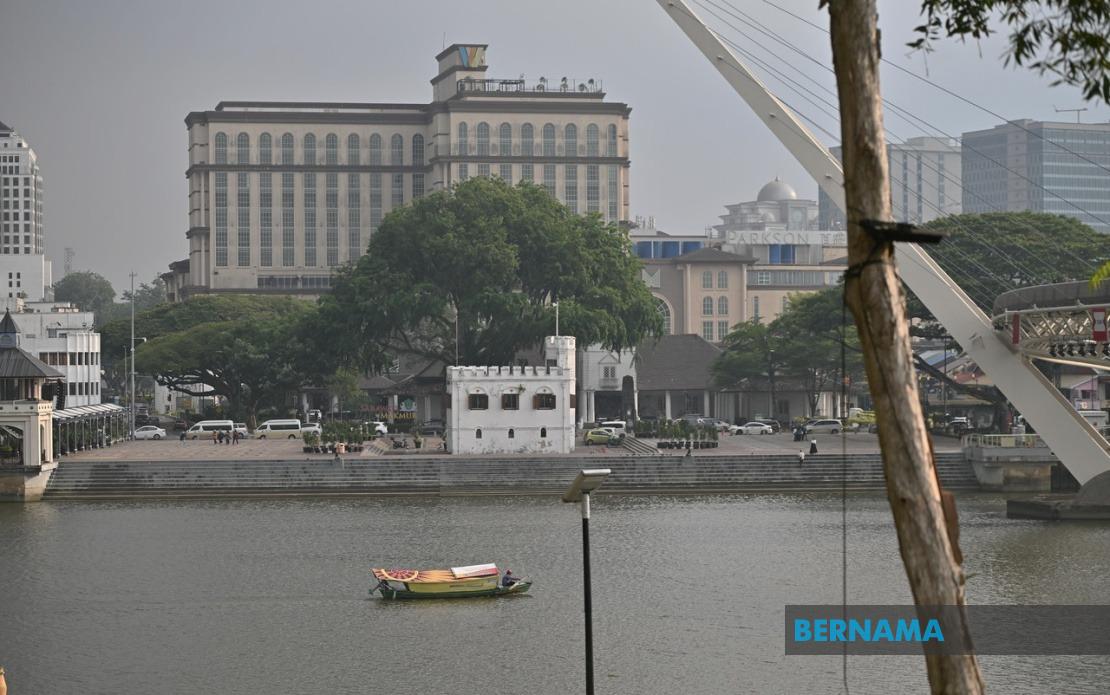
The deteriorating air quality that has forced school closures in Sarawak serves as a stark reminder that Malaysia remains vulnerable to transboundary haze despite years of experience with the problem. Tan Sri Lee Lam Thye, chairman of the Alliance for a Safe Community, has called on the government to fundamentally shift its approach from managing crises after they occur to preventing them before they develop. His intervention comes as six schools in Tebedu, Sarawak, closed their doors following Air Pollutant Index readings that exceeded 200, signalling that the region is once again facing hazardous air conditions.
The current situation underscores a critical policy gap that has persisted through multiple haze episodes over the past two decades. Malaysia has repeatedly found itself caught off guard despite predictable seasonal patterns and known risk factors. Lee's observation that the country "should not allow ourselves to be caught unprepared once again" reflects frustration with a pattern of inadequate preparation that has characterised the national response to this recurring challenge. The stakes extend far beyond temporary discomfort; transboundary haze creates genuine public health emergencies, disrupts education systems, strains healthcare resources, and imposes substantial economic costs on affected communities.
At the heart of Lee's proposed solution is the activation of the National Haze Action Plan not as an emergency response mechanism, but as a year-round preparedness framework triggered by early warning indicators. This represents a conceptual reorientation from treating haze as an occasional seasonal inconvenience to recognising it as a persistent regional disaster risk requiring continuous attention. Enhanced monitoring of hotspots, fire-prone areas, meteorological patterns, and air quality data would enable authorities to implement preventive measures while conditions remain manageable, before smoke crosses borders and affects millions of people across the region.
Regional cooperation represents perhaps the most critical dimension of any effective haze strategy, given that smoke originating from land clearing and agricultural burning in Indonesia frequently drifts across the Malacca Strait and South China Sea to affect Malaysian air quality. The ASEAN Agreement on Transboundary Haze Pollution, which all ten member states ratified by 2015, provides the institutional framework for coordinated action. However, Lee's point that the agreement exists but implementation remains weak identifies the true bottleneck. Southeast Asian governments must translate political commitments into concrete enforcement actions, investment in fire prevention infrastructure, and rapid response protocols that prevent small fires from escalating into regional crises.
A particularly concerning aspect of transboundary haze is its documented impact on regional public health and socioeconomic stability. Respiratory illnesses spike during haze episodes, placing additional burden on healthcare systems already stretched thin in many Southeast Asian nations. Schools close, disrupting education for millions of children and forcing parents to make difficult choices about childcare and work. Businesses suffer as visibility decreases, outdoor activities cease, and productivity declines. These consequences fall disproportionately on lower-income populations with less ability to purchase air filtration equipment or access premium healthcare. For Malaysia specifically, the economic costs manifest through lost productivity, healthcare expenses, and reduced tourism during peak haze seasons.
Critically, Lee emphasizes that Malaysia cannot simply wait for its neighbours to solve the problem unilaterally. Illegal open burning, peat fires, uncontrolled agricultural land clearing, and poor management of developmental land clearance within Malaysian territory contribute substantially to regional haze. Addressing these domestic sources requires stronger enforcement of environmental regulations, mandatory land management practices, and accountability mechanisms for businesses and individuals who engage in prohibited burning. The phrase "we must put our own house in order while urging our neighbours to do the same" encapsulates the balanced approach necessary for regional progress.
Institutional preparedness at the local level remains another crucial yet often overlooked element of haze management. Schools, hospitals, and workplaces require clearly documented protocols specifying when and how to respond to hazardous air quality readings. Administrators must understand trigger points for closing facilities, protocols for protecting vulnerable populations, and communication procedures for alerting staff and the public. Public education campaigns should focus not merely on providing real-time air quality information, but on helping citizens understand what different API readings mean for personal health and what protective measures are available. This educational foundation transforms haze response from government-directed crisis management into a shared community responsibility.
The ASEAN early-warning system represents an underutilised asset in regional haze prevention. These systems aggregate meteorological data, satellite imagery of hotspots, and air quality monitoring across member states, enabling rapid identification of developing fire situations and smoke trajectories. Accelerating action in response to early-warning signals, rather than waiting for hazardous air to develop, allows for more cost-effective interventions. Authorities can mobilise firefighting resources, impose burning restrictions, and coordinate cross-border air quality management before populations face exposure to unhealthy conditions. This preventive approach also facilitates more proportionate regional responses that avoid the escalation to crisis management.
Lee's assertion that prevention is fundamentally cheaper than dealing with consequences reflects both economic reality and practical wisdom. The economic cost of transboundary haze—including healthcare expenses, lost productivity, tourism disruption, and emergency response operations—vastly exceeds the investment required for comprehensive prevention infrastructure. Enhanced monitoring systems, regional coordination mechanisms, enforcement capacity for environmental laws, and public education programmes represent reasonable investments compared to the massive economic disruption caused by severe haze episodes. Yet Malaysian policymakers have historically struggled to prioritise preventive spending over reactive crisis response, partly because prevention benefits are harder to quantify and credit politically.
The transformation Lee advocates requires shifting the conceptual framing of transboundary haze from a weather phenomenon to a manageable policy challenge. Unlike actual weather, which humans cannot control, many of the fires that generate transboundary haze result from deliberate human decisions—agricultural burning, land clearing, and negligent fire management. These are activities susceptible to regulation, enforcement, and penalty. Reframing haze as a consequence of policy failures rather than an inevitable seasonal occurrence creates political space for demanding stronger government action and holding officials accountable for inadequate prevention efforts.
The implications for Malaysia extend beyond immediate air quality concerns. As the country continues to urbanise and develop economically, the population increasingly concentrates in cities vulnerable to haze episodes. Additionally, climate change is altering rainfall patterns and lengthening dry seasons in Southeast Asia, potentially extending fire season and intensifying conditions that enable rapid smoke spread. These trends suggest that transboundary haze may become an even more significant challenge in future decades unless prevention and preparedness frameworks are substantially strengthened now. Lee's five-point strategy—full National Haze Action Plan activation, enhanced monitoring, intensified regional engagement, local accountability, and public preparedness—provides a coherent roadmap for this necessary transformation.
Implementing such comprehensive haze management requires political will and sustained commitment from multiple government agencies, regional partners, and civil society actors. The Alliance for a Safe Community's intervention highlights that Malaysian civil society expects government to move beyond rhetorical commitments and demonstrate concrete action. As Sarawak schools remain closed and air quality readings approach crisis levels, the window for preventive action before peak haze season remains open but is rapidly closing. Whether Malaysian policymakers translate these warnings into substantive policy change will determine whether the country enters the next critical season adequately prepared or once again scrambles to respond to a foreseeable crisis.

