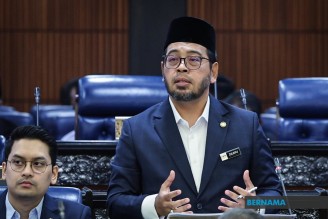
Malaysia's government has committed to overhauling Tabung Haji through a series of stringent financial and regulatory measures, marking a decisive response to institutional failures that pushed the hajj fund to the brink of collapse. The comprehensive reform package, detailed during an extended parliamentary sitting in Kuala Lumpur, reflects the authorities' determination to prevent a recurrence of the mismanagement and investment losses that threatened the savings of millions of Malaysian pilgrims.
The government's reform agenda centres on amending the Tabung Haji Act 1955 to fundamentally restructure how the institution operates. A dedicated task force, chaired by TH chairman Tan Sri Abdul Rashid Hussain and comprising Bank Negara Governor Datuk Seri Abdul Rasheed Ghaffour and Securities Commission chairman Datuk Mohammad Faiz Azmi, has been tasked with implementing recommendations from the Royal Commission of Inquiry. The task force's key proposal separates regulatory responsibilities, with the Securities Commission assuming control over fund management and investments while religious affairs oversight remains with the Ministry in the Prime Minister's Department.
The scale of TH's financial deterioration became starkly apparent during parliamentary proceedings. Minister in the Prime Minister's Department (Religious Affairs) Dr Zulkifli Hasan revealed that accumulated losses had approached RM13 billion, while the government faced potential liabilities of approximately RM74.5 billion in 2018 had large-scale panic withdrawals occurred. These figures underscore the systemic risks that accumulated within the institution and the precarious position in which depositors' retirement savings were placed during the critical period from 2014 to 2020, which forms the focus of the RCI's investigation.
Seven of the fourteen troubled investments identified in the inquiry resulted in complete financial losses, exemplifying the depths of mismanagement that plagued the institution. Finance Minister II Datuk Seri Amir Hamzah Azizan highlighted that TH's exposure to Putrajaya Perdana Bhd had inadvertently drawn the fund into connections with 1Malaysia Development Bhd, further demonstrating how poor investment governance created cascading vulnerabilities. The government's willingness to publicly disclose these painful realities suggests a commitment to transparency that contrasts sharply with earlier periods when such losses might have remained obscured.
The reformed governance structure aims to address fundamental conflicts of interest that plagued the previous framework. Amendments to the Tabung Haji Act will legally prohibit serving politicians from occupying board positions, a crucial step that removes political influence from investment decision-making. Additionally, profit distributions will henceforth be based on audited accounts rather than discretionary determinations, while all institutional decisions will be measured exclusively against the interests of depositors and the broader Muslim community.
Parliamentary debate during the special sitting yielded additional reform proposals with broader implications for Malaysia's financial system. Aminolhuda Hassan, Member of Parliament for Sri Gading, advocated for establishing a unified regulatory authority overseeing all major non-bank financial institutions, a category encompassing the Employees Provident Fund, Permodalan Nasional Bhd, and the Retirement Fund Incorporated. This proposal highlights a systemic gap in Malaysia's supervisory architecture, where disparate regulatory bodies oversee different segments of the non-bank financial sector without coordinated prudential supervision or systemic risk assessment. The absence of consolidated oversight has historically enabled risks to accumulate undetected across institutional boundaries.
The Royal Commission of Inquiry report, released publicly on July 29 after its submission to the Yang di-Pertuan Agong in August 2022, documented extensive operational and management weaknesses spanning the 2014 to 2020 period. The 211-page investigation contained twenty-five specific recommendations for institutional improvement, of which seventy-five percent had already been implemented by TH as of late July. This relatively swift implementation rate suggests some institutional learning has occurred, though the comprehensive reforms now being legislated represent a more fundamental restructuring than earlier incremental measures.
TH's over-reliance on income from UJSB sukuk presents an ongoing vulnerability that parliamentary members, including Bentong MP Young Syefura Othman, have flagged for urgent attention. The instrument currently contributes nearly twenty-six percent of the institution's annual income, according to RCI findings, creating dangerous concentration risk. Diversification of revenue streams becomes essential to insulating the fund from volatility in any single asset class and reducing dependence on investment returns that may themselves become unreliable if proper governance frameworks remain absent.
The government's announcement establishes a concrete timeline for reform implementation. The task force's recommendations, once refined and submitted to the cabinet for formal approval, will shape the legislative amendments to Act 535. Finance Minister Amir Hamzah's emphasis on accountability without favouritism, combined with promises of comprehensive investigations regardless of the stature of those implicated, signals an intent to close the governance loopholes that previously enabled misconduct. The explicit rejection of compromise toward those found guilty reflects public pressure for consequences that extends beyond mere institutional restructuring.
For Malaysian depositors and prospective hajj pilgrims, these reforms carry profound significance. The intervention by the Securities Commission will introduce professional investment management standards aligned with those governing commercial financial institutions, substantially reducing the likelihood of the poorly-vetted venture capital and real estate investments that characterised TH's troubled portfolio. The prohibition on politician board membership eliminates a channel through which political patronage networks previously influenced capital allocation decisions contrary to prudential principles.
Regionally, Malaysia's experience with TH offers instructive lessons for other Southeast Asian nations managing sovereign wealth funds, pilgrim savings schemes, and faith-based financial institutions. The scale of exposure and the concentration of losses within a single institution underscore the importance of establishing robust supervisory frameworks before institutional crises develop. The government's willingness to conduct a public inquiry and implement consequent reforms, while politically costly in the short term, demonstrates commitment to systemic integrity that may enhance investor confidence across broader financial markets.
Looking forward, the success of these reforms will depend substantially on the Securities Commission's capacity to embed professional investment governance into TH's operations without compromising the institution's religious and social mission. The separation of investment regulation from pilgrimage management creates potential coordination challenges, requiring seamless communication between the SC and the Religious Affairs Ministry. The broader proposal for a unified NBFI regulator, while generating debate among interested institutions, addresses a legitimate structural gap that extends well beyond Tabung Haji's circumstances and merits serious consideration by policymakers seeking to strengthen Malaysia's overall financial stability framework.

