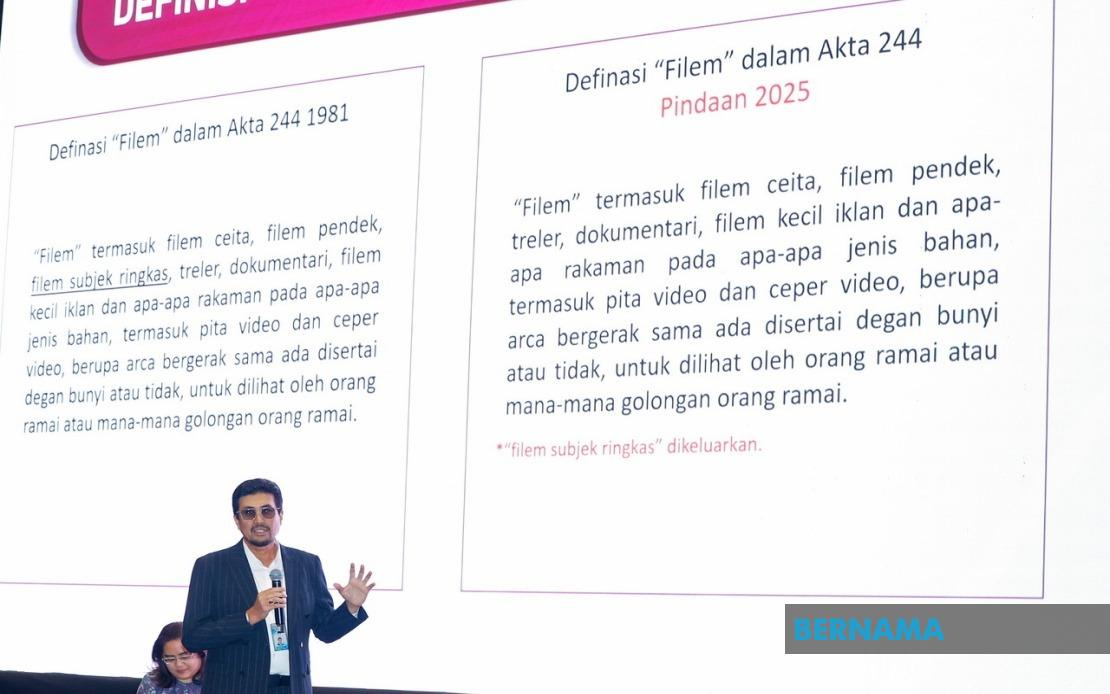
Malaysia is poised to unveil its most comprehensive film sector overhaul in two decades, with the National Film Development Corporation Malaysia (FINAS) targeting Cabinet approval and launch of the National Film Policy 2026-2035 within the current calendar year. The initiative represents a significant departure from the 2005 policy framework, introducing modern approaches to financing, artificial intelligence adoption, and market access that reflect the rapidly evolving global entertainment landscape.
FINAS Chief Executive Officer Datuk Azmir Saifuddin Mutalib outlined the policy's scope following stakeholder consultations at the corporation's Damansara headquarters in Petaling Jaya. The framework encompasses more than 70 distinct initiatives distributed across five foundational pillars: Financing and Investment; Marketing and Promotion; Industry Collaboration and Technology; Human Capital Development and Management; and Governance and Legislation. This multi-dimensional approach signals a recognition that Malaysia's film industry requires coordinated reform across production ecosystems, market mechanisms, workforce capabilities, and regulatory structures.
The emphasis on alternative financing models addresses a longstanding constraint within Malaysia's creative sector. Traditional funding pathways through government allocations and limited private investment have often restricted production scope and experimentation. By developing diverse financing mechanisms—potentially including crowdfunding, public-private partnerships, and innovative investment vehicles—the policy aims to democratise access to production capital and enable independent creators to bring projects to market without excessive reliance on established studios or government bodies. This structural change could unleash a wave of diverse storytelling reflecting Malaysia's multicultural society.
Artificial intelligence integration represents perhaps the most forward-looking element of the policy framework. Rather than resisting technological disruption, FINAS is positioning Malaysia's industry to leverage AI tools for scriptwriting assistance, visual effects production, post-production workflows, and even data analytics for audience targeting. For a nation seeking to compete globally while managing production costs, strategic AI adoption could provide competitive advantages in animation, visual effects, and independent film production where human capital remains limited.
Market expansion initiatives acknowledge that Malaysia's domestic market, while growing, cannot sustain an ambitious industry alone. The policy framework prioritises mechanisms to facilitate regional and international distribution of Malaysian content, potentially through streaming platform partnerships, film festival participation, and co-production agreements with established markets. This outward orientation mirrors successful models from countries like South Korea and Thailand, where strategic market positioning has transformed regional film sectors into significant export industries.
Workforce development and certification programmes address critical human capital gaps that currently constrain industry growth. By establishing formal training pathways and recognised certifications across production roles—from technical cinematography to sound design to digital marketing—the policy creates clearer career trajectories for potential entrants. Partnerships with Universiti Teknologi MARA (UiTM) and the National Academy of Arts, Culture and Heritage (ASWARA), already embedded in the policy formulation process, suggest these educational institutions will become key implementation partners in skills development.
Intellectual property protections form another strategic pillar, reflecting recognition that content creators require robust legal frameworks to justify investment and participate confidently in international markets. Strengthening mechanisms against unauthorised reproduction and establishing clearer ownership rights for digital works protect both independent creators and larger production entities, creating incentives for higher-quality, more ambitious projects.
The policy's development methodology merits attention as an example of comprehensive stakeholder engagement. Over one to two years, FINAS consulted extensively with industry practitioners, government agencies, relevant ministries, and academic institutions to ensure alignment with existing policies and avoid jurisdictional overlap. This deliberative approach, while lengthening the preparation timeline, reduces the risk of poorly-coordinated implementation and builds constituency support among stakeholders who contributed to the policy's design.
Recent stakeholder feedback highlighted requests for greater clarity on operational frameworks, particularly regarding cooperation mechanisms between FINAS and industry associations. These refinement discussions, currently being addressed through copywriting and formalisation before Cabinet submission, suggest the policy framework maintains flexibility to accommodate implementation details that industry participants themselves are helping to shape.
As Malaysia's third national film strategy since the 1980s original framework, the 2026-2035 policy carries symbolic weight beyond its programmatic content. It represents a deliberate choice to position the film sector not merely as cultural institution or entertainment product, but as a legitimate economic development engine comparable to tourism, technology, or manufacturing. By explicitly framing the industry as a platform reflecting Malaysia's multicultural identity and a driver of national unity, policymakers are signalling that film production and distribution serve national objectives extending beyond commercial returns.
For Southeast Asian creative industries broadly, Malaysia's policy framework offers instructive lessons about adapting traditional cultural sectors to contemporary technological and market realities. The simultaneous emphasis on tradition—reflecting Malaysian identity through diverse storytelling—and innovation through AI and alternative financing demonstrates a balanced approach that other regional nations navigating similar challenges may observe with interest.
The policy's approval timeline remains subject to Cabinet scheduling, though FINAS's confidence in launching before year-end suggests internal administration processes are advancing smoothly. Once approved, implementation will determine whether the ambitious framework translates into tangible outcomes: measurably increased production investment, expanded international market penetration, demonstrable workforce growth, and ultimately, a globally competitive Malaysian film sector.

