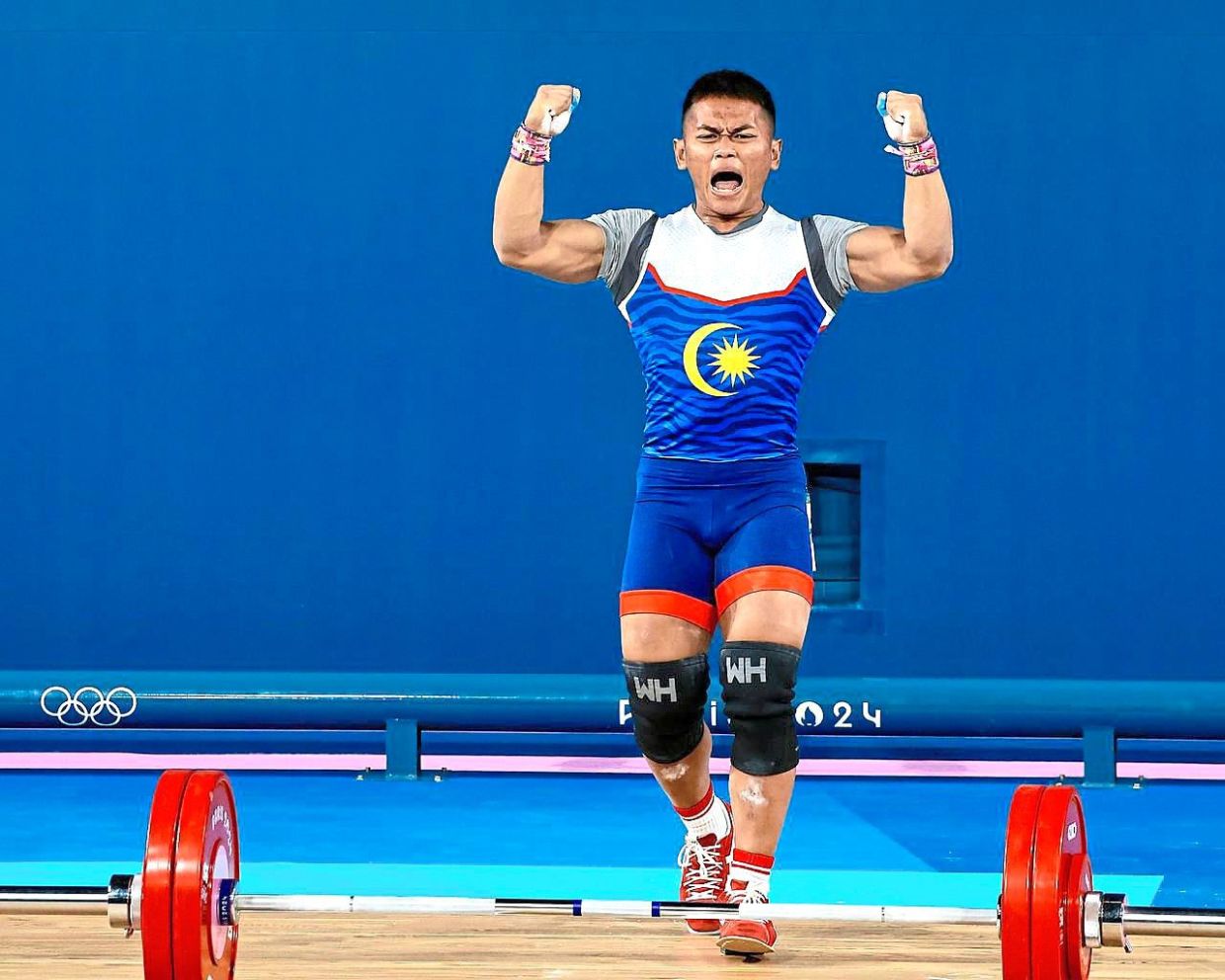
The Malaysian weightlifting squad's commanding performance at last month's Glasgow Commonwealth Games has triggered a significant financial commitment from the government, with the Youth and Sports Ministry pledging an additional RM1 million towards the sport's future development. This substantial injection of funds reflects the government's confidence in weightlifting as a viable medal-winning discipline and underscores a strategic shift towards supporting sports that have demonstrated genuine competitive success on the international stage.
Minister Dr Mohd Taufiq Johari announced the funding boost following consultations with the Malaysian Weightlifting Federation and the National Sports Council, both of which had identified critical areas requiring investment to sustain and accelerate the sport's momentum. The decision to allocate these resources was not made hastily but emerged from substantive discussions about the structural requirements needed to transform Glasgow's success into a sustainable competitive advantage for Malaysian weightlifters in future international competitions.
The Glasgow Commonwealth Games proved to be a watershed moment for the discipline in Malaysia. Weightlifters returned home with five gold medals, a single silver and one bronze medal, making them the country's most prolific medal contributors at the Games by a significant margin. This achievement is particularly noteworthy given the relative resource constraints that Malaysian weightlifting has historically faced compared to other sporting disciplines, suggesting that targeted investment could yield exponential returns in performance.
The broader medal tally contextualises this success further. Malaysia's overall haul from Glasgow totalled eight golds, three silvers and five bronzes, meaning that weightlifting alone accounted for 62.5 per cent of the gold medal count. This concentration of success in a single sport raises important questions about portfolio management in national sports funding and why such a high-performing discipline had not previously received comparable levels of government support.
Beyond the headline funding announcement, the ministry has committed to a comprehensive infrastructure upgrade centred on the Rompin weightlifting training centre in Pahang. The facility is slated for transformation into a Sports Centre of Excellence, a designation that brings not only improved amenities but also enhanced credibility on the international sporting circuit. Such centres typically feature state-of-the-art equipment, world-class accommodation for athletes, and research facilities that can support performance optimisation programmes.
A critical element of the development strategy involves personnel augmentation at the Rompin centre. The ministry has agreed to appoint a full-time coach whose remit will specifically focus on nurturing female weightlifters. This targeted approach acknowledges a significant gap in Malaysia's weightlifting pipeline and reflects international best practice, where women's weightlifting has become an increasingly competitive and medal-rich category at major sporting events. The appointment of a dedicated female development coach suggests the ministry recognises that generic coaching approaches may not adequately address the specific technical, physiological and psychological requirements of developing elite female athletes in this sport.
The National Sports Council is also expected to expand the weightlifter quota within its development programme following the conclusion of the Malaysia Games, commonly known as Sukma. Selection priorities will emphasise athletes demonstrating substantial potential and satisfying rigorous technical criteria. This merit-based approach, though standard in principle, gains particular significance when applied to a sport like weightlifting, where technical proficiency and genetic attributes intersect in ways that demand careful talent identification processes.
For Malaysian readers and policymakers, the weightlifting investment reveals an important principle about sports funding: success begets investment. The discipline had long existed in relative obscurity within Malaysia's sporting landscape, operating with limited resources and minimal public profile. The Glasgow performance has fundamentally altered the political calculus, demonstrating to government that weightlifting represents an efficient use of sporting funds relative to medals generated. This formula may have implications for how other emerging sports seek to make the case for government support.
From a Southeast Asian perspective, Malaysia's weightlifting resurgence also signals the region's broader sporting ambitions. Several Southeast Asian nations are investing heavily in weightlifting development, recognising that the discipline offers viable pathways to Commonwealth Games and Asian Games medals. Malaysia's coordinated approach—combining funding, infrastructure, and specialist coaching—mirrors strategies being deployed across the region and reflects a maturation of how Southeast Asian governments approach sports development beyond traditional disciplines.
The sustainability of this investment remains an important consideration. Government funding commitments, particularly those announced in the wake of specific achievements, can sometimes prove vulnerable to shifting political priorities or budget pressures. However, the ministry's emphasis on long-term ecosystem building rather than short-term medal chasing suggests a more durable commitment. The focus on grassroots development, facility enhancement, and personnel training creates structural foundations that should persist regardless of immediate competitive results.
Dr Taufiq's framing of the investment as both recognition and future-proofing encapsulates the dual rationale underlying the decision. The immediate boost acknowledges and celebrates the Glasgow accomplishments, providing tangible rewards that validate the athletes' efforts and encourage others to pursue weightlifting. Simultaneously, the infrastructure and personnel investments position Malaysia's weightlifting programme to compete effectively in upcoming Commonwealth Games, Asian Games and Olympic qualifying events, suggesting this is genuinely a long-term commitment rather than a one-off gesture.

