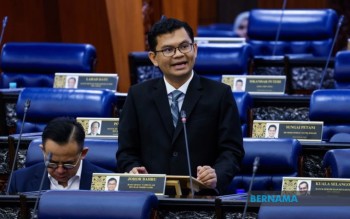
The Malaysian government is executing a comprehensive 120-point action plan designed to buffer the country from continued global supply chain turmoil, Economy Minister Akmal Nasrullah Mohd Nasir announced during a parliamentary briefing this week. The initiative, overseen by the National Economic Action Council (MTEN), reflects an acknowledgement that supply chain pressures will persist well into 2026 and beyond, requiring sustained intervention rather than temporary fixes.
Of the total decisions in the package, 27 have already been fully operationalised while the remaining 93 are progressing through implementation phases. This staged approach suggests the government has prioritised immediate relief measures while maintaining a pipeline of longer-term stabilisation efforts. The combination of completed and in-progress actions indicates that officials expect recovery to be gradual rather than sudden, necessitating a rolling programme of adjustments to keep pace with evolving market conditions.
The interventions span both immediate crisis response and structural safeguards. According to Akmal Nasrullah, the measures target direct assistance to vulnerable households, targeted support for micro, small and medium enterprises (MSMEs), and broader industrial policy adjustments designed to maintain the flow of essential goods throughout the economy. This multi-layered approach recognises that supply disruptions affect different economic actors in distinct ways, requiring differentiated policy responses rather than uniform measures.
Government officials have adopted what they characterise as a realistic posture regarding the timeline for global normalisation. Rather than wagering on a swift resolution to supply pressures, the administration is planning for an extended period of heightened uncertainty. Energy markets, which have been a particular flashpoint during the current crisis, are expected to stabilise only gradually from the third quarter of 2026 onwards, contingent on sustained geopolitical stability and the restoration of major trade corridors. This cautious outlook acknowledges that even optimistic scenarios involve another one to two years of price volatility and supply uncertainty.
The government's monitoring framework represents an attempt to transform crisis management into continuous governance. Through MTEN and coordinating agencies, officials say they are systematically tracking developments and remaining prepared to adjust policy responses as circumstances evolve. This standing structure contrasts with ad hoc interventions and suggests confidence in the government's capacity to respond nimbly to emerging bottlenecks or shocks. Regular parliamentary briefings on progress underscore the administration's commitment to transparency, at least in theory, regarding the state of supply chain pressures and remedial efforts.
Akmal Nasrullah acknowledged that prolonged supply disruptions carry material risks for Malaysia's economy if allowed to persist unchecked. However, he framed these risks as manageable through structured, evidence-based interventions rather than as catastrophic threats requiring panic responses. This rhetoric attempts to balance public reassurance with candid recognition of genuine challenges—a delicate communication task given that supply pressures directly affect household purchasing power and business viability across the economy.
The scale of the intervention programme also reflects growing sophistication in Malaysian economic policymaking. Rather than relying on a handful of major policy levers, the government has disaggregated the response into 120 distinct decisions, suggesting each targets specific pressure points or constituencies. This granular approach differs markedly from earlier era crisis responses and suggests institutional learning about how supply shocks ripple through interconnected economies.
From a regional perspective, Malaysia's experience mirrors broader Southeast Asian vulnerability to global supply volatility. As a manufacturing hub and trade-dependent economy, Malaysia faces particular exposure to disruptions affecting semiconductor supply chains, energy markets, and shipping routes. The government's proactive stance contrasts with more reactive approaches in some neighbouring economies, potentially offering a template for coordinated regional response to shared supply chain challenges.
The emphasis on stakeholder cooperation underscores a recognition that government policy cannot single-handedly resolve supply constraints. Private sector participation in identifying bottlenecks, adapting production processes, and identifying alternative suppliers remains essential. Public statements urging collective action serve both to mobilise private sector support and to distribute responsibility for economic outcomes across government and business leadership.
Looking forward, the government's willingness to maintain active intervention throughout the recovery period signals that supply chain normalisation will not trigger an automatic policy withdrawal. Instead, officials appear committed to sustaining monitoring and support mechanisms until confidence in stable supply conditions becomes firmly established. This extended engagement model potentially reduces the shock of sudden policy withdrawal but also embeds ongoing fiscal costs and administrative overhead into the budget planning process.
The parliamentary briefing mechanism itself serves important signalling functions beyond simple information transmission. Regular updates to legislators demonstrate government attentiveness to the issue and create accountability pressure for demonstrable progress. As the plan unfolds over the coming years, these periodic parliamentary accounts will provide benchmarks against which the administration's economic management during a prolonged global crisis can be assessed by both lawmakers and the public.

