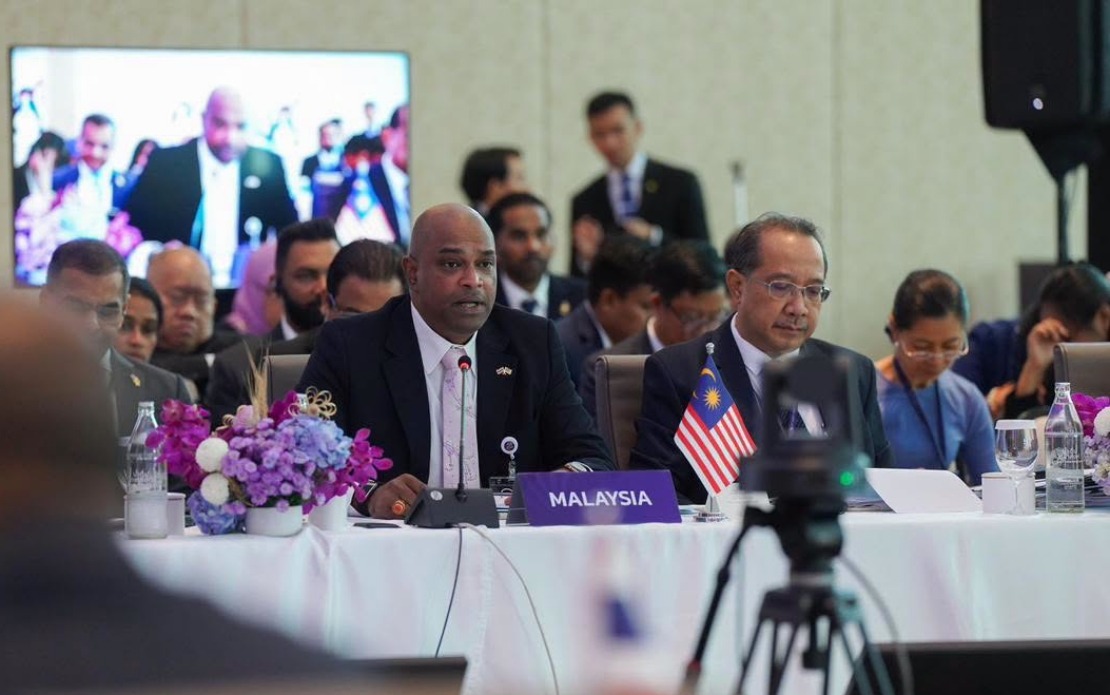
Malaysia has made a strategic push for ASEAN to adopt stronger mechanisms for recognising the skills and qualifications of its workforce, a move aimed at positioning the region's talent pool as globally competitive and capable of meeting emerging industry requirements. The initiative represents a significant step toward facilitating labour mobility across Southeast Asia while simultaneously strengthening the region's collective bargaining power in the international job market.
Human Resources Minister Datuk Seri R. Ramanan outlined three key pillars for Malaysia's approach during the 14th ASEAN Plus Three Labour Ministers' Meeting held in Bangkok, Thailand. The first focuses on establishing joint certification standards and achieving harmonisation of Technical and Vocational Education and Training qualifications across member states. The second emphasises accelerating technology transfer while simultaneously upskilling educators who teach these programmes. The third priority involves designing training curricula that anticipate future economic sectors, particularly artificial intelligence, next-generation vehicle manufacturing, and robotics technology.
The rationale behind Malaysia's proposal is rooted in a fundamental economic challenge facing Southeast Asia: while individual ASEAN nations possess significant human capital resources, the fragmentation of qualification systems creates barriers to regional integration and limits workers' geographical mobility. When vocational certificates issued in one country lack recognition in another, skilled professionals face unnecessary restrictions on employment opportunities, and employers struggle to access talent across borders. By standardising these systems, Malaysia argues that ASEAN can unlock substantial economic benefits through more efficient labour allocation and human capital deployment.
Ramanan emphasised that the recognition of skills transcends mere bureaucratic procedures or certificate validation. Instead, he framed it as a fundamental strategic question about enhancing the future value and competitiveness of the region's entire workforce. His comments reflect a growing recognition among policymakers that in an increasingly globalised economy, Southeast Asian workers must not merely satisfy domestic labour market demands but must be recognised and sought after as premium talent worldwide. This positioning is particularly critical as ASEAN competes with other regions for high-value manufacturing and service sectors.
The involvement of China, Japan, and South Korea in these deliberations signals Malaysia's acknowledgment that meaningful skills harmonisation requires collaboration beyond ASEAN's borders. These three major Asian economies possess advanced technological capabilities, established vocational training systems, and significant experience in cross-national skills recognition frameworks. By engaging them as partners rather than mere observers, Malaysia seeks to leverage their expertise and best practices while creating potential pathways for ASEAN workers to gain access to training and employment opportunities in these economically advanced nations.
For Malaysia specifically, this initiative carries particular significance given its position as a relatively developed economy within ASEAN with established vocational training infrastructure. By championing harmonisation at the regional level, Malaysia positions itself as a potential hub for TVET excellence and a gateway for other Southeast Asian workers seeking to acquire internationally recognised qualifications. This could enhance Malaysia's economic influence within ASEAN while potentially attracting regional talent to its own training institutions and labour market.
The timing of this push reflects broader economic trends within the region. ASEAN economies are increasingly competing for participation in high-value global supply chains, particularly in electronics, automotive manufacturing, and semiconductor production. These sectors demand a workforce with certified, verifiable, and internationally recognised technical skills. Without harmonised qualification systems, individual ASEAN nations risk being perceived as lacking the talent depth necessary for major industrial investments, whereas a coordinated regional approach could present Southeast Asia as a single, integrated labour market with substantial skilled capacity.
Technology transfer and teacher upskilling represent particularly important dimensions of Malaysia's proposal because they address structural capacity constraints within the region's vocational education systems. Many ASEAN nations possess committed instructors but face challenges in accessing cutting-edge equipment, curricula aligned with emerging technologies, and professional development opportunities for educators. By facilitating technology transfer partnerships, particularly with advanced economies, ASEAN can upgrade the quality of training without requiring massive autonomous capital investments from individual member states.
The focus on artificial intelligence, next-generation vehicles, and robotics reflects recognition that ASEAN's future competitiveness depends not on competing in mature, labour-intensive sectors where wage-based advantages are eroding, but on developing capabilities in future-defining industries. These sectors require workers with sophisticated technical knowledge, problem-solving abilities, and familiarity with rapidly evolving technological landscapes. By building harmonised training frameworks around these fields now, ASEAN can position its workforce ahead of the skills curve rather than perpetually chasing established industry needs.
Ramanan's vision of ASEAN talent becoming globally sought-after represents an ambitious but achievable reorientation of how the region markets its human capital internationally. Rather than serving primarily as a source of lower-cost labour for multinational corporations seeking cost reduction, Southeast Asian workers could increasingly be valued for technical excellence, innovation capability, and reliability. This transformation requires consistent investment, cross-national coordination, and genuine commitment to quality over quantity in workforce development.
The implementation challenges should not be underestimated, however. ASEAN member states possess varying levels of vocational training infrastructure, different regulatory frameworks, and competing economic priorities. Achieving meaningful harmonisation requires member states to surrender some autonomy over their certification standards and accept common baseline requirements. Nevertheless, Malaysia's advocacy suggests growing consensus within regional leadership that the collective benefits of integrated labour markets significantly outweigh the short-term costs of coordination and standardisation.
Looking forward, the success of Malaysia's initiative will depend on translating rhetoric into concrete institutional mechanisms and funding commitments. ASEAN will need to establish dedicated secretariat capacity to oversee harmonisation efforts, create mutual recognition agreements backed by legal mechanisms, and develop dispute resolution procedures when disagreements arise over qualification standards. Malaysia's active role in driving these discussions positions it favourably to influence the shape these institutions ultimately take.

