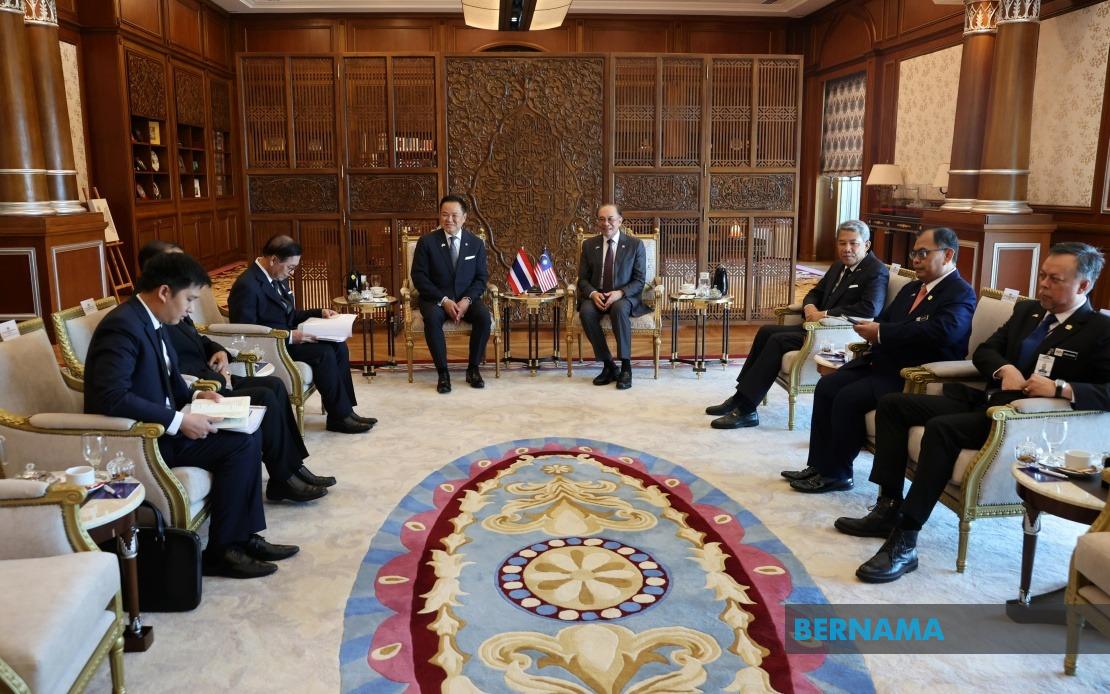
Malaysia is doubling down on its long-standing position that diplomatic engagement, rather than isolation, offers the most credible pathway towards resolving Myanmar's deepening political crisis. Prime Minister Datuk Seri Anwar Ibrahim articulated this stance during Thursday's bilateral meeting with visiting Thai Prime Minister Anutin Charnvirakul in Putrajaya, underscoring Kuala Lumpur's conviction that Myanmar's future must ultimately rest in the hands of its own people. The pronouncement carries particular weight given Malaysia's influential standing within ASEAN and its historical involvement in regional mediation efforts stretching back decades.
Anwar's emphasis on dialogue reflects Malaysia's pragmatic approach to a conflict that has resisted quick resolution since Myanmar's military coup in February 2021. Rather than advocating punitive measures or economic sanctions—approaches favoured by some Western governments—the Malaysian leader has consistently championed a middle path that keeps diplomatic channels open whilst supporting ASEAN's collective framework for addressing the crisis. This strategy acknowledges the complex geopolitical realities of Southeast Asia, where maintaining regional stability and consensus often requires patience and sustained engagement even when rapid breakthroughs seem elusive.
The Malaysian Prime Minister's particular emphasis on Thailand's potential role as a mediator carries strategic significance that extends beyond the bilateral relationship. Thailand shares a lengthy border with Myanmar and possesses deep historical, cultural, and commercial ties that position it uniquely to influence developments in the neighbouring country. Bangkok's geographic proximity and established networks within Myanmar society give it leverage that distant powers cannot replicate. By publicly highlighting Thailand's capacity to advance peace efforts, Anwar was essentially inviting Bangkok to assume a more active diplomatic role whilst simultaneously reaffirming Malaysia's commitment to multilateral approaches within ASEAN's institutional framework.
The Myanmar crisis has consumed considerable diplomatic energy within ASEAN since the military takeover nearly four years ago. The regional bloc's Five-Point Consensus, agreed in 2021, represents the association's most structured attempt to guide Myanmar towards political dialogue and eventual democratic transition. However, implementation has proven painstaking, with limited tangible progress on the ground despite sustained diplomatic efforts. Malaysia's continued advocacy for engagement-based solutions, even as the situation remains intractable, demonstrates Kuala Lumpur's belief that abandoning dialogue would only entrench Myanmar's military leadership further and potentially destabilize the broader Southeast Asian region.
Autin's visit, his first bilateral trip to Malaysia since his reappointment as Thai Prime Minister in March 2026, provided an opportune moment for the two neighbours to align their positions on Myanmar and other pressing regional issues. The timing underscores how closely ASEAN member states continue to coordinate on this enduring challenge, recognizing that fragmented approaches would diminish their collective influence. Bilateral visits of this nature serve not merely ceremonial functions but provide essential platforms for senior leaders to recalibrate strategies and demonstrate unity to both domestic constituencies and the international community.
Beyond Myanmar, the bilateral discussions also touched on the Thailand-Cambodia border situation, an issue that has periodically tested ASEAN's cohesion and regional stability. Anwar commended Anutin's commitment to maintaining peace along this sensitive frontier, reflecting Malaysia's broader interest in ensuring that territorial disputes do not metastasize into larger regional conflicts. By publicly endorsing Thailand's collaborative approach, the Malaysian Prime Minister was reinforcing the principle that ASEAN members should resolve differences through peaceful mechanisms rather than confrontation. This positioning matters considerably for Malaysian readers given Kuala Lumpur's own history of border management and its stake in maintaining predictable, rules-based regional order.
The practical demonstration of bilateral cooperation will occur during a joint visit to Bukit Kayu Hitam in Kedah on Friday, where Anwar and Anutin are scheduled to open newly constructed border facilities linking Malaysia and Thailand. The inauguration of the Immigration, Customs, Quarantine and Security Complex in Bukit Kayu Hitam and its counterpart in Sadao represents tangible progress in facilitating cross-border movement and commerce. Such infrastructure projects carry significance extending far beyond logistics—they symbolize the deepening integration of ASEAN member states and their commitment to regional connectivity. For Malaysian businesses and citizens, smoother border processes translate into enhanced economic opportunities and improved travel experiences.
Malaysia's sustained advocacy for dialogue-based approaches to Myanmar reflects both principled commitment to regional cooperation and pragmatic recognition that military solutions or severe international isolation rarely produce desired outcomes in contemporary geopolitical contexts. The country's diplomatic positioning balances competing pressures: from Western governments advocating tougher stances against Myanmar's military regime, from ASEAN partners with varying interests, and from domestic considerations about regional stability and refugee flows. This balancing act requires sophisticated diplomacy and consistent messaging, which Anwar's articulation of Malaysia's Myanmar strategy demonstrates.
The emphasis on allowing Myanmar's people to determine their own future, whilst seemingly straightforward, carries important implications for ASEAN's broader approach to sovereignty and non-interference. These principles, foundational to the association's founding consensus, have been tested repeatedly by Myanmar's crisis. Malaysia's reaffirmation of this position signals that Kuala Lumpur believes upholding these principles—even when circumstances are frustrating—serves the association's long-term interests better than ad-hoc deviations based on individual cases.
For Malaysian observers following regional developments, the substance of Anwar's remarks reinforces continuity in approach despite changes in domestic political circumstances within Thailand. Anutin's presence in Malaysia and his alignment with the dialogue-based framework suggests that, despite domestic political turbulence in Bangkok, Thai leadership remains committed to ASEAN-centred solutions for regional challenges. This consistency is reassuring for regional stability, as it indicates that member states' foundational commitments to cooperative approaches transcend individual leadership transitions.
The coming months will test whether sustained dialogue and Thailand's mediation efforts can generate meaningful movement on Myanmar. ASEAN's credibility as a regional organization depends partly on demonstrating that its institutional mechanisms and member cooperation can address serious security challenges. Malaysia's continued investment in dialogue, coupled with Thailand's willingness to play an active role, represents the association's best current hope for preventing Myanmar's crisis from further destabilizing Southeast Asia. Whether this strategy ultimately succeeds remains uncertain, but the alternative—fragmentation and competing national approaches—would likely prove far more damaging to regional interests that Malaysia and its neighbours share.

