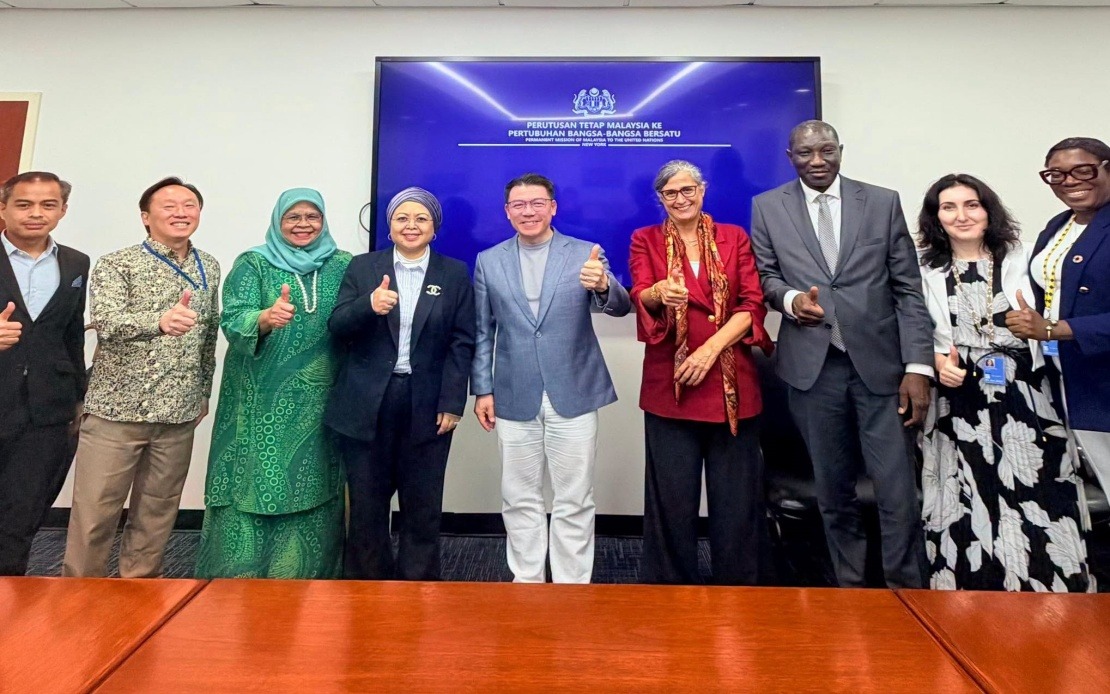
Malaysia's Housing and Local Government Minister Nga Kor Ming has called on the global community to move beyond rhetoric and deliver concrete results in building sustainable cities, speaking at the United Nations Headquarters in New York following a high-level meeting on urban development. As President of the UN-Habitat Assembly, Nga emphasised that the Midterm Review of the New Urban Agenda this year represents a crucial turning point rather than a mere stocktaking exercise, with only four years remaining until the 2030 deadline for achieving transformative urban change.
The appeal comes amid growing urgency over the global housing crisis, digital inequality in urban areas, and the need to build cities resilient to climate impacts. Nga stressed that member states must treat this midterm review as a watershed moment, where aspirational commitments are converted into measurable action for the billions of people inhabiting cities worldwide. This framing reflects a broader frustration within development circles that many nations sign international agreements but fail to implement them with sufficient ambition or resources.
Malaysia itself has positioned itself as a model for sustainable urbanisation, having constructed more than 500 million square feet of green-indexed buildings to date. The country has committed to expanding this portfolio further before 2030, demonstrating how environmental standards can be embedded into urban infrastructure at scale. This achievement carries particular significance for Southeast Asia, where rapid urbanisation is creating both opportunities and acute challenges across the region.
Central to Malaysia's approach is the Asia-Pacific Urban Action Platform, which Nga championed as a regional mechanism for translating global sustainable development goals into locally appropriate solutions. The platform facilitates knowledge exchange between countries facing similar urban challenges and strengthens financing mechanisms for green infrastructure across the Asia-Pacific. For Malaysia and its neighbours, this collaborative approach acknowledges that sustainable urbanisation cannot be imposed from outside but must be tailored to local contexts and priorities.
Nga reaffirmed Malaysia's commitment to championing sustainable urbanisation through its MADANI Economy framework, a domestic development model that emphasises inclusive and equitable growth. This framework serves as the foundation for Malaysia's international advocacy, allowing the country to demonstrate that sustainability principles need not conflict with economic development when properly designed and implemented.
The minister articulated three critical urban challenges demanding accelerated global response. First, the housing crisis continues to leave millions without adequate shelter, particularly in developing regions where urban populations are expanding rapidly. Second, the digital divide means that many urban residents lack access to connectivity and digital services essential for participating in modern economies. Third, climate vulnerability exposes cities to increasingly severe weather events and environmental degradation, requiring substantial investment in resilient infrastructure.
Nga's emphasis on equity and inclusion reflects a concern that urban development benefits must reach marginalised communities rather than concentrating wealth and opportunity among privileged groups. The principle of leaving no community behind implies a deliberate policy focus on informal settlements, low-income housing, and service delivery to disadvantaged neighbourhoods. For Malaysia and the broader region, this inclusive approach is essential given the persistence of significant disparities within expanding urban areas.
The High-Level Meeting itself, themed around delivering sustainable urbanisation for all and accelerating implementation of the New Urban Agenda through 2036, brought together diverse stakeholders including UN member states, local and regional government leaders, and civil society representatives. This broad participation reflects recognition that urban challenges cannot be solved by national governments alone but require coordination across governmental levels and partnership with community organisations and the private sector.
Nga's call for strengthened political commitment signals frustration that many nations have not adequately prioritised urban development within their domestic agendas or budgets. Sustainable cities require long-term investment in public transportation, affordable housing, water and sanitation systems, waste management, and green spaces. These expenditures often compete with other pressing priorities in constrained government budgets, yet their absence perpetuates urban poverty and environmental degradation.
The Asia-Pacific region faces particular urgency in this agenda. Southeast Asia's cities are among the world's fastest-growing, with urban populations projected to continue expanding substantially over the coming decades. Countries like Malaysia, along with Indonesia, Thailand, and the Philippines, must manage this growth while simultaneously addressing infrastructure backlogs, environmental pressures, and social needs. The New Urban Agenda provides a framework for channelling development toward more sustainable outcomes.
Nga's participation at the UN headquarters underscores Malaysia's aspiration to leadership in regional and global urban development discourse. By speaking clearly about the inadequacy of mere declarations and the need for implementation, Malaysia positions itself as a serious actor committed to substantive outcomes rather than symbolic gestures. This approach aligns with growing demands from developing nations that developed countries demonstrate genuine commitment to sustainable development through resource mobilisation and technology transfer.
Looking forward, the challenge lies in translating the recommendations and renewed commitments from this midterm review into actual policy changes, budget allocations, and implementation mechanisms at national and local levels. Malaysia's own track record with green buildings and sustainable urban projects provides evidence that progress is possible when political will and resources align. However, achieving the scale of transformation required across the Asia-Pacific and globally will demand far more intensive efforts and substantially increased investment than currently observed.

