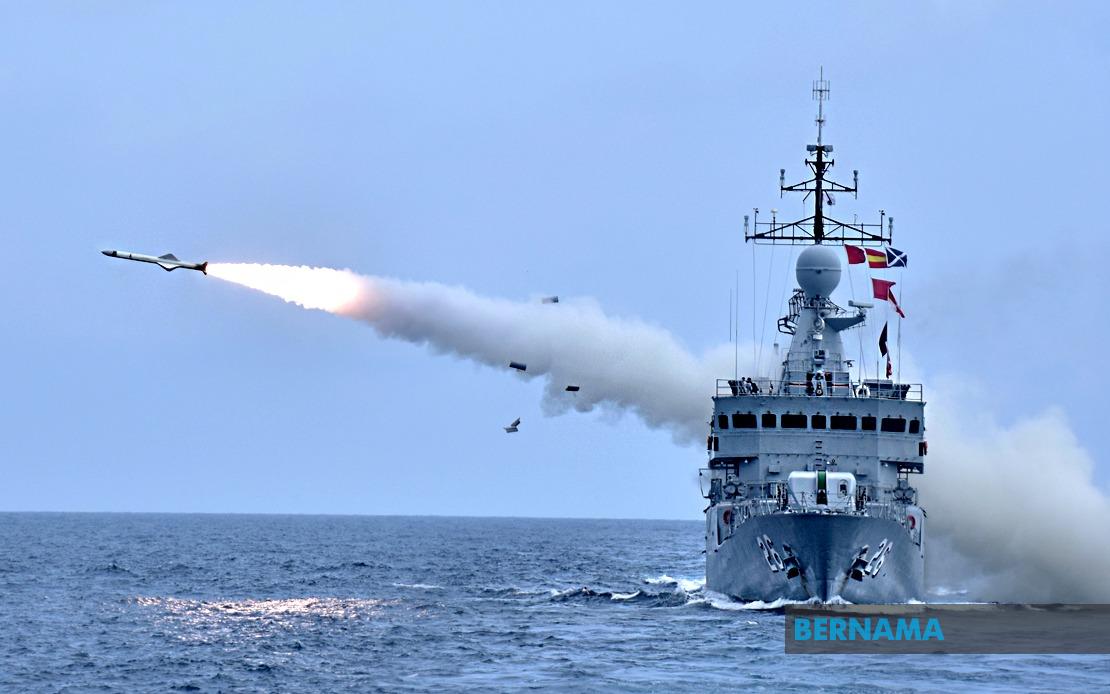
Malaysia's decision to significantly increase defence spending reflects far more than traditional regional security calculations, according to Defence Minister Datuk Seri Mohamed Khaled Nordin. The government is responding to a multifaceted array of contemporary challenges that have fundamentally reshaped how policymakers assess national security needs, encompassing digital warfare capabilities, electromagnetic threats, and coordinated disinformation operations that pose risks beyond conventional military conflict.
The shifting threat landscape that prompted this budgetary reassessment extends well beyond the traditional flashpoints that have long dominated Malaysian strategic thinking. Cyber attacks targeting critical infrastructure, attempts to manipulate public opinion through mass disinformation campaigns, and emerging electromagnetic warfare technologies represent an entirely new dimension of vulnerability that traditional defence procurement cannot address alone. These threats demand not only substantial financial investment but also the development of entirely new institutional capacities and technological expertise within the Malaysian Armed Forces and supporting civilian agencies.
Within the broader Southeast Asian context, Malaysia faces a distinctly complicated security environment shaped by intensifying strategic competition among major powers. The region has become an arena where the United States, China, and other strategic actors are expanding their military presence and capabilities, creating what analysts describe as a security dilemma. As one side increases its military footprint or technological advantages, neighbouring states feel compelled to enhance their own defensive capabilities in response, generating an upward spiral of military modernisation across the region that directly affects Malaysian strategic planning.
Prime Minister Datuk Seri Anwar Ibrahim, who also holds the Finance portfolio, signalled that Malaysia may require defence expenditure increases stretching into billions of ringgit to build a military posture adequate for managing an increasingly intricate security landscape. This substantial commitment reflects recognition that underfunding defence capabilities in an era of rapid technological change and geopolitical volatility carries unacceptable strategic risks. The specific figure remains contingent on comprehensive assessments of operational requirements and technological gaps that must be systematically addressed.
The geographic concentration of military assets within Southeast Asia's relatively confined maritime spaces creates acute risks of unintended escalation. Mohamed Khaled emphasized that the density of military platforms operating in close proximity naturally elevates the probability that miscalculation, misunderstanding, or minor incidents could rapidly transform into serious confrontations with regional consequences. This crowding effect makes the maintenance of communication channels and confidence-building measures essential safeguards against catastrophic miscalculation.
Developments in the southern Philippines, particularly in areas neighbouring Sabah, warrant Malaysian attention despite not directly involving Malaysian assets. The Defence Minister stressed that escalation in this adjacent theatre could generate spillover effects throughout the South China Sea, destabilising the broader security architecture upon which Malaysia's prosperity depends. Consequently, Malaysian defence planning must account for contingencies involving neighbouring states' security decisions, even when those decisions result from bilateral arrangements unilaterally determined by other countries.
Malaysia's approach to Philippine defence partnerships reflects delicate diplomatic balancing. While respecting Manila's sovereign right to establish its own defence arrangements based on its security calculations, Malaysia remains committed to maintaining open diplomatic channels that prevent misunderstandings from spiralling into confrontation. This posture acknowledges that nations can pursue legitimate security interests without necessarily targeting their neighbours, and that dialogue remains superior to military posturing for managing regional tensions.
The government has deliberately framed its defence modernisation programme as a national interest imperative rather than a reaction to specific countries' actions. Mohamed Khaled clarified that increased defence spending does not constitute Malaysia choosing sides in great power competition or directing military capabilities against the Philippines, United States, China, or any particular nation. This messaging proves critical for maintaining ASEAN cohesion and preventing Malaysia from being perceived as aligning with one strategic bloc against another.
The planned increase in defence spending to 1.5 percent of GDP by 2030 represents a carefully calibrated trajectory rather than a dramatic departure from historical practice. Malaysia has pursued armed forces modernisation as a standing element of national defence planning for decades, gradually retiring ageing equipment and acquiring newer platforms to maintain operational effectiveness. Framing the spending increase within this continuity narrative allows the government to position budget increases as logical progression rather than reactive panic.
Strategic investments in capabilities at locations like Pulau Layang-Layang exemplify Malaysia's approach to territorial sovereignty protection without explicitly targeting any particular country. These infrastructure and defence improvements serve national interest by ensuring Malaysia can exercise effective jurisdiction over its territorial claims and maritime zones, responding to geographic imperatives of national defence rather than to any specific foreign threat.
Malaysia's dual-track strategy combines credible defensive capabilities with sustained advocacy for regional stability through dialogue and diplomatic engagement. The government remains committed to supporting ASEAN centrality and maintaining the organisation's traditional approach of providing diplomatic space for addressing disputes despite fundamental disagreements over territorial claims and strategic interests. This balanced posture seeks to shield Southeast Asian nations from becoming collateral damage in great power rivalries while preserving regional autonomy and decision-making authority.
Progress on formalising a Code of Conduct for the South China Sea remains essential for establishing the predictability and restraint upon which Malaysia depends. All regional actors must exercise strategic discipline by avoiding actions that trigger escalatory cycles, particularly given how densely packed the region has become with military capabilities. Malaysia will continue advocating for peaceful resolution of disputes, restraint in military operations, and the primacy of dialogue over confrontation as the mechanism for managing overlapping claims and competing strategic interests throughout the maritime domain.

