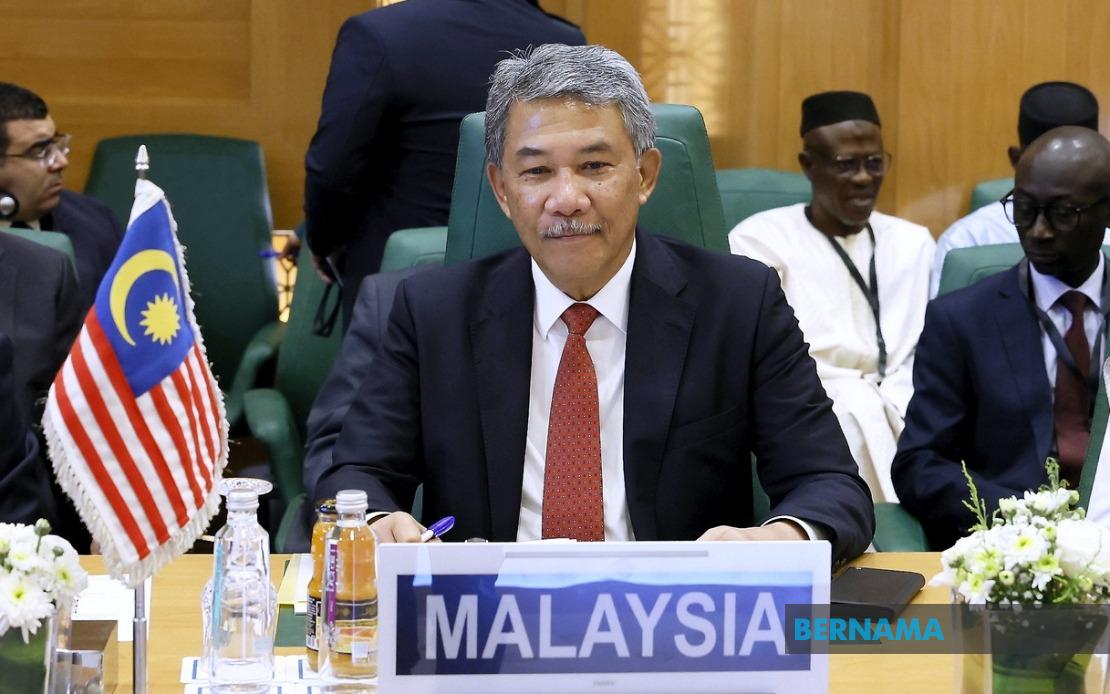
Malaysia has escalated its diplomatic pressure within the Organization of Islamic Cooperation, calling on member states to formally reject Israel's controversial US$2.3 billion settlement expansion programme in occupied Palestinian territories. Foreign Minister Datuk Seri Mohamad Hasan delivered this message during an Extraordinary Meeting of the OIC Council of Foreign Ministers in Jeddah on August 27, positioning the regional bloc as a unified front against what Malaysia characterises as illegal occupation and settlement activity.
The call represents a strategic effort to leverage the International Court of Justice's advisory opinion from July 19, 2024, which addressed the legal status of Israeli settlements. Mohamad insisted that OIC member states must not merely acknowledge this legal position but actively implement it by withholding support and recognition from settlement initiatives. This framing transforms a legal document into a basis for collective diplomatic action, potentially raising the cost for countries that might otherwise maintain pragmatic but politically sensitive economic or diplomatic ties with Israel.
Central to Malaysia's concern is the so-called E1 settlement plan, which the government views as particularly threatening to Palestinian territorial integrity. The E1 zone, located between Jerusalem and the dead sea, is strategically significant because its development would physically sever the northern and southern portions of the Palestinian West Bank, making territorial contiguity essential for any future independent state functionally impossible. Mohamad argued that Israel's expansion strategy deliberately exploits this geographic reality to foreclose the two-state solution option, effectively making Palestinian statehood unviable through incremental territorial fragmentation rather than outright annexation.
Beyond settlements, Malaysia's statement addressed the broader security situation in Gaza, where the conflict has claimed over 70,000 lives according to figures cited by the Foreign Minister. Mohamad characterised the humanitarian situation as a crisis of international credibility, noting that nearly three years of international appeals for ceasefires, protection of civilians, and humanitarian access have gone unheeded. This framing attempts to reposition the Palestinian issue from a regional dispute into a matter of global institutional legitimacy, suggesting that international organisations' failure to enforce their own principles undermines their authority worldwide.
The statement emphasised Palestinian institutional strengthening as a prerequisite for establishing a viable independent state, reflecting recognition among Malaysian policymakers that Palestinian self-governance capacity remains contested. By calling for enhanced OIC support in protecting and reconstructing Palestinian administrative, security, and educational institutions, Malaysia tacitly acknowledges that international legal recognition of Palestinian statehood must be accompanied by practical state-building capacity. This approach suggests Malaysia views the path forward as requiring both external diplomatic support and internal Palestinian institutional development.
Mohamad reiterated Malaysia's consistent position that Palestinian statehood must be based on June 4, 1967 borders, with East Jerusalem designated as the capital. He deliberately framed this not as a negotiating preference but as a fundamental imperative, elevating it beyond the realm of diplomatic compromise. This language choice reflects how Malaysia increasingly positions itself as defending immutable principles rather than seeking middle-ground solutions, a strategic stance that reinforces domestic political support while potentially narrowing diplomatic flexibility.
The statement also addressed incidents at Al-Aqsa Mosque, specifically condemning what Malaysia described as an incursion by Israeli settlers and far-right figures on July 23. These religious sensitivity concerns extend beyond the settlement dispute into questions of religious freedom and protection of sacred sites, issues that resonate powerfully across the Muslim-majority OIC membership. By connecting territorial expansion to religious desecration, Malaysia broadens the coalition of concern beyond those primarily motivated by Palestinian national interests to include broader Muslim constituencies concerned with protecting Islamic heritage.
Critically, the statement invoked Jordan's historical Hashemite Custodianship over Islamic and Christian holy sites in Jerusalem, a diplomatic formulation that acknowledges Jordan's unique regional role while subtly positioning OIC action as supporting an existing, internationally recognised arrangement rather than pursuing novel territorial claims. This inclusion strengthens the statement's diplomatic grounding by linking OIC advocacy to established international arrangements and another Arab state's legitimate interests.
Mohamad called on the United Nations Security Council to enforce international law and specifically protect UNRWA's mandate, raising the stakes of the dispute by bringing in questions of refugee rights and humanitarian agency operations. The reference to Israel's seizure of UNRWA's Kalandia Training Centre and legislation adopting capital punishment for Palestinian offences signals that Malaysia views the dispute as increasingly encompassing international humanitarian law violations rather than settling within diplomatic norms.
By framing OIC member states as collectively responsible for upholding a rules-based international order, Mohamad attempted to create diplomatic and perhaps economic incentives for alignment. This approach implicitly warns member states that neutrality or tacit support for Israeli actions represents a departure from OIC solidarity and the international legal consensus Malaysia claims to represent. For regional states like Malaysia seeking to balance economic interests with political identity, such framing creates pressure to demonstrate public commitment even when private calculations might differ.
The statement's emphasis on holding Israel fully accountable through international law mechanisms reflects Malaysia's broader diplomatic strategy of internationalising the Palestinian dispute rather than confining it to bilateral Arab-Israeli negotiations. By consistently referencing ICJ opinions, UNSC authority, and international humanitarian law, Malaysia positions itself as defending universal legal principles rather than advancing particular national interests, a rhetorical strategy designed to appeal beyond Muslim-majority countries.
For Southeast Asian readers, Malaysia's prominent role in articulating OIC positions carries implications for regional dynamics. As a Muslim-majority nation with significant economic interests across the Middle East and beyond, Malaysia's diplomatic stance influences how the region is perceived internationally and shapes expectations for ASEAN's own positioning on Middle Eastern conflicts. The statement demonstrates how Malaysian foreign policy continues to weigh Islamic solidarity concerns against other strategic considerations in determining the nation's diplomatic voice.
Ultimately, Malaysia's Jeddah statement represents an attempt to consolidate OIC diplomatic momentum against Israeli settlement expansion while maintaining that collective action through international legal frameworks offers the most effective path forward. Whether OIC member states can translate rhetorical consensus into coordinated diplomatic or economic measures remains the substantive test of whether such statements generate policy consequences or remain largely symbolic affirmations of shared opposition.

