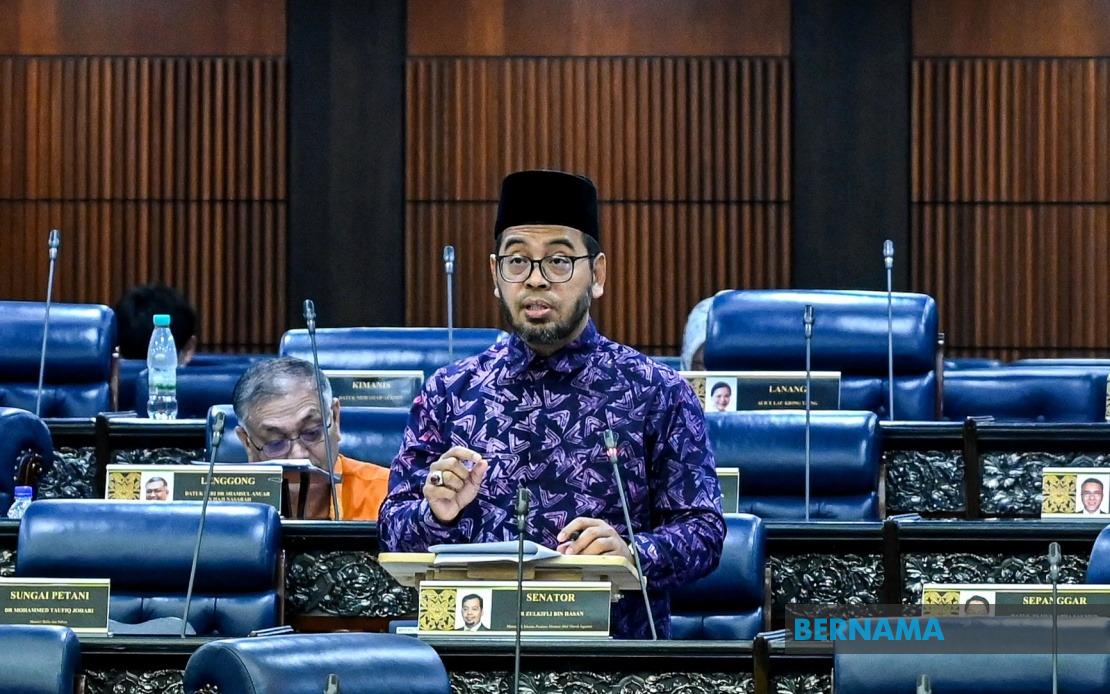
Malaysia's religious authorities are embarking on an ambitious nationwide monitoring programme to address what they characterise as deviant Islamic teachings proliferating across digital channels and transcending geographical boundaries. Dr Zulkifli Hasan, the Minister in the Prime Minister's Department overseeing Religious Affairs, outlined the escalating challenge to Parliament, emphasising that the government is mobilising resources across multiple agencies to contain ideological trends deemed incompatible with Ahli Sunnah Wal Jamaah orthodoxy. The strategic shift reflects growing recognition that traditional enforcement mechanisms designed for physical gatherings are insufficient in an era where religious discourse increasingly occurs through encrypted messaging applications, social media platforms and online communities that operate beyond conventional regulatory oversight.
The landscape of religious dissent in Malaysia has undergone significant transformation, migrating from localised, underground assemblies to decentralised digital ecosystems that present formidable detection and intervention challenges. Unorthodox movements have become increasingly sophisticated in their recruitment methodologies, framing their activities within contexts that appear legitimate to potential adherents. These groups leverage motivational seminars, wellness programmes, charitable frameworks and informal educational initiatives as entry points, subsequently introducing theological positions that diverge from state-sanctioned Islamic interpretation. The use of psychological manipulation techniques, conspiracy narratives and charismatic leadership figures amplifies their appeal, particularly among younger Malaysians seeking alternative spiritual frameworks or community belonging outside establishment structures.
The government's response represents a comprehensive whole-of-government architecture, bringing together the Department of Islamic Development Malaysia (JAKIM), state-level Islamic religious authorities, federal police, the Malaysian Communications and Multimedia Commission, the National Security Council, municipal governments, immigration officials and civil registration departments. This administrative integration signals recognition that countering ideological movements requires intelligence sharing, coordinated enforcement and complementary regulatory approaches across traditionally siloed institutions. The coordination mechanism seeks to identify patterns of deviant teaching propagation, track individuals involved in dissemination and intercept digital communications containing prohibited theological content, though the specifics of surveillance capabilities and digital monitoring techniques remain officially undisclosed.
Recent enforcement operations demonstrate the tangible manifestation of this coordinated strategy. In May, authorities conducted a significant operation in Sabah resulting in the detention of 288 individuals identified as Ahmadiyya Qadiani followers, one of the most substantial apprehensions of members from this unorthodox movement in recent years. Subsequently, a raid on a Syiah religious centre in Petaling Jaya, a major urban centre within the Federal Territories, led to the detention of 226 foreign nationals allegedly engaged in propagating Twelver Shia theology. These operations illustrate the government's willingness to employ enforcement tools against both indigenous movements and foreign nationals perceived as introducing competing Islamic interpretations into the Malaysian religious marketplace.
The interventions extend considerably beyond detention and enforcement action. The government has established rehabilitation mechanisms designed to reintegrate individuals who have adopted deviant teachings back into mainstream Islamic frameworks. Targeted counselling programmes address affected individuals and community leaders, while Syariah courts mandate placement in faith rehabilitation centres where inmates receive intensive religious instruction emphasising orthodox theology. These rehabilitation initiatives represent a softer approach than purely punitive responses, premised on the assumption that many adherents to unorthodox movements are susceptible to re-education and ideological reorientation through sustained engagement with qualified Islamic scholars and religious authorities.
Capacity-building efforts targeting younger populations constitute a preventive dimension of the government's strategy. The National Steering Committee to Address Threats to Faith coordinates programmes across the education sector, encompassing initiatives by the Ministry of Education and Ministry of Higher Education. The Institut Pemantapan dan Perkaderan Akidah Malaysia (IPHAM) has expanded its activities, while new programmes including My Insaniah and Rakan Masjid operate in partnership with the Youth and Sports Ministry, seeking to strengthen Islamic identity and theological resilience among young Malaysians. Significantly, the government has invested in curriculum enhancement through KAFA 2.0, the standardised Quranic and obligatory religious knowledge programme, attempting to fortify orthodox understanding at foundational educational stages before alternative theological narratives gain traction among vulnerable youth populations.
The emphasis on youth-focused interventions reflects understanding that digital-native generations engage with religious content through fundamentally different mechanisms than their predecessors. Traditional mosque-based religious learning competes with algorithmically-curated content feeds, influencer-driven spiritual communities and transnational Islamic movements accessible through VPN applications and mirrored websites. By reconstructing religious education curricula and creating government-endorsed spiritual development pathways, Malaysian authorities seek to provide orthodox alternatives that address genuine spiritual seeking motivations while channelling them toward state-sanctioned interpretations. The success of such preventive approaches depends heavily on their ability to offer compelling theological narratives and authentic community experiences comparable to what unorthodox movements provide to their adherents.
The regional implications of Malaysia's approach warrant consideration. As a multilingual, multiethnic Muslim-majority nation with significant diaspora communities, Malaysia occupies a distinctive position within global Islamic discourse networks. Unorthodox movements often establish regional coordination centres within Malaysia to influence Southeast Asian populations across borders. The government's surveillance and enforcement mechanisms therefore function not merely as domestic religious management tools but as regional firewalls attempting to prevent theological innovations originating in the Middle East, South Asia or Western contexts from establishing institutional footholds in Malaysian territory. This defensive posture reflects anxieties that alternative Islamic interpretations might generate instability or fragment the consensual religious framework upon which Malaysian multireligious governance depends.
However, the government's monitoring intensification raises complex questions about the boundaries between legitimate religious pluralism and prohibited doctrinal deviation. Determining which theological positions constitute unorthodox deviation rather than permissible jurisprudential interpretation involves theological judgments inherently contested within Islamic scholarship globally. The government's reliance on JAKIM determinations about orthodoxy effectively privileges one institutional interpretation, potentially constraining theological discourse and limiting the space for heterodox but non-threatening Islamic exploration. The targeting of foreign nationals engaged in Syiah religious instruction suggests that sectarian boundaries maintained in Middle Eastern contexts are being replicated and enforced within Malaysia, though these sectarian divisions historically held less salience in Southeast Asian Islamic practice.
The digital dimension of these enforcement efforts introduces additional complexities regarding surveillance scope and civil liberties implications. Monitoring messaging applications, social media communications and online religious communities requires technological capabilities potentially applicable far beyond the identification of unorthodox teachings. The involvement of the Malaysian Communications and Multimedia Commission and National Security Council in faith-related enforcement operations raises questions about potential function creep and the expansion of surveillance apparatus ostensibly justified by religious security concerns. Malaysian civil society observers have previously flagged concerns that religious security frameworks can facilitate monitoring of secular political dissent or minority religious communities, though such broader implications remain largely absent from official discourse.
The government's multi-institutional approach reflects pragmatic recognition that singular enforcement strategies prove inadequate against transnational, digitally-mediated movements characterised by decentralisation and adaptability. By combining law enforcement operations, rehabilitation programmes, preventive education and surveillance infrastructure, Malaysian authorities have constructed a comprehensive framework attempting to manage religious heterodoxy across multiple intervention points. Whether such investments successfully contain unorthodox teachings or merely redirect them toward more clandestine operational modes remains an open empirical question. The ultimate effectiveness of these initiatives depends substantially on the government's ability to simultaneously enforce ideological boundaries while addressing the underlying social, psychological and spiritual factors driving individuals toward alternative Islamic interpretations.

