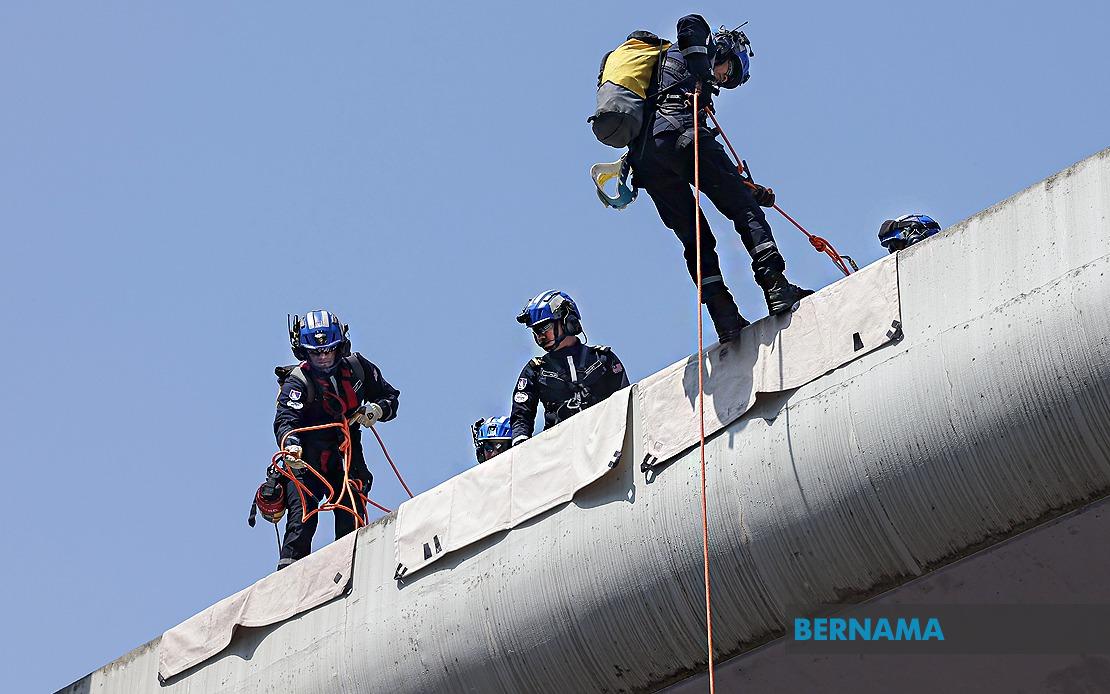
Malaysia has positioned its elite search and rescue capability on high alert to assist Nepal in the aftermath of devastating floods, though deployment remains contingent on formal approval from Nepali authorities. The National Disaster Management Agency (NADMA) confirmed on Friday that the Malaysian Special Search and Rescue Team (SMART) is operationally prepared and could be mobilised at short notice should Nepal's government formally request Malaysian intervention. The standby positioning represents Kuala Lumpur's commitment to regional disaster relief, while respecting the sovereign authority of the affected nation to determine which foreign assistance it requires.
NADMA's statement underscores a carefully calibrated approach to international humanitarian deployment. Coordination is being managed jointly with Malaysia's Foreign Ministry, ensuring that any operational decision is synchronised with diplomatic channels and Nepal's own assessment of rescue capacity needs. This multi-agency coordination reflects lessons learned from previous regional disasters, where premature or uncoordinated deployments sometimes complicated response efforts. The agency emphasised that readiness does not automatically translate to action; Nepal must signal both willingness to receive Malaysian assistance and identified requirements that SMART's specialised capabilities can meaningfully address.
Senior Fire Superintendent I Abdul Manaf Che Isa, commanding the SMART contingent, conveyed the team's high state of preparedness despite competing demands on personnel. Remarkably, the unit is simultaneously maintaining its involvement in Malaysia's National Day parade scheduled for Saturday—the nation's 69th independence celebration—while remaining primed for rapid redeployment overseas. This dual commitment illustrates the operational flexibility demanded of elite rescue personnel, who must balance ceremonial obligations with the unpredictable nature of international disaster response. Che Isa's assurance that the team can mobilise at minimal notice underscores both their training intensity and the administrative infrastructure supporting rapid overseas deployments.
Prime Minister Anwar Ibrahim formalised Malaysia's comprehensive response package, directing SMART to pursue a multi-pronged mission beyond conventional search and rescue operations. The deployment mandate explicitly includes locating Malaysian nationals affected by the flooding and facilitating their return home, recognising that major natural disasters often leave diaspora communities vulnerable and in need of coordinated repatriation assistance. Additionally, SMART personnel would work with Malaysia's Embassy in Nepal to facilitate broader humanitarian coordination, helping Malaysian authorities channel assistance to affected populations and maintaining oversight of fellow citizens' welfare.
The financial contribution of US$1 million announced by Anwar positions Malaysia among Nepal's international supporters at a critical juncture. While modest in absolute terms, the commitment demonstrates tangible economic backing for immediate relief efforts and longer-term recovery infrastructure. This bilateral assistance approach—combining skilled human resources with financial resources—represents a conventional model for Malaysian disaster diplomacy in the region. The funding targets both immediate victim assistance and post-disaster reconstruction, recognising that flood recovery extends well beyond the initial emergency phase into weeks of restoration work affecting agriculture, housing, and infrastructure.
Nepal's vulnerability to flooding reflects both geographical realities and climate dynamics increasingly relevant to South Asian nations. The country's mountainous terrain, monsoon weather patterns, and the presence of major river systems create recurrent flood hazards that periodically overwhelm local response capacity. For Malaysia, engagement in Nepalese disaster relief carries broader significance for Association of Southeast Asian Nations (ASEAN) positioning within South Asia, demonstrating willingness to extend assistance beyond the bloc's formal membership. Such engagement builds diplomatic capital and reinforces Malaysia's image as a responsible regional actor, particularly important given competing great-power influences in South Asia.
SMART's institutional profile has evolved significantly since its establishment as Malaysia's premier search and rescue asset. The unit has participated in major international deployments following the 2004 Indian Ocean tsunami, the 2015 Nepal earthquake, and various other regional emergencies. This operational experience informs current readiness protocols and the team's capacity to operate effectively in unfamiliar terrain under challenging conditions. Nepal's mountainous environment, limited infrastructure access, and potential language barriers present particular operational complexities that SMART's training regime explicitly addresses through scenario-based preparation.
The diplomatic nuance surrounding deployment approval reflects evolving international norms around humanitarian intervention. Unlike medical or logistical assistance, which countries readily accept from multiple sources, search and rescue operations involve armed or paramilitary personnel operating in sovereign territory. Nepal's government must balance genuine need for international expertise against concerns about foreign military presence, media management, and ensuring that external assistance complements rather than displaces domestic capabilities. NADMA's patient stance—maintaining readiness without presuming acceptance—respects these legitimate concerns while ensuring Malaysia can respond swiftly if and when approval materialises.
The timing of Malaysia's offer carries geopolitical undertones within South Asian regional dynamics. India, as Nepal's immediate neighbour and primary security partner, typically leads regional disaster response. Malaysian engagement signals that smaller Asian nations possess genuine disaster management capacity worthy of international recognition, and that humanitarian assistance extends beyond immediate geographic proximity. For Malaysian policymakers, Nepal deployments also serve to maintain institutional expertise and operational readiness that might otherwise atrophy without regular overseas missions, effectively converting humanitarian impulses into practical military capability maintenance.
Looking forward, the extent to which Nepal accepts Malaysian assistance may set precedent for future regional deployments. Should SMART deploy successfully and contribute meaningfully to Nepali relief efforts, positive outcomes would enhance Malaysia's standing as a reliable international partner and potentially encourage requests for assistance in future emergencies. Conversely, if Nepal's government determines that existing bilateral support networks suffice, that decision would also carry valid operational logic. Either outcome underscores that genuine humanitarian partnership requires respecting recipient nation sovereignty and avoiding the paternalistic assumption that larger or more developed nations automatically know best how affected populations should be assisted.

