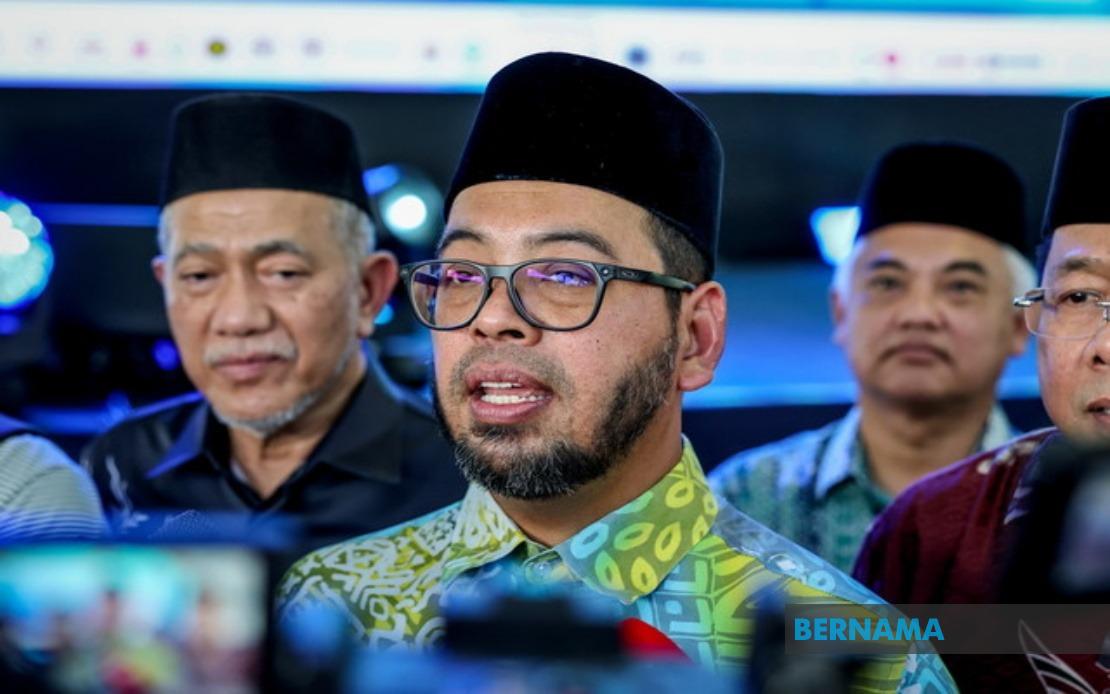
Malaysia has solidified its position as one of the world's foremost nations in managing Islamic affairs, according to Minister in the Prime Minister's Department (Religious Affairs) Dr Zulkifli Hasan, who highlighted the country's institutional achievements and policy frameworks that have earned widespread international admiration. Speaking at the opening of the Northern Zone MADANI Ulama and Umara Multaqa at Masjid Timah in Permatang Pauh, Dr Zulkifli stressed that Malaysia's global standing in this domain rests on concrete evidence and the observations of international scholars rather than subjective claims.
The minister's remarks carry particular significance given the ongoing narrative in some quarters that Islam faces marginalisation within Malaysia. By contrast, the international perspective recognises Malaysia as playing a pivotal role not merely in managing its own religious affairs but in advancing Islamic governance and religious administration at the global stage. This external validation offers a compelling counterpoint to domestic debates about the status of Islam in the Malaysian context, demonstrating that international institutions and observers view the country as a custodian of best practices in Islamic management.
During his travels abroad, Dr Zulkifli noted that Malaysia's approach to Islamic affairs is consistently studied and admired by other nations seeking to develop their own frameworks. The statistical evidence underpinning this international recognition extends across multiple sectors, indicating that Malaysia's success is not concentrated in a single area but rather reflects a comprehensive ecosystem of institutions and policies working in concert. This multifaceted approach has enabled Malaysia to maintain its standing despite evolving global challenges and shifting international priorities regarding religious affairs.
Malaysia's halal certification system, administered by the Department of Islamic Development Malaysia (JAKIM), stands as a flagship achievement that has earned recognition as among the world's most rigorous and credible. The halal certification framework has become increasingly significant in global commerce, particularly as Muslim-majority and Muslim-minority nations alike seek reliable assurance mechanisms for food and consumer products. JAKIM's standards have become a reference point for international certification bodies, reflecting Malaysia's technical expertise and commitment to authentic implementation of Islamic dietary requirements.
The country's Islamic finance sector represents another cornerstone of Malaysia's global leadership in Islamic affairs management. Malaysian Islamic banking and capital markets have maintained the world's top ranking for eleven consecutive years, a sustained achievement that underscores institutional stability and investor confidence. This prominence extends beyond Malaysia's borders, as the nation's financial regulatory frameworks and Shariah-compliant instruments have influenced the development of Islamic finance globally. The sector's continued growth demonstrates that religious governance and economic development need not be viewed as competing priorities but can reinforce one another when properly managed.
Haj management through Lembaga Tabung Haji has earned repeated international recognition for its operational efficiency and care for Malaysian pilgrims. The annual pilgrimage represents both a spiritual obligation and a logistical undertaking of immense complexity, requiring coordination across multiple national and international stakeholders. Malaysia's success in this domain reflects institutional competence and a deep understanding of the hajj's religious and cultural significance, earning the country respect within international Islamic circles and among other Muslim nations facing similar organisational challenges.
In the educational sphere, Malaysia has invested substantially in developing its Islamic curriculum and creating comprehensive pathways for students pursuing Islamic knowledge. The government's initiative to strengthen the Kelas Al-Quran dan Fardu Ain (KAFA) curriculum through the KAFA 2.0 programme represents an evolution beyond rote memorisation toward deeper understanding and practical application of Islamic teachings. This pedagogical shift acknowledges contemporary educational best practices while remaining rooted in Islamic methodology, positioning Malaysian Islamic education as forward-thinking rather than static or insular.
The tahfiz ecosystem constitutes a particularly innovative contribution to Malaysia's Islamic affairs management framework. By establishing the National Tahfiz Council, National Tahfiz Policy, National Tahfiz Standard, and the Malaysia Tahfiz Certificate, the government has created formal recognition and pathways for those pursuing memorisation of the Quran. Significantly, the system enables tahfiz graduates to transition into professional, technical, and higher education fields, addressing a longstanding concern that religious education might create limited career prospects. This integration demonstrates sophisticated policy design that values religious scholarship while ensuring economic viability for practitioners.
The government has explicitly committed to producing professional huffaz—those who have memorised the Quran—capable of contributing meaningfully to national development. This framing positions religious scholars not as separate from or peripheral to national development goals but as integral contributors. The emphasis on professionalism and contribution to the broader nation reflects an understanding that Islamic affairs management in modern Malaysia requires individuals who can navigate both religious and secular domains with competence.
During the same event, Yayasan Takwa made a financial contribution of RM280,000 distributed among twenty-eight mosques throughout Penang, with each institution receiving RM10,000. Selected religious schools also benefited from similar allocations, with each receiving RM10,000 to support their educational development initiatives. This targeted funding underscores the practical commitment to strengthening Islamic institutions at the grassroots level, complementing the policy-level and institutional achievements that have garnered international recognition. The combination of high-level regulatory frameworks, international cooperation, and community-level financial support creates a comprehensive approach to Islamic affairs management that addresses both strategic and immediate institutional needs.
For Malaysian policymakers and regional observers, these achievements suggest that successful management of Islamic affairs at a national level requires sustained institutional investment, clear policy frameworks, international engagement, and community participation. As Southeast Asian nations increasingly grapple with questions regarding religious governance and interfaith relations, Malaysia's multifaceted approach offers instructive examples of how religious affairs can be administered professionally while maintaining authenticity and public confidence. The international recognition Dr Zulkifli referenced provides context for understanding Malaysia's evolving role within the Organisation of Islamic Cooperation and broader networks of Muslim-majority nations engaging with global Islamic affairs.

