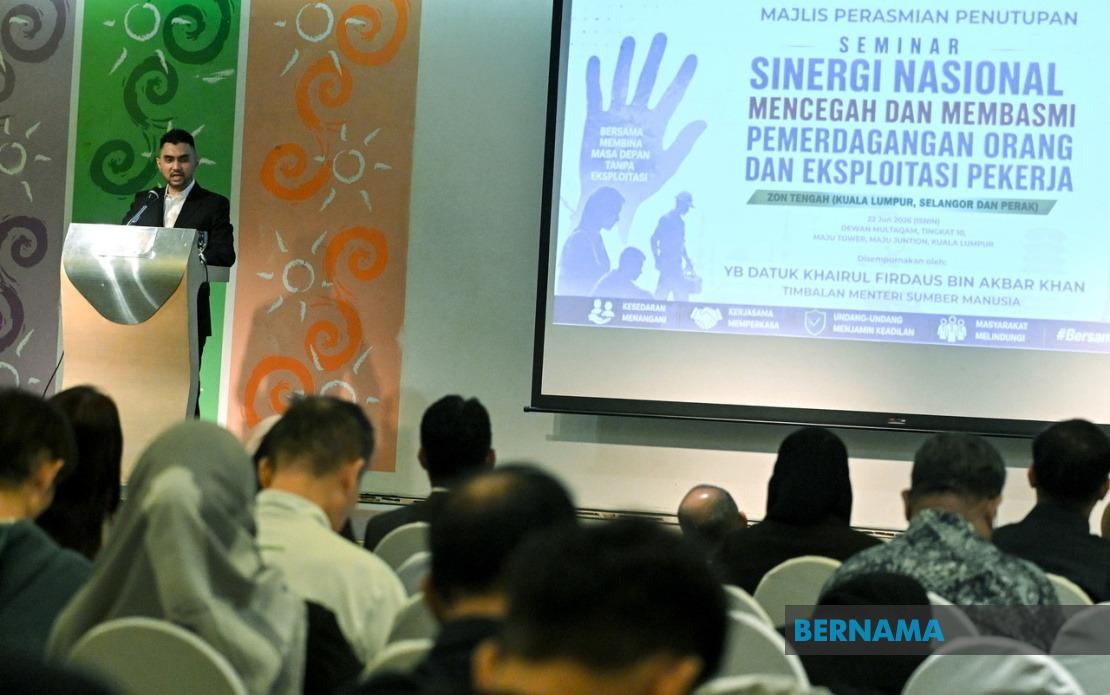
The number of human trafficking victims rescued in Malaysia has trended downward over the past three years, according to data released by the Deputy Human Resources Minister Datuk Khairul Firdaus Akbar Khan. Records from the Peninsular Malaysia Manpower Department reveal 70 victims were rescued in 2023, falling to just 10 the following year. This year has seen a modest uptick to 17 victims identified through May, marking a substantial reduction from the 2023 figure. The apparent success reflects intensified government crackdowns and prevention initiatives aimed at dismantling trafficking networks and protecting vulnerable workers.
Yet Khairul Firdaus sounded a cautionary note during remarks at the closing of a national prevention seminar in Kuala Lumpur, emphasizing that declining reported cases do not necessarily indicate the problem has been solved. He acknowledged a troubling reality facing law enforcement across the region: many trafficking incidents never reach official records because victims remain hidden or unaware of assistance available to them. This gap between reported and actual cases underscores a persistent challenge for Malaysian authorities attempting to gauge the true scale of human trafficking and labour exploitation within their borders.
The government's enforcement machinery has been working at full capacity to identify and rescue trafficking victims. Between January and May of this year alone, authorities conducted 386 labour-related enforcement operations throughout Malaysia, resulting in 311 investigation papers being opened. These figures demonstrate sustained commitment to rooting out exploitative practices across industries where trafficking typically occurs, including construction, agriculture, domestic work, and manufacturing sectors. Each investigation represents potential victims identified and removed from dangerous situations, though the relatively small rescue numbers suggest either successful prevention or the possibility that enforcement efforts are not yet reaching all trafficking hotspots.
Malaysia's approach to combating forced labour aligns with international standards established by the International Labour Organisation, protocols that the country has formally ratified. This commitment to global norms reflects growing recognition that trafficking and labour exploitation are transnational issues requiring coordinated responses. By binding itself to ILO standards, Malaysia signals its intention to adopt best practices in victim identification, prosecution of traffickers, and rehabilitation of survivors. The alignment also facilitates cooperation with neighbouring countries and international partners investigating trafficking networks that often operate across borders throughout Southeast Asia.
To bolster awareness and prevention, Malaysian authorities have launched a National Synergy Seminar series touring different regions of the country. The Central Zone programme, where Khairul Firdaus made his remarks, represents part of this broader educational initiative designed to expose trafficking vulnerabilities and equip communities with knowledge about exploitation warning signs. Earlier seminars in the North Zone at Sungai Petani, Kedah in May and the South Zone at Kluang, Johor in June drew collectively substantial participation. Nearly 1,000 stakeholders attended these events, including law enforcement, labour officials, NGO representatives, and community leaders who shared perspectives on addressing the crisis systematically.
The seminar format itself reflects an important strategic shift toward collaborative problem-solving. Rather than treating human trafficking as solely a law enforcement matter, Malaysian authorities increasingly recognize the need for multisectoral engagement. Participants at these events discuss root causes of trafficking, such as poverty and limited economic opportunity, alongside immediate intervention strategies. This comprehensive approach acknowledges that sustainable solutions require addressing both supply-side factors that make people vulnerable to exploitation and demand-side factors that create markets for trafficked labour.
For Malaysian businesses and employers, these enforcement operations and awareness campaigns carry implications for workplace practices. Companies operating in sectors with high trafficking risks face heightened scrutiny, and penalties for complicity or negligence in preventing exploitation have become more severe. The government's focus on labour enforcement means regular surprise inspections and investigations are increasingly likely, particularly in industries employing migrant workers or contract labourers. Employers who have not yet conducted internal audits of their supply chains and labour practices may face unexpected compliance challenges.
Regionally, Malaysia's trafficking situation reflects patterns common throughout Southeast Asia, where demand for cheap labour and geographic proximity to labour-sending countries creates persistent opportunities for exploitation. The country's status as both a destination and transit point for trafficking adds complexity to prevention efforts. Victims are often moved through Malaysia en route to third countries, meaning some cases involve cooperation with foreign governments and international agencies. This regional dimension makes bilateral and multilateral cooperation essential for disrupting trafficking routes and prosecuting organised crime networks involved in the trade.
The decline in reported rescues, while superficially encouraging, masks deeper structural challenges. Trafficking victims often lack trust in authorities, fear deportation or legal consequences, or remain unaware that they are being exploited. Language barriers, isolation, and debt bondage tactics used by traffickers all contribute to underreporting. Additionally, some experts argue that preventive success may reduce trafficking volumes in certain sectors while simply displacing the problem to less-monitored areas. The government's candid acknowledgement that unreported cases likely dwarf official statistics suggests awareness of these limitations and a recognition that continued vigilance is essential.
Looking forward, Malaysia's challenge lies in converting enforcement momentum into structural change that addresses trafficking's root causes. This requires sustained investment in victim rehabilitation programmes, improved training for frontline workers in identifying trafficking signs, and economic development initiatives that reduce the desperation driving vulnerable populations toward traffickers' recruitment efforts. The national seminar series represents one component of this broader strategy, but its long-term effectiveness depends on whether participating stakeholders translate awareness into concrete action within their respective organisations and communities. For Malaysia to move beyond celebrating declining statistics, authorities must ensure that prevention infrastructure reaches the hidden populations most at risk of exploitation.