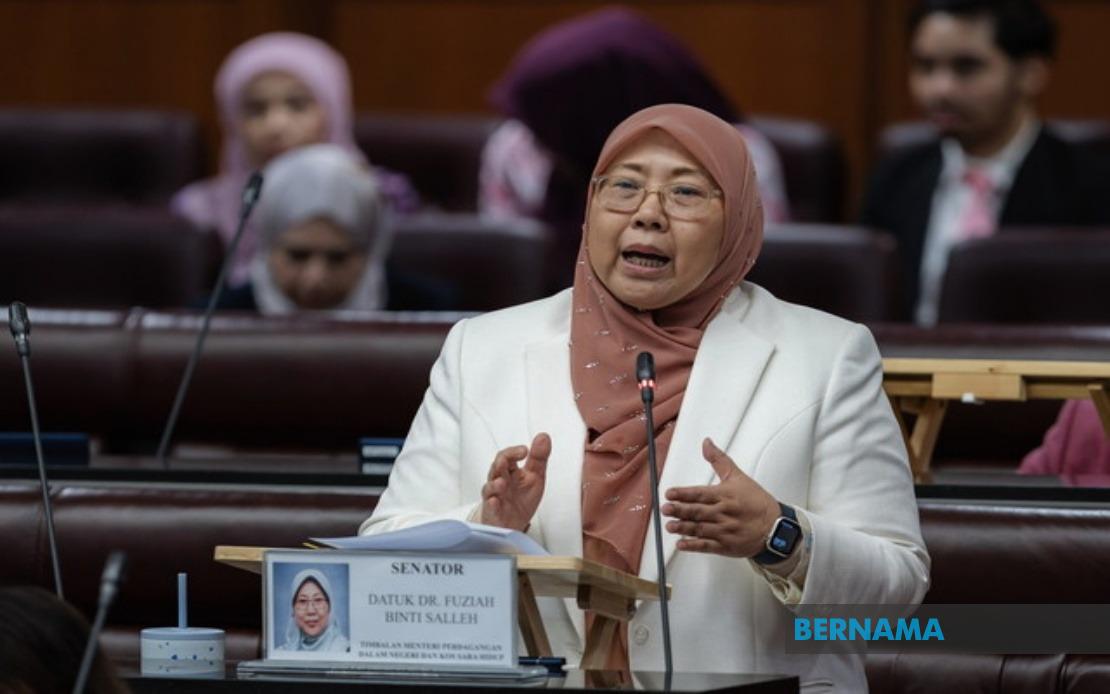
Malaysia's government has reaffirmed that copyright owners must grant permission before their creative works are used to train artificial intelligence models, establishing a clear legal framework that extends existing protections into the rapidly evolving AI sector. Deputy Domestic Trade and Cost of Living Minister Datuk Dr Fuziah Salleh made this clarification during parliamentary proceedings at the Dewan Negara, responding to concerns raised by lawmakers about whether local creators and copyright holders receive adequate protection when their intellectual property forms the foundation for machine learning systems.
The clarification addresses a growing tension between technology developers seeking unrestricted access to training data and creative professionals worried about unauthorized use of their work. Under Malaysia's Copyright Act 1987, the legal principle remains consistent regardless of how copyrighted material is deployed—whether for traditional purposes or modern AI applications, copyright holders retain exclusive rights and must be compensated. This stance places Malaysia in alignment with several international jurisdictions grappling with similar questions about the intersection of intellectual property law and artificial intelligence development.
Fuziah emphasized that Section 27 of the Copyright Act 1987 provides flexibility in how compensation arrangements are structured between interested parties. Rights holders and AI developers can negotiate direct licensing agreements, assign rights through contractual arrangements, or utilize Collective Management Organisations that represent groups of creators. This framework theoretically allows Malaysian creators—from musicians and writers to photographers and visual artists—to participate in the economic value generated by AI systems trained on their content, though practical implementation remains complex.
The government's position reflects concern that without explicit permission requirements, Malaysia's creative industries could be disadvantaged in the global AI economy. Local artists, authors, journalists, and other content creators might see their work incorporated into training datasets without compensation while international technology companies profit from AI systems built on that intellectual property. The minister's statement provides reassurance that existing copyright mechanisms can be adapted to address these concerns, though enforcement and practical oversight remain open questions.
However, Malaysia has not yet initiated a comprehensive examination of how AI development affects employment and income for creative professionals within the country. Senator Wan Martina Wan Yusoff raised this concern during the same parliamentary session, questioning whether the government understands the downstream economic impacts on Malaysian creators as AI systems become more sophisticated and potentially replace human-generated content in some applications. Fuziah acknowledged this gap, indicating the government is conducting ongoing consultations with various stakeholders before implementing new policies.
The government's cautious approach reflects the rapid evolution of artificial intelligence technology, which presents policymakers with challenges in regulating a sector that changes faster than legislation can typically adapt. Rather than rushing to enact new laws, Malaysian authorities are studying how other countries—including the United States, European Union nations, and others—are addressing AI and copyright issues. This comparative analysis aims to identify effective regulatory models while avoiding unintended consequences that might stifle innovation or create unworkable compliance burdens for Malaysian tech companies and startups.
Currently, Malaysia has not recorded any court cases specifically involving copyright violations arising from AI model training, suggesting either that disputes have been resolved outside the courts or that legal challenges have not yet materialized. This absence of litigation does not indicate there are no underlying conflicts, but rather that the issue remains relatively new to Malaysian legal practice. As AI adoption accelerates across Southeast Asia, test cases will likely emerge, potentially establishing judicial precedents that guide how copyright protections apply in AI contexts.
A key distinction in Malaysia's copyright framework centers on the definition of protectable works. The Copyright Act 1987 recognizes copyright only in works that demonstrate originality arising from human creativity, effort, skill, and intellectual contribution. Fully automated AI-generated content—material created without meaningful human involvement—does not qualify for copyright protection under current law. This distinction becomes increasingly important as generative AI systems produce images, text, code, and other content with minimal human guidance, raising questions about authorship and ownership rights in an era of machine-generated creation.
The practical implications of Malaysia's position extend beyond simple permission and licensing frameworks. Educational institutions, research organizations, and commercial entities developing AI systems face uncertainty about what constitutes permissible training data use. While the legal answer is straightforward—get permission from copyright holders—the logistical reality is considerably more complex. Identifying rightsholder, negotiating terms, and managing payment arrangements across thousands or millions of copyrighted works embedded in training datasets presents significant practical obstacles that the government has not yet addressed through detailed guidance or regulatory frameworks.
For Malaysia's position to be meaningful and enforceable, the government would need to develop practical mechanisms for copyright holders to assert their rights, establish fair compensation standards, and monitor compliance. Without such infrastructure, the policy risks becoming a statement of principle that lacks enforceability in practice. This gap between legal declaration and practical implementation represents a critical challenge that Malaysian policymakers must address as AI becomes more integrated into the economy and society.
The government's ongoing consultations with stakeholders suggest recognition that a comprehensive approach is necessary. This engagement should include technology companies, creative industry representatives, academic institutions, and consumer advocates to balance legitimate interests in AI innovation against protection for intellectual property rights and creative livelihoods. The outcomes of these consultations will likely determine whether Malaysia develops a regulatory framework that becomes a regional model or remains a general principle without effective enforcement mechanisms. As artificial intelligence fundamentally reshapes how content is created, distributed, and valued, Malaysia's approach to copyright in this context will have ripple effects across Southeast Asia's emerging digital economy.

