Malaysia's mangrove restoration efforts have reached a significant milestone, with authorities announcing that approximately 3,965 hectares of these critical coastal ecosystems have been rehabilitated through an intensive nationwide tree-planting programme. The restoration work, which has involved the establishment of more than 9.3 million mangrove and complementary coastal species across the country's shorelines, underscores a strategic governmental push to preserve vital natural habitats whilst simultaneously supporting broader economic development objectives centred on sustainable use of marine resources.
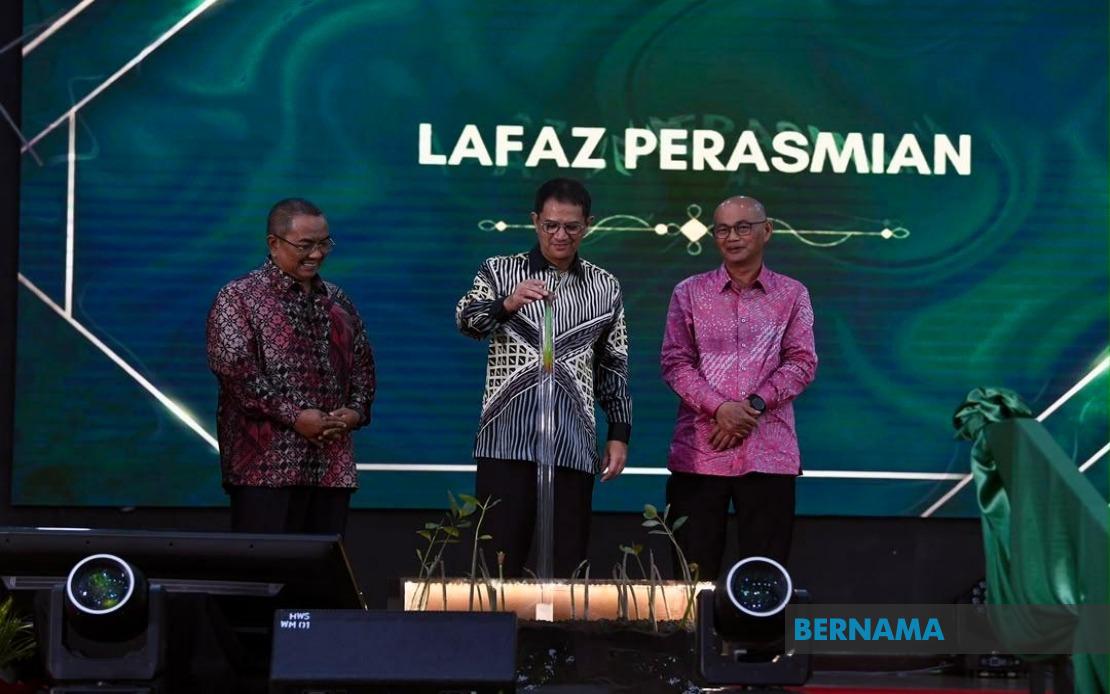
The achievement was highlighted during the National-level International Day for the Conservation of the Mangrove Ecosystem 2026 celebration held in Alor Setar, where Natural Resources and Environmental Sustainability Minister Datuk Seri Arthur Joseph Kurup emphasised that the restoration drive reflects a genuine commitment from Putrajaya to maintaining coastal biodiversity. Mangrove forests serve as nurseries for commercially important fish species, provide critical storm surge protection, and function as natural carbon sinks—making their conservation strategically important for both environmental security and economic resilience across the region.
The financial commitment underpinning these restoration activities has been substantial. Between now and 2025, the government has channelled RM71.3 million through the National Coastal Mangrove and Suitable Species Tree Planting Programme to fund not only the physical planting operations but also associated maintenance work, scientific research, ecosystem monitoring, and community education initiatives. This multi-year investment framework demonstrates that authorities recognise mangrove preservation as requiring continuous resource commitment beyond initial tree-planting phases, a perspective often lacking in earlier environmental programmes that frequently faltered after initial implementation.
Looking ahead to 2026 and beyond, momentum appears set to continue. An additional RM2 million allocation has been confirmed under the 13th Malaysia Plan specifically for mangrove conservation and coastal zone preservation efforts spanning Peninsular Malaysia, Sabah, and Sarawak. This pan-Malaysian geographic scope is particularly significant, as it indicates the government's intention to address mangrove challenges uniformly across the country's diverse coastal regions rather than concentrating resources on politically prominent areas or those with the highest urban populations.
The restoration programme has fundamentally depended on establishing robust interagency coordination mechanisms. Forestry Peninsular Malaysia serves as the primary implementing body, working alongside the Sabah Forestry Department and Sarawak Forest Department to ensure consistent standards and practices across state boundaries. The inclusion of the Forest Research Institute Malaysia adds a crucial scientific dimension, enabling the programme to incorporate research findings into operational management strategies and to monitor long-term ecosystem health through rigorous data collection protocols.
A critical distinguishing feature of Malaysia's approach has been the deliberate integration of non-governmental organisations and grassroots community groups into implementation frameworks. During the Alor Setar ceremony, Kedah Raja Muda Tengku Sarafudin Badlishah Ibni Sultan Sallehuddin presented certificates of appreciation to four separate NGOs and community organisations, formalising recognition of their contributions to mangrove ecosystem work. This collaborative model reflects an understanding that environmental conservation at scale requires engagement extending well beyond government agencies, tapping into the commitment and local knowledge that civil society organisations and affected communities can provide.
The integration of environmental education and public awareness into the restoration programme carries particular importance for long-term sustainability prospects. Beyond simply planting trees and monitoring growth rates, authorities have recognised that securing durable conservation outcomes requires shifting public attitudes regarding mangrove ecosystems. Many Malaysian communities, particularly those with limited exposure to coastal environments, historically viewed mangrove areas as unproductive wastelands suitable for conversion to aquaculture ponds, industrial facilities, or urban development. Systematic public engagement represents an attempt to reframe these perceptions, presenting mangrove forests as valuable assets worthy of protection.
The event also featured the National Mangrove and Coastal Ecosystem Seminar 2026, which provided structured forums for knowledge exchange among researchers, technical specialists, government officials, and various stakeholders. The seminar included presentation of twelve research papers, fifteen technical posters, and operation of nine exhibition booths covering diverse aspects of mangrove management, restoration science, and conservation methodology. Such platforms enable practitioners across different jurisdictions and disciplines to identify best practices, discuss emerging challenges, and build networks that can support programme implementation over extended timeframes.
For regional context, Malaysia's mangrove restoration programme sits within a broader Southeast Asian pattern of environmental policy maturation. Countries across the region have increasingly recognised that coastal zones represent frontline areas where climate impacts—including sea-level rise, increased storm intensity, and changing precipitation patterns—will first manifest with economic consequences. Mangrove ecosystems, being naturally adapted to dynamic coastal conditions, offer both environmental and climate adaptation benefits, making their preservation strategically aligned with regional climate resilience objectives outlined in frameworks such as the ASEAN Comprehensive Investment Agreement and various bilateral environmental cooperation agreements.
The mangrove conservation initiative also links explicitly to the "blue economy" framing that dominates contemporary Malaysian economic policy discourse. This conceptual framework positions sustainable exploitation of marine and coastal resources as central to achieving long-term prosperity in the post-pandemic era. Mangrove forests support fisheries, enable carbon credit generation through REDD+ mechanisms and nature-based climate solutions, and increasingly constitute natural infrastructure assets that reduce government expenditure on conventional coastal protection engineering. By investing in mangrove restoration under blue economy rubrics, policymakers position environmental conservation as economically rational rather than as a cost imposed on productive sectors.
Implementation challenges remain, however, particularly regarding long-term maintenance of restored areas and ensuring that replanted ecosystems achieve full functional recovery. Tree survival rates in tropical restoration projects frequently fall below initial targets due to salinity fluctuations, competition from invasive species, inadequate maintenance funding following initial establishment phases, and climate variability. The allocation of resources specifically for maintenance activities within the broader RM71.3 million investment framework indicates awareness of these challenges, though sustaining such commitments through political cycles and competing budget priorities represents an ongoing test for programme durability.
Looking forward, the trajectory of Malaysia's mangrove restoration efforts will largely depend on whether financial commitments extend beyond announced allocations and whether interagency collaboration mechanisms can operate effectively at implementation levels. Success in Peninsular Malaysia, where urban pressures on coastal lands are most intense, may generate political momentum for expanding efforts in Sabah and Sarawak, where pristine mangrove forests remain under mounting threat from agricultural expansion and resource extraction activities. The framing of mangrove conservation as central to blue economy development—rather than as an environmental mitigation cost—may prove crucial in ensuring this commitment persists through successive government cycles.

