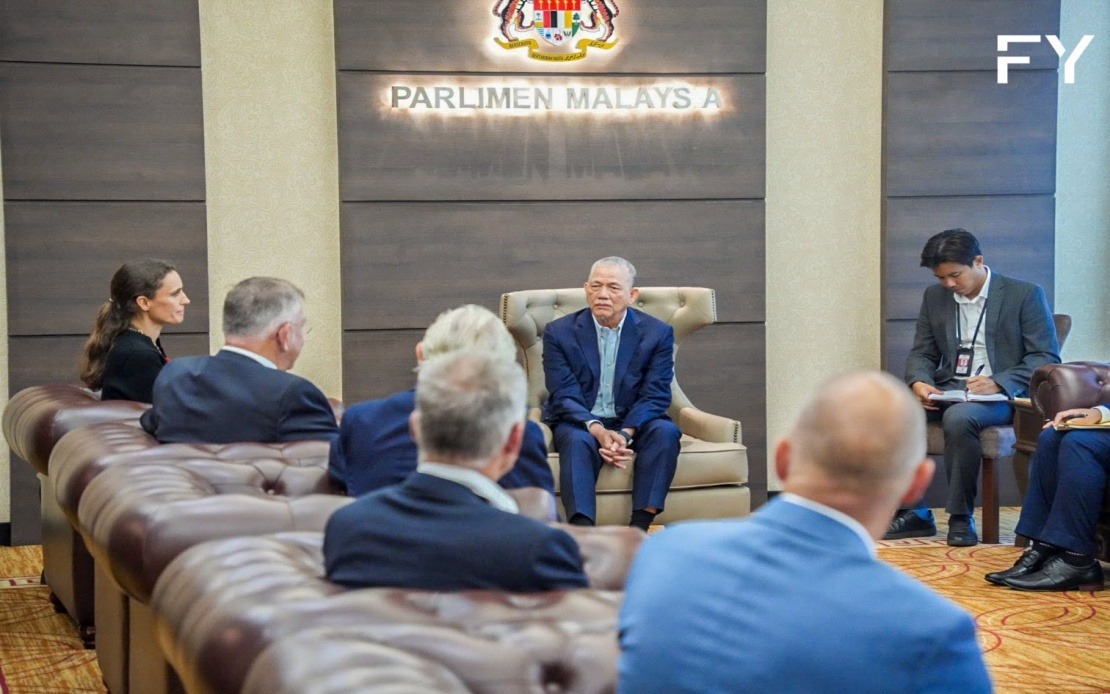
Malaysia is actively reaching out to German small and medium enterprises to bolster investment flows into emerging green sectors, according to Deputy Prime Minister Datuk Seri Fadillah Yusof. The message came during a high-level engagement at Parliament House on June 24 with Silke Riecken-Daerr, the German Ambassador to Malaysia, who arrived with representatives from the German SME Business Association. Fadillah's overture reflects Kuala Lumpur's strategic pivot toward attracting technology-driven enterprises aligned with the nation's long-term sustainability commitments.
The Deputy Prime Minister underlined that attracting capital into renewable energy, green technology development, and water management infrastructure represents a natural fit with Malaysia's broader sustainable development agenda. Rather than pursuing investment indiscriminately, the government is signalling a preference for sectors that address environmental challenges while creating modern employment opportunities. This targeted approach positions Malaysia as a destination for responsible foreign capital rather than competing purely on cost or labour availability.
Germany's standing as one of Malaysia's most valued bilateral partners provides substantial foundation for deepening commercial ties. The relationship has historically centred on mechanical engineering and advanced manufacturing technology, sectors in which German expertise and innovation have found receptive markets in Southeast Asia. With more than 800 German companies already operating across Malaysian territory in diverse sectors, from automotive components to industrial machinery, an established ecosystem exists to support new entrants and expansion initiatives.
The depth of existing German business presence in Malaysia extends beyond mere numbers and reflects structural interdependencies. German firms have invested significantly in local supply chains, worker training, and technology transfer arrangements. This embedded presence creates competitive advantages for additional German investment, as infrastructure, regulatory familiarity, and skilled labour pools already partially exist. Potential new entrants into green technology sectors can therefore leverage existing relationships and facilities rather than establishing operations from scratch.
Beyond immediate investment considerations, Fadillah highlighted vocational and technical education as a critical area for collaborative advancement. Germany's internationally recognised TVET system has earned global respect for consistently producing highly qualified workforces capable of navigating complex manufacturing and engineering challenges. The country's dual education model, combining classroom instruction with substantial on-the-job training, has become a benchmark for workforce development worldwide.
Malaysia faces intensifying pressure to upgrade human capital as regional competitors invest heavily in skills development and automation accelerates job displacement in lower-skilled sectors. By tapping German expertise in technical education frameworks, Malaysian institutions could restructure programmes to better align with evolving industry demands. Such cooperation could extend beyond manufacturing into emerging green sectors, where skilled technicians capable of installing, maintaining, and optimising renewable energy systems and water treatment facilities are in acute shortage across Southeast Asia.
The bilateral discussion reflected mutual recognition that technological advancement and workforce quality increasingly determine competitive positioning in global value chains. Malaysia's openness to absorbing German TVET methodologies signals awareness that attracting sophisticated foreign investment requires not merely tax incentives or infrastructure, but demonstrable capacity to deliver skilled personnel. Conversely, German SMEs seeking expansion markets need confidence that their operational environments will provide access to adequately trained employees.
Fadillah's confidence in strengthened bilateral relations rests on complementary economic interests rather than nostalgic historical ties. German industrial tradition emphasises precision, quality, and technological sophistication—attributes increasingly demanded by global supply chains. Malaysian market access, expanding middle-class consumption, and geographic position within ASEAN offer German enterprises significant commercial potential. Simultaneously, Malaysia gains technology transfer, employment generation, and enhanced industrial sophistication.
The timing of this diplomatic engagement carries significance within broader Malaysian policy currents. The government has committed to ambitious carbon neutrality targets and renewable energy capacity expansion. Private capital from technologically advanced foreign enterprises represents a crucial funding source and knowledge channel for achieving these objectives. German SMEs, typically more nimble than multinational corporations yet more sophisticated than local startups, occupy a particularly valuable niche for developing and scaling green technology solutions adapted to Southeast Asian conditions.
Water management and treatment technology represents a particularly acute strategic concern for Malaysia and the broader region. Climate variability, rapid urbanisation, and industrial expansion have intensified pressure on freshwater resources. German expertise in water treatment, recycling systems, and resource-efficient technologies addresses challenges directly relevant to Malaysia's long-term development. Investment in this sector carries multiplier benefits: environmental improvement, reduced municipal costs, industrial competitiveness enhancement, and employment creation across manufacturing and service segments.
The broader context involves Malaysia's positioning within global trade and investment flows as traditional manufacturing bases transition toward higher value-added activities. Rather than competing with lower-wage nations for labour-intensive assembly work, Malaysia aspires to develop capacity in knowledge-intensive sectors including renewable energy engineering, green chemistry, and sustainable resource management. German SME partnerships offer pathways toward this transition by providing technical knowledge, quality standards, and market connections.
For Malaysia's workforce, the implications extend beyond immediate job creation. Exposure to German technical standards and methodologies elevates overall industrial capability and establishes foundations for regional supply chain leadership. Workers trained in advanced green technologies gain credentials recognised across ASEAN and globally, enhancing career mobility and earning potential. This human capital development represents perhaps the deepest long-term benefit of the proposed cooperation.
Looking forward, translating Fadillah's welcoming message into concrete investment flows requires sustained effort across multiple dimensions. Regulatory frameworks must accommodate German SME operational preferences. Financial incentives must prove competitive without undermining fiscal sustainability. Educational institutions must adapt programmes in genuine partnership with German counterparts. Trade facilitation mechanisms must function efficiently. Success depends on institutional commitment extending well beyond diplomatic courtesy calls, requiring coordinated action across government agencies, educational bodies, and private sector intermediaries.