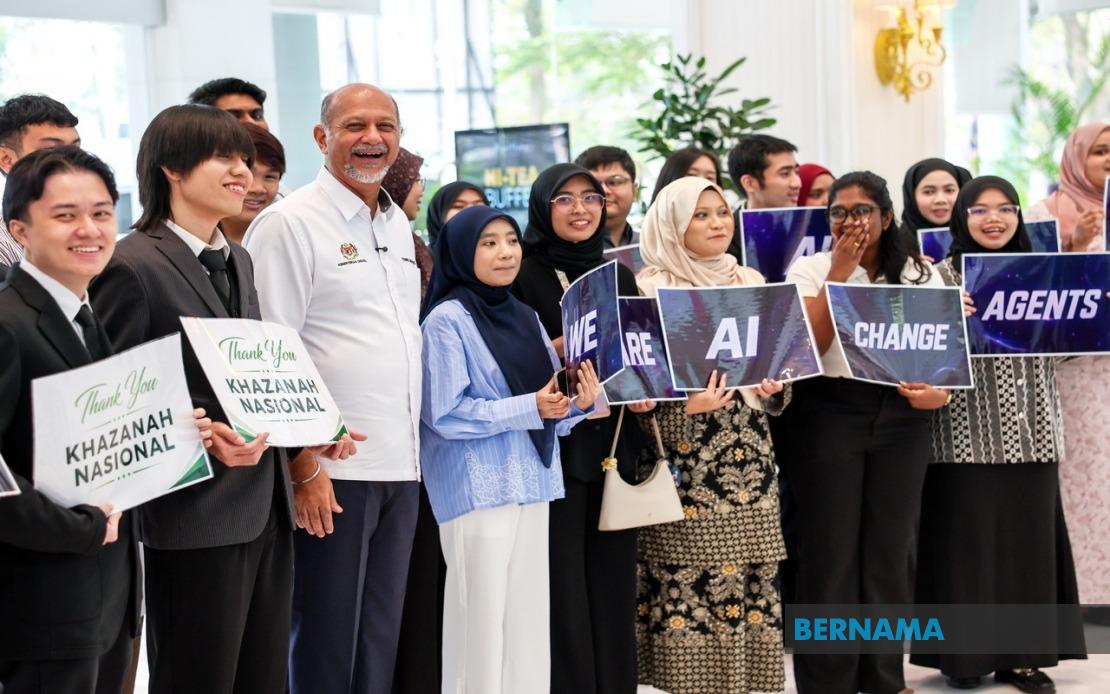
Malaysia's approach to technological governance is undergoing a fundamental shift from reactive problem-solving to strategic foresight, according to Digital Minister Gobind Singh Deo, who outlined the transformation during his address at the AI-Ready Malaysia Summit 2026 in Petaling Jaya. The minister emphasised that rapid technological advancement, particularly in artificial intelligence, demands a fundamentally different policy mindset—one that anticipates challenges and develops solutions before crises materialise rather than scrambling to address problems after they emerge.
The traditional governmental approach, Gobind explained, relied on formulating policies, legislation, and enforcement mechanisms only after issues had already surfaced. This retrospective methodology, while suitable for slower-moving technological environments, creates dangerous lags in response time and leaves critical vulnerabilities unaddressed during implementation phases. The Digital Minister characterised this reactive posture as increasingly incompatible with the accelerating pace of AI innovation and deployment across economies. By the time regulatory frameworks catch up to real-world challenges, the technology landscape has often shifted fundamentally, rendering those measures partially obsolete or insufficient for newly emergent threats.
To operationalise this strategic reorientation, the government has established AI Malaysia as a dedicated institutional body tasked with shepherding the nation's ambition to achieve AI nation status by 2030. Rather than functioning as a conventional ministry department, AI Malaysia serves as an anticipatory think-tank and implementation vehicle designed to model future scenarios, identify emerging risks across sectors, and develop policy and technical solutions that can be rapidly deployed when circumstances demand. This proactive architecture represents a sophisticated departure from Malaysia's conventional bureaucratic structures, which typically activate only after problems become visible to the public.
The scope of AI Malaysia's strategic focus extends across six critical economic and social sectors identified as central to the nation's future prosperity and stability. Agriculture remains fundamental to rural livelihoods and food security, particularly in an era of climate uncertainty. The transport sector encompasses autonomous vehicles, logistics optimisation, and urban mobility challenges that will reshape infrastructure investment and employment patterns. Healthcare, meanwhile, faces mounting pressure from ageing demographics and chronic disease burdens, where AI-driven diagnostics and treatment optimisation could yield transformative benefits. By concentrating resources on these six priority areas rather than attempting comprehensive AI governance across all sectors simultaneously, Malaysia adopts a strategic sequencing approach that maximises early wins and builds momentum.
Gobind underscored that legislation and policy instruments must be developed proactively as preparedness infrastructure. This forward-planning architecture allows the government to move swiftly from identification of an emerging issue directly to implementation without spending months navigating legislative drafting processes. Bills currently in development stages represent hypothetical responses to challenges that may materialise within 18 to 36 months, ensuring that when those challenges arrive, the legal and institutional machinery stands ready for immediate deployment. This represents a sophisticated understanding of how modern governance can adapt temporally—building response capacity before demand manifests rather than frantically improvising solutions during crisis moments.
Beyond infrastructure and policy mechanisms, Gobind highlighted that technological advancement alone guarantees neither adoption nor equitable benefit distribution. Public understanding of AI capabilities and limitations remains critically underdeveloped across Malaysia's diverse population segments. Many citizens harbour misconceptions about what AI can accomplish, viewing it either as a miraculous universal solution or as a threatening autonomous entity bent on displacing human workers. This awareness gap directly inhibits technology adoption, as individuals and organisations hesitate to integrate tools they inadequately understand. The minister argued that government has a responsibility to foster genuine technological literacy—moving beyond superficial familiarity toward substantive comprehension of how AI functions, where it creates genuine value, and what risks genuinely exist.
Accessibility represents the second pillar of Malaysia's adoption strategy. Regardless of how sophisticated government policy frameworks become, or how advanced domestic AI capabilities develop, these innovations benefit only those with adequate access. For a developing economy with significant income inequality and persistent digital divides between urban and rural areas, ensuring that cutting-edge technology remains prohibitively expensive or technically inaccessible to large population segments would perpetuate rather than reduce existing disparities. Gobind acknowledged that government must actively shape market conditions and provide infrastructure support to prevent AI technologies from becoming tools exclusively available to wealthy corporations and affluent individuals.
The cost barrier deserves particular emphasis within Malaysia's socioeconomic context. While high-income nations can afford to deploy expensive AI solutions across sectors, Malaysian enterprises—particularly small and medium-sized businesses that constitute the backbone of employment—require accessible price points and modular solutions appropriate to diverse operational scales. Government policy should incentivise technology developers to create scalable, affordable implementations rather than bespoke enterprise solutions suitable only for large corporations. This democratisation of AI access represents not merely a social policy priority but an economic imperative that will determine whether AI-driven productivity gains accrue broadly across Malaysian society or concentrate among already-dominant market actors.
The ease-of-use dimension complements both awareness and accessibility. Even affordable, widely available AI tools prove ineffective if their deployment requires extensive technical specialisation. Malaysian farmers, healthcare workers, transport operators, and agricultural entrepreneurs require interfaces and implementations that integrate intuitively into existing workflows without demanding months of retraining or wholesale business process redesign. This represents a subtle but crucial distinction from the Silicon Valley model of disruption, which typically imposes large implementation costs on users while concentrating benefits among platform creators and early adopters.
Gobind's articulation of this multifaceted adoption strategy reflects growing international recognition that technological capability without equitable distribution generates political backlash and social fragmentation. As AI capabilities concentrate, societies without deliberate policy mechanisms ensuring broad-based benefit distribution experience deepening inequality alongside technological advancement—a pattern that has already manifested in several advanced economies. Malaysia's stated commitment to widespread accessibility and affordability suggests policymakers understand these distributional challenges and seek to avoid replicating developed-world patterns of technology-driven inequality.
The establishment of AI Malaysia within Malaysia's institutional architecture positions the nation as a regional leader in anticipatory technology governance. Singapore and South Korea have pursued comparable forward-planning approaches, but Malaysia's emphasis on accessibility and public understanding alongside sectoral targeting suggests a governance philosophy distinct from purely efficiency-focused models. As regional competitors pursue artificial intelligence capabilities, Malaysia's advantage may ultimately derive less from cutting-edge algorithmic development than from successfully embedding AI across broad economic strata with genuine public understanding and ownership of the transformation process.
Looking forward, the success of Malaysia's 2030 AI nation aspiration depends on whether this proactive policy architecture translates into tangible outcomes in the six priority sectors. Establishing institutions represents a necessary condition but insufficient guarantee for achieving stated ambitions. The critical test will emerge within 18 to 24 months, when specific policy instruments and regulatory frameworks anticipated by Gobind either materialise or fail to emerge, and when evidence accumulates regarding whether awareness-building initiatives have actually shifted public understanding and adoption behaviour. Malaysia's ability to execute on this proactive vision will offer instructive lessons for regional peers navigating similar technological transitions.

