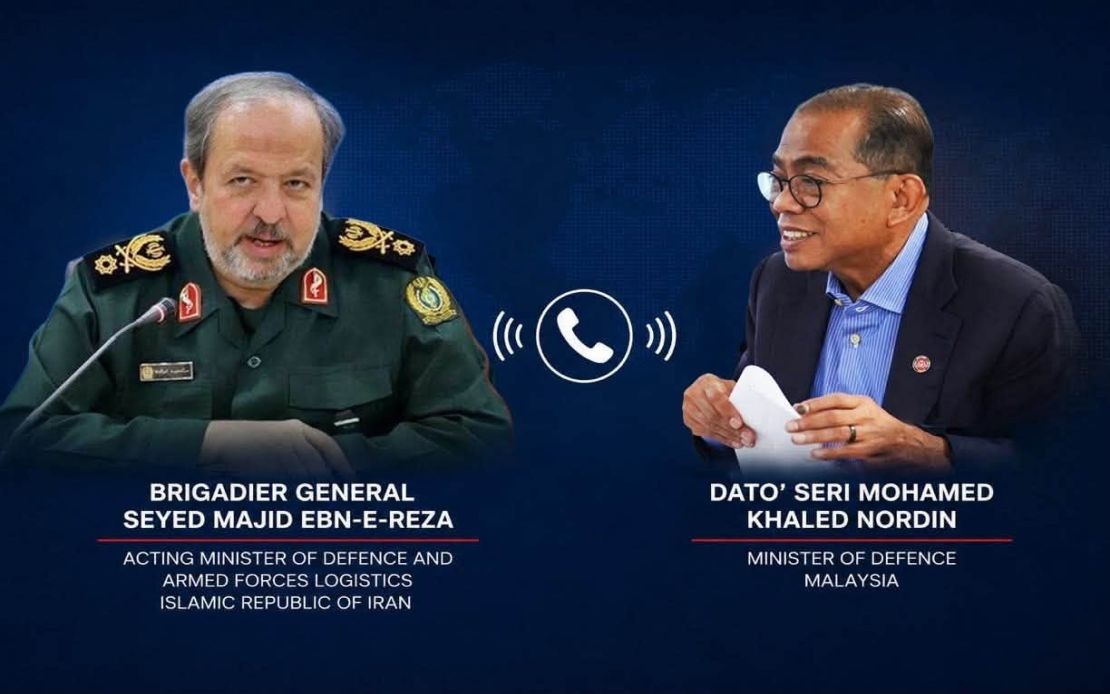
Malaysia has signalled its readiness to deepen defence and security partnerships with Iran, reflecting the longstanding diplomatic bonds between the two nations. During a telephone conversation with Iran's Acting Minister of Defence and Armed Forces Logistics, Brigadier General Seyed Majid Ebn-e-Reza, Defence Minister Datuk Seri Mohamed Khaled Nordin outlined ambitions to build more substantive military cooperation frameworks that would move beyond occasional exchanges toward institutionalised collaboration.
Central to this overture is Malaysia's proposal to formalise defence relations through a Memorandum of Understanding, which would serve as a binding instrument anchoring defence ties between Kuala Lumpur and Tehran. Such an agreement would mark a significant step in cementing bilateral military relationships, providing a structured pathway for cooperation across multiple defence domains. The move reflects Malaysia's strategic interest in cultivating relationships across the Islamic world and in strengthening non-aligned positioning in an increasingly multipolar security environment.
A notable component of Malaysia's outreach involves extending an invitation to Iran to participate in the Langkawi International Maritime and Aerospace Exhibition (LIMA), scheduled for next year. LIMA represents one of Southeast Asia's premier defence and aerospace showcases, attracting military delegations, defence contractors, and security professionals from across the globe. Iranian participation would provide a high-profile platform for exploring collaborative opportunities while simultaneously signalling Malaysia's inclusive approach to regional defence engagement.
The Defence Minister also used the conversation to convey Malaysia's condolences regarding casualties among Iranian military personnel, security forces, and civilian populations caught in the broader West Asian conflict. This diplomatic gesture acknowledges the human toll of ongoing regional tensions while positioning Malaysia as a concerned observer committed to humanitarian principles. By explicitly referencing losses across multiple categories—military, security, and civilian—Malaysia demonstrates nuanced recognition of the complexity surrounding conflict zones in the Middle East.
A critical dimension of Malaysia's approach involves advocacy for de-escalation and peaceful resolution of regional disputes. Mohamed Khaled emphasised Malaysia's hope that ceasefire arrangements would hold and that diplomatic channels would remain open for dialogue-based solutions. This stance reflects Malaysia's consistent foreign policy orientation toward multilateralism and non-alignment, positioning the country as a proponent of resolution mechanisms that prioritise negotiation over military confrontation. For a Southeast Asian nation with significant maritime interests and regional responsibilities, maintaining stability in distant but strategically important regions serves broader national security interests.
Malaysia's appreciation for Iran's operational conduct during regional hostilities carries particular significance given shared maritime concerns. The Defence Minister specifically highlighted Iran's cooperation in facilitating safe passage through contested waters and commended the treatment of Malaysian interests during volatile periods. This reference implicitly acknowledges the Strait of Hormuz as a critical artery for global commerce and regional security, through which substantial portions of Asian energy supplies transit annually.
The security of maritime routes, particularly the Strait of Hormuz, emerged as a shared priority in Malaysia's diplomatic messaging. As a major maritime trading nation heavily dependent on open sea lanes for commerce and energy security, Malaysia has vested interests in maintaining freedom of navigation and preventing disruptions to international shipping. Collaborative agreements with Iran, a dominant regional power controlling portions of these critical waterways, carry practical implications for Malaysian shipping, energy imports, and broader regional economic stability. By emphasising the necessity of continued safeguarding of maritime routes, Malaysia signals that bilateral defence cooperation should serve broader regional stability objectives.
Malaysia's acknowledgment of Iran's indigenous defence capabilities and demonstrated resilience adds a layer of strategic respect to the diplomatic engagement. Rather than approaching Iran from a position of superiority or dismissiveness, Malaysia's recognition of Tehran's autonomous development of military technologies reflects mutual respect between defence establishments. This framing proves important for substantive cooperation, as partnerships between equals typically prove more durable and productive than relationships built on asymmetrical power dynamics.
The timing of these overtures reflects Malaysia's broader strategic calculations in an era of great power competition and regional uncertainty. Southeast Asian nations increasingly recognise the necessity of cultivating diverse partnerships while maintaining strategic autonomy. Malaysia's engagement with Iran complements its existing relationships with traditional security partners while demonstrating independence in foreign policy formulation. This balancing act becomes increasingly complex as global alignments shift and regional powers assert greater influence across the Indo-Pacific and beyond.
For Malaysian defence planners, formalising cooperation with Iran potentially opens avenues for technology exchange, joint training initiatives, and intelligence sharing on matters of mutual concern. While specific domains remain unelaborated in public statements, defence cooperation frameworks typically encompass naval coordination, air defence systems, military education exchanges, and counter-terrorism collaboration. Such arrangements would expand Malaysia's defence ecosystem while providing Iranian counterparts access to Southeast Asian security perspectives and capabilities.
The proposed MoU represents more than ceremonial diplomacy; it establishes legal foundations for sustained institutional engagement across multiple defence agencies. Compared to ad hoc bilateral interactions, formalised frameworks create predictable channels for communication, reduce transaction costs for coordination, and facilitate long-term strategic planning. For Malaysia, such arrangements align with its practice of deploying diplomatic instruments to advance strategic interests while maintaining non-aligned positioning.
Looking forward, Malaysia's invitation to Iran for LIMA participation and pursuit of formal defence agreements suggest a calculated expansion of Malaysia's diplomatic footprint in Middle Eastern security affairs. This engagement demonstrates that Southeast Asian nations, despite geographic distance from primary conflict zones, maintain strategic interests in preserving stability and building relationships across major regions. By positioning itself as an honest broker and proponent of dialogue, Malaysia seeks to enhance its international standing while building partnerships that serve national interests across multiple policy domains.

