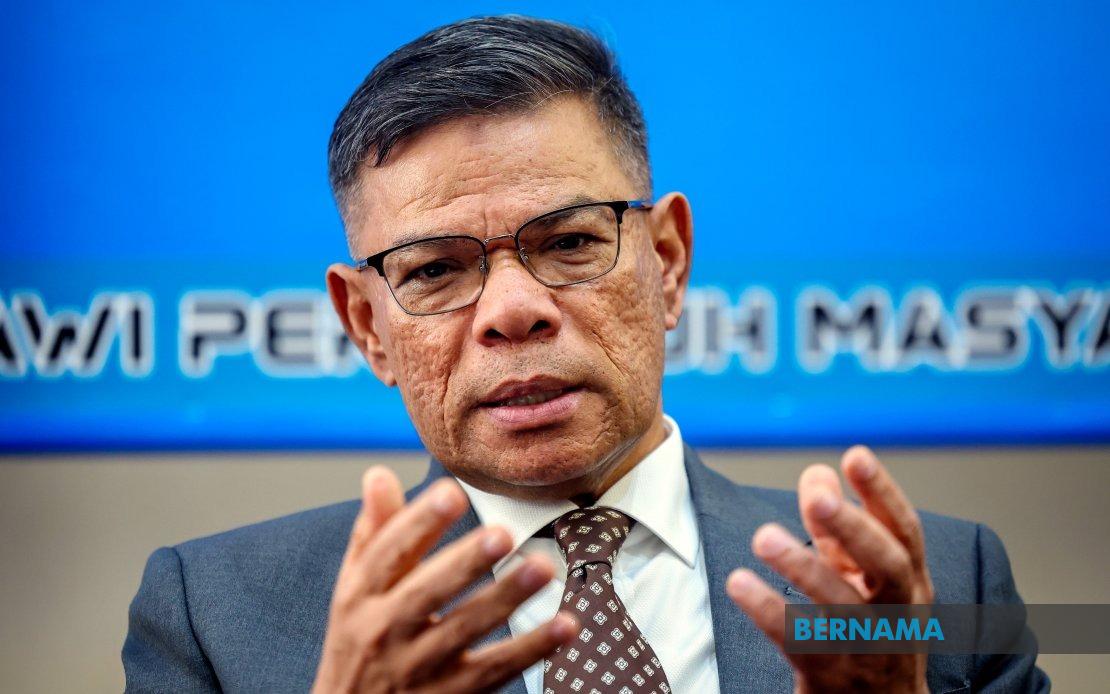
The Malaysia-Singapore land border experienced orderly traffic conditions on election day as millions of voters crossed into Johor to participate in the 16th state election, according to Home Minister Datuk Seri Saifuddin Nasution Ismail. The two principal entry points—Sultan Iskandar Building and Sultan Abu Bakar Complex—handled the influx of voters without significant delays, with the Malaysian Border Control and Protection Agency confirming efficient operations throughout the morning polling period.
The successful traffic management represented a coordinated effort by border authorities who had implemented comprehensive contingency measures in anticipation of heightened cross-border activity. The agency had activated maximum operational capacity at both checkpoints, deploying additional infrastructure specifically designed to accommodate the expected surge in vehicular and foot traffic. This proactive approach reflected lessons learned from previous high-volume border scenarios and demonstrated institutional readiness for managing complex logistical challenges during major electoral events.
To facilitate voter movement, authorities introduced dedicated lanes operating on a round-the-clock basis, commencing operations from 12:01 am and extending through 6 pm on election day. These specially designated corridors were supplemented by hybrid counter arrangements and contra-flow lane configurations that allowed bidirectional traffic management with optimized efficiency. The infrastructure modifications effectively doubled processing capacity at critical junctures, preventing the bottlenecks that have periodically disrupted cross-border transit in previous years.
The Johor state election represented a significant electoral engagement, with 172 candidates competing for 56 state assembly positions spread across 1,076 polling centres. Election organizers had positioned 4,889 polling channels to manage the anticipated voter volume, creating a parallel logistical structure to the border management operations. The simultaneous coordination of electoral and border security functions illustrated the complexity of administering democratic processes in a region where significant populations maintain residency connections across international boundaries.
Voter participation patterns reflected the substantial cross-border commuter population that characterizes the Malaysia-Singapore relationship. Approximately 2.6 million registered voters participated in the election, with a considerable proportion residing in Singapore despite their electoral rights in Johor. This demographic reality underscores how economic integration and labor mobility in Southeast Asia create unique governance challenges, where citizens exercise political rights across borders that separate their residential locations from their places of employment or economic interest.
The Election Commission had established a 70 percent voter turnout benchmark as the target for the election, reflecting confidence in public engagement with the democratic process. Early projections suggested that final results would be available by 10 pm, allowing relatively rapid determination of state-level political configurations. This timeline demanded synchronized operations between electoral authorities managing polling procedures and border agencies managing cross-border traffic, requiring unprecedented coordination between multiple government entities.
Home Minister Saifuddin's public acknowledgment of smooth border operations served a dual communication function: reassuring the general public about border management capacity while commending AKPS personnel for their execution. His social media statement, supplemented by video documentation of both checkpoint locations, provided real-time transparency regarding border conditions and demonstrated governmental responsiveness to public information needs. Such communications have become essential in contemporary democratic governance, where perceptions of administrative competence influence broader public confidence.
The successful border management on election day carried implications extending beyond immediate operational metrics. For Malaysia and Singapore, smooth cross-border movement during major civic events reinforces the bilateral relationship's functional efficiency, demonstrating that despite periodic diplomatic tensions and competing national interests, both countries maintain institutional capacity for coordinated administration of shared border infrastructure. This operational continuity supports economic integration and facilitates the legitimate movement of hundreds of thousands of cross-border workers and family members.
From a regional perspective, the Johor election management process offered insights into how Southeast Asian nations can administer complex electoral events within increasingly integrated labor markets. As regional mobility increases through agreements like the ASEAN Framework Agreement on Services and bilateral labor protocols, electoral authorities must develop sophisticated systems for accommodating voters who maintain political rights in their origin countries despite residing elsewhere. Malaysia's approach, combining dedicated border infrastructure with expanded polling facilities, provides a model potentially applicable to other regional jurisdictions facing similar demographics.
The border authority's pre-emptive activation of maximum operations reflected evidence-based planning rather than reactive crisis management. By analyzing historical traffic patterns, voter registration data, and cross-border transit volumes, authorities identified optimal resource allocation strategies. This data-driven approach to governance infrastructure represents professional administrative development in Malaysian border management, moving beyond traditional capacity planning toward predictive modeling that anticipates demand fluctuations tied to specific civic events.
Looking forward, the smooth election day experience establishes institutional expectations for future high-volume border scenarios. Malaysian authorities have demonstrated that comprehensive planning, infrastructure investment, and inter-agency coordination can effectively manage traffic challenges that previously generated public frustration. This successful execution may inform policy discussions regarding permanent infrastructure enhancements at Malaysia-Singapore checkpoints, potentially accelerating discussions about modernized processing facilities that could improve efficiency during routine operations as well.

