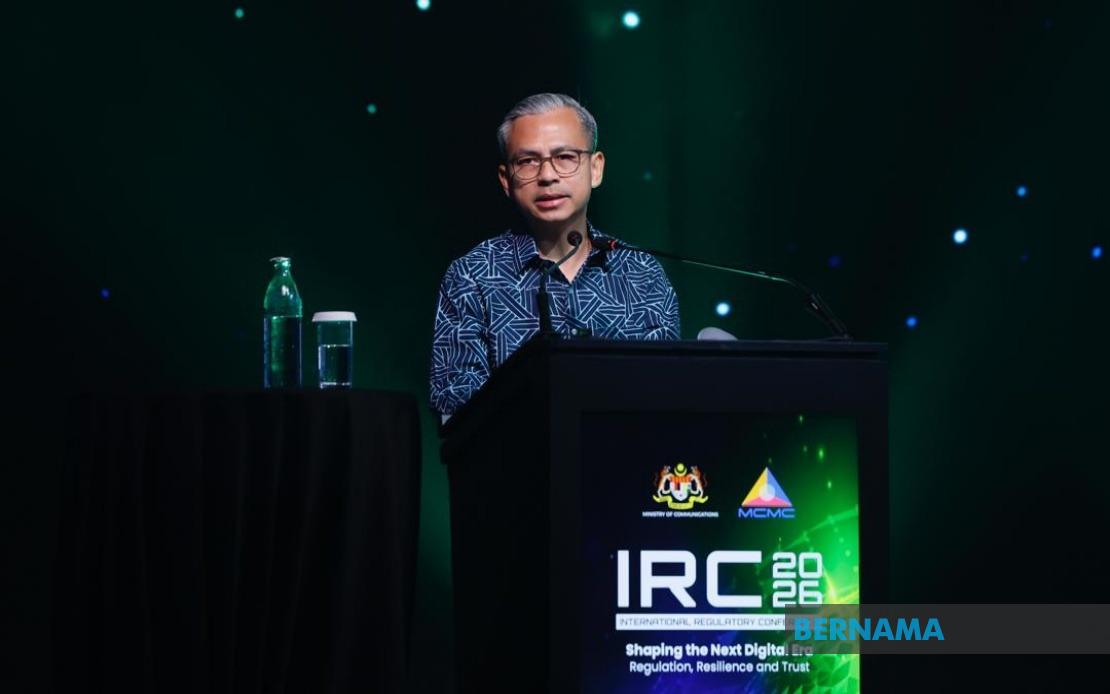
Malaysia is moving decisively to establish robust digital governance frameworks that prioritise security, resilience and public trust while simultaneously encouraging technological innovation. Communications Minister Datuk Seri Fahmi Fadzil outlined the government's comprehensive approach during the opening of the International Regulators Conference 2026 in Kuala Lumpur, emphasising that the rapid pace of technological change has outstripped the development of regulatory structures meant to oversee it.
The minister highlighted that Malaysia's commitment to strengthening digital governance is evident through several major initiatives currently underway. The National Digital Network Plan, commonly known as Jendela, forms a cornerstone of this effort, providing the roadmap for digital transformation across the nation. Complementing this are accelerated investments in 5G infrastructure across the country, alongside significant capital expenditure in submarine cable networks to enhance regional connectivity and data resilience. Perhaps most significantly, the government has enacted the Online Safety Act 2025, a landmark legislative framework designed to create a safer digital environment by holding platforms accountable and protecting vulnerable populations.
At the heart of Malaysia's approach lies a fundamental recognition that trust has emerged as perhaps the defining challenge of the contemporary digital age. Citizens increasingly depend on digital platforms for communication, commerce, information and social interaction, yet many harbour legitimate concerns about data privacy, content authenticity and the security of systems that influence their daily existence. Fahmi articulated this concern by posing a critical question: can Malaysians confidently trust the platforms they rely on, the information they encounter and the digital systems that progressively shape their lives? This question resonates particularly strongly in Southeast Asia, where rapid digitalisation has often outpaced regulatory maturity and public digital literacy.
The minister stressed that regulatory frameworks must evolve at a pace commensurate with technological innovation, requiring governance structures flexible enough to address emerging challenges without becoming ossified. Simultaneously, regulations must remain proportionate to avoid stifling legitimate business innovation and providing industry with adequate certainty for long-term investment. This delicate balance reflects Malaysia's attempt to position itself as a jurisdiction that can attract technology companies and investment while maintaining strong consumer protections.
The Online Safety Act 2025 represents a strategic pivot in Malaysia's approach to digital regulation. Rather than adopting a purely reactive stance that addresses online harms after they occur, the legislation establishes a proactive framework that prevents harm before it materialises. Central to this shift is the elevation of platform accountability, making digital companies responsible for the content and activities occurring on their services. The legislation also incorporates enhanced protections specifically designed for children and other vulnerable communities, recognising the asymmetric vulnerabilities certain populations face online.
The International Regulators Conference 2026, now in its third iteration, has evolved into a significant venue for global dialogue on digital governance. The conference emerged from Malaysia's transition to a Dual Network model for its 5G deployment, an approach that attracted considerable international attention and prompted neighbouring countries and regulators worldwide to seek deeper understanding of Malaysia's experience. The three-day gathering brings together regulatory officials, policymakers, industry executives and academic specialists to examine interconnected challenges reshaping the global digital landscape.
This year's conference theme, "Shaping the Next Digital Era: Regulation, Resilience and Trust," directly addresses the multifaceted dimensions of contemporary digital governance. Over the coming days, participants will deliberate on online safety mechanisms, frameworks for data governance, the implications of artificial intelligence proliferation, emerging quantum communications technologies, autonomous system regulation and the fundamental question of how governance structures should evolve to remain relevant. Fahmi indicated that the conference aspires not merely to generate discussion but to translate dialogue into concrete policy recommendations and actionable international cooperation mechanisms.
Malaysia's engagement with international regulators reflects a sophisticated understanding that digital challenges transcend national boundaries. The circulation of harmful content, data breaches, cyber threats and privacy violations respect no borders, making bilateral and multilateral cooperation essential. By drawing on experiences from neighbouring countries and regulatory approaches adopted globally, Malaysia can identify deficiencies in its own legal frameworks and determine what additional domestic measures may be required. Fahmi emphasised the critical importance of learning from international best practices to systematically close regulatory gaps.
The outcomes from the International Regulators Conference 2026 are expected to generate follow-up actions extending beyond Malaysia into other participating jurisdictions. The minister has indicated that key findings and policy recommendations will be formally submitted to the International Telecommunication Union, of which Malaysia holds a Council seat. This pathway ensures that Malaysian insights influence global standards-setting and that the country's regulatory experience contributes to shaping international telecommunications policy.
Hosted by the Malaysian Communications and Multimedia Commission, the conference reflects Malaysia's deliberate strategy to position itself as a thought leader in global digital governance. Rather than simply implementing policies developed elsewhere, Malaysia is actively participating in the creation of international standards and regulatory best practices. This positioning carries implications throughout Southeast Asia, where other nations often look toward Malaysia's regulatory innovations as potential models for their own digital ecosystems. The conference also reinforces the MCMC's standing as a respected voice in international regulatory discussions, elevating Malaysia's profile in global telecommunications policy forums.
The comprehensive approach outlined by Minister Fahmi demonstrates Malaysia's recognition that sustainable digital progress requires simultaneous attention to multiple dimensions: technological infrastructure investment, legal framework development, international cooperation, and institutional capacity building. The convergence of initiatives like Jendela, 5G expansion, submarine cable infrastructure and the Online Safety Act 2025 creates an interconnected ecosystem where technological advancement, regulatory oversight and public protection reinforce rather than contradict each other. For Malaysia and the broader Southeast Asian region, this integrated approach offers a potential blueprint for countries seeking to harness digital innovation's benefits while managing its risks through proportionate, forward-looking governance.

