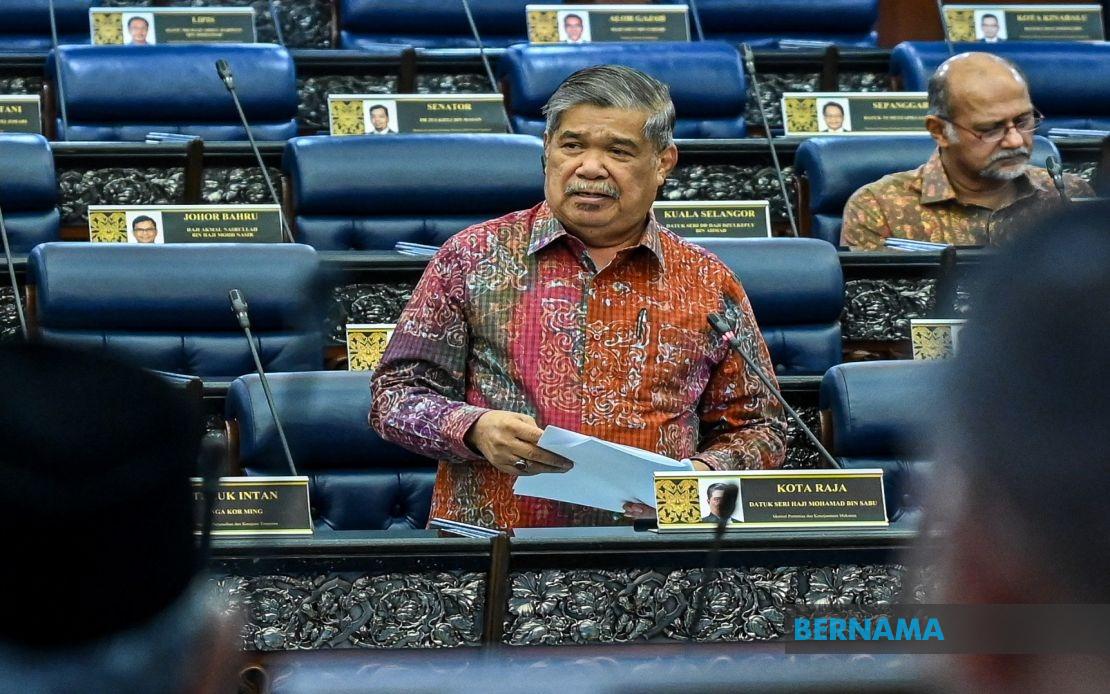
The Malaysian government is deploying a comprehensive strategy to shield its agro-food sector from the escalating threat posed by the El Niño phenomenon, combining technological innovation with targeted farmer assistance. Agriculture and Food Security Minister Datuk Seri Mohamad Sabu unveiled the multi-pronged approach during parliamentary proceedings, signalling heightened concern about weather volatility affecting domestic food supplies and the livelihoods of rural communities across the nation.
At the core of the government's defensive measures lies an overhaul of how Malaysia manages its precious water resources during prolonged dry spells. The ministry is implementing continuous surveillance of water levels across the country's dam networks and natural catchment areas, supported by sophisticated integrated water resource management systems. Complementing these monitoring efforts is the rollout of smart irrigation technology, including sensor-based systems that optimise water distribution in real time, alongside traditional drip irrigation installations designed to minimise wastage. These technological shifts represent a significant departure from conventional farming practices, acknowledging that climate variability demands more responsive and efficient approaches to water stewardship.
The vulnerability of Malaysia's rice sector—a cornerstone of national food security and rural income—has prompted intensive agricultural research into climate adaptation. The Malaysian Agricultural Research and Development Institute (MARDI) has been tasked with accelerating development of new paddy varieties bred specifically for drought tolerance, addressing a critical gap in the country's crop resilience. Cloud seeding operations also feature in the mitigation arsenal, though their effectiveness remains contingent on favourable atmospheric conditions. Following discussions at a high-level Food Security Meeting chaired by the Prime Minister, MARDI has received explicit direction to deepen this research programme, underscoring political priority attached to creating more robust rice varieties capable of withstanding stress from reduced rainfall.
Financial protection for rice farmers experiencing climate-related losses forms another pillar of government strategy. In the initial phase of its disaster assistance scheme, authorities channelled RM45.24 million to 8,224 rice farmers, demonstrating commitment to cushioning income losses from drought impacts. The programme's expansion through June 2026 has seen RM38.53 million distributed across 55,058 affected farmers, covering nearly 16,933 hectares of agricultural land predominantly in northern and eastern Peninsular Malaysia—regions historically vulnerable to monsoon fluctuations and increasingly exposed to El Niño-induced water stress. This direct cash transfer mechanism provides immediate relief while longer-term adaptation measures take root.
Beyond immediate support, the government is pursuing structural expansion of Malaysia's rice production capacity to reduce dependence on imported supplies. Large-scale rice field development projects in Sarawak, Pahang, and other states feature prominently in medium-term planning, with the dual objective of boosting domestic output and creating employment in agricultural regions. Such initiatives acknowledge that self-sufficiency in staple grains strengthens national food security posture and insulates the economy from international price volatility. Concurrently, Malaysia is promoting controlled environment agriculture—encompassing greenhouse and hydroponic systems—as a mechanism to shield high-value crops and livestock operations from weather unpredictability.
The government maintains strategic rice reserves calibrated to sustain domestic consumption for approximately six months, with continuous imports topping up stocks as consumption patterns dictate. This buffer strategy provides temporal protection against supply disruptions, though it also reflects Thailand's dominance in global rice markets and the complexities of diversifying supplier relationships within Southeast Asia. The reserve level represents a calculated middle ground between fiscal efficiency and food security assurance, balancing storage costs against the imperative to prevent scarcity-driven price spikes that disproportionately harm low-income households.
El Niño's agricultural ramifications extend beyond water stress and yield uncertainty to encompass broader market dynamics. The recent dumping of durians—Malaysia's premium export commodity—has depressed farmgate prices, squeezing incomes for smallholder producers and larger commercial operators alike. While distinct from El Niño's direct impact, the glut reflects climate-driven production patterns and global market oversupply, illustrating how weather phenomena cascade through value chains beyond immediate crop loss. The government's response emphasises market expansion rather than production controls, with negotiating efforts directed at opening Chinese markets beyond major metropolitan centres where Malaysian durians currently concentrate.
Government strategy targets secondary and tertiary cities across China, regions with substantially larger consumer populations but presently limited fresh durian availability. Streamlining logistics and customs procedures represents a crucial lever for unlocking this potential, requiring bilateral coordination on cold-chain infrastructure and regulatory harmonisation. Success in this arena would stabilise Malaysian durian prices while generating additional export revenue, contributing to broader agricultural sector resilience. The approach recognises that climate adaptation must encompass market integration alongside production techniques—farmers cannot survive on drought-resistant crops yielding to unprofitable market conditions.
The El Niño challenge arrives amid Malaysia's broader transition toward agricultural modernisation and sectoral diversification away from commodity dependence. Contemporary climate patterns demand that policy simultaneously addresses immediate humanitarian concerns—ensuring rice farmers do not face ruin during drought years—and systematic repositioning of the agricultural sector toward greater productivity and reduced environmental footprint. Smart irrigation, crop breeding programmes, and market development initiatives collectively signal official acknowledgement that incremental adjustments to traditional farming will prove insufficient against projected climate volatility intensification.
For Malaysian consumers, these measures offer medium-term reassurance regarding food availability and affordability, though their efficacy remains contingent on implementation quality and sufficient budgetary allocation. Rice remains central to Malaysian foodways and cultural identity, extending beyond mere nutrition to encompass social cohesion and political stability. El Niño's threat to rice security thus carries implications far transcending agricultural economics. Regional observers across Southeast Asia monitor Malaysia's adaptation strategies with evident interest, as climate-driven food security challenges present similar existential pressures across the peninsula and throughout the broader region, where many nations face comparable geographic and climatic vulnerabilities.

