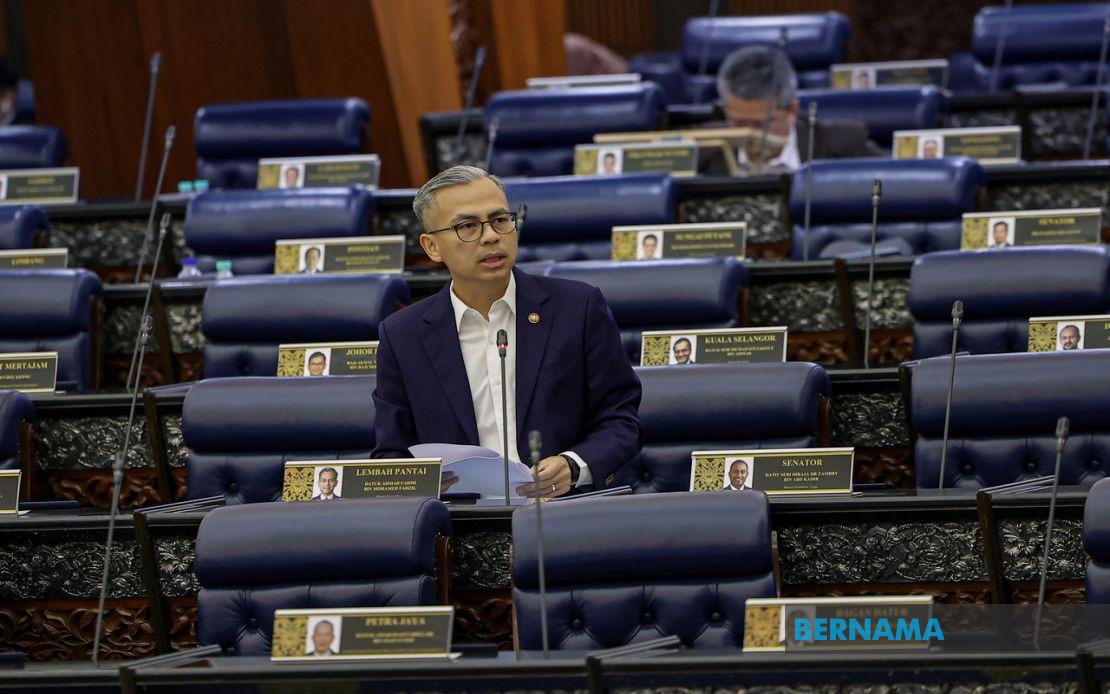
Communications Minister Datuk Seri Fahmi Fadzil tabled the Communications and Multimedia (Amendment) Bill 2026 in the Dewan Rakyat on July 13, advancing a legislative overhaul designed to weave national security considerations directly into Malaysia's universal service obligations. The bill represents a significant evolution in how the government approaches telecommunications regulation, moving beyond traditional service-provision targets to encompass broader strategic imperatives that reflect contemporary security challenges across the digital landscape.
The proposed amendments fundamentally modify Section 202 of the Communications and Multimedia Act 1998, inserting new subsections 202(1A) and 202(1B) that grant the Communications Minister expanded directive authority. Under these provisions, the Minister would gain explicit power to instruct the Malaysian Communications and Multimedia Commission to champion universal service initiatives relating to network and application services whenever such measures serve national security interests. This represents a meaningful delegation of responsibility, positioning the MCMC as an operational arm in executing security-focused telecommunications policy rather than simply a regulatory body ensuring competitive markets.
The framework establishes a critical procedural safeguard by tethering national security determinations to the National Security Council, which operates under the National Security Council Act 2016. Rather than allowing ad hoc ministerial judgment on what constitutes a security threat, the bill institutionalises such assessments within Malaysia's formal security architecture. This institutional check acknowledges the potential for mission creep while recognising that telecommunications infrastructure increasingly underpins critical national functions, from financial systems to healthcare delivery networks.
Beyond regulatory oversight, the amendments enable proactive deployment of network infrastructure and service provision specifically to strengthen national security posture. Initiatives might encompass accelerated installation of telecommunications facilities in strategically important regions, mandatory redundancy protocols for critical services, or requirements that certain communications networks meet domestic security standards. These measures reflect growing international concern about telecommunications dependencies, particularly in Southeast Asia where geopolitical tensions and supply-chain vulnerabilities intersect with rapidly expanding digital economies.
The legislative approach acknowledges Malaysia's evolving technological landscape and associated vulnerabilities. As 5G deployment accelerates and cloud computing becomes central to business and government operations, regulators worldwide grapple with balancing service expansion against security risks. The amendment demonstrates Malaysia's intent to embed such considerations into formal obligation structures rather than treating security as a parallel concern addressed through separate regulatory instruments.
Subsection 202(1B) includes an important constraint requiring that any universal service provision initiative remain consistent with the principal objects of the Communications and Multimedia Act 1998. This linguistic anchor prevents security rationales from entirely displacing the competition and consumer-welfare objectives traditionally animating telecommunications regulation. The requirement ensures that while national security becomes a legitimate consideration in universal service frameworks, it operates within boundaries established by the original legislation.
The bill further authorises the Minister to promulgate regulations governing national universal service initiatives under Section 16 of the principal act. This delegated legislative power allows flexibility in implementation, permitting rules to evolve as security threats and technological circumstances shift without requiring repeated parliamentary amendment. However, such regulations would remain subject to parliamentary scrutiny and existing constitutional constraints on ministerial rule-making.
From a budgetary perspective, the government has indicated that implementing this framework involves no additional expenditure. This assertion warrants scrutiny, as directing the MCMC toward security-related universal service objectives may impose compliance costs on service providers or require regulatory agency resource reallocation. The claim likely reflects that the bill creates no new government spending on infrastructure or subsidies, while assuming existing regulatory machinery can accommodate expanded mandate scope.
For Malaysian telecommunications companies and service providers, this bill signals that regulatory expectations now incorporate security dimensions alongside traditional universal service benchmarks. Operators may face requirements to maintain redundant infrastructure, adopt government-approved technologies, or prioritise network development in security-sensitive areas. These obligations could increase operational complexity and costs, particularly for smaller providers lacking sophisticated security infrastructure.
Regionally, Malaysia's approach mirrors legislative developments across Southeast Asia as governments assert greater influence over telecommunications architecture. Unlike Western democracies relying primarily on competition and transparency mechanisms, Malaysia's approach institutionalises government direction over critical service provision. This reflects both legitimate security concerns and broader patterns whereby emerging economies consolidate state authority over digital infrastructure deemed essential to national interests.
The bill's second reading during the current parliamentary session will determine whether legislative debate probes the breadth of ministerial discretion or security council determinations. Questions regarding appeal mechanisms, transparency in security determinations, and safeguards against regulatory capture versus legitimate security enhancement will likely surface. These considerations matter considerably because universal service obligations traditionally enjoy bipartisan support, and embedding contested security definitions within such frameworks could transform service provision into a vector for contested policy objectives.
The legislative initiative ultimately reflects Malaysia's conviction that digital infrastructure constitutes strategic national assets requiring explicit security governance. By anchoring such governance within formal legal structures and institutional checks, the government seeks to professionalise security considerations in telecommunications rather than leaving them to ad hoc ministerial preference. Whether this framework successfully balances innovation, competition, security and accessibility will depend substantially on implementation and the National Security Council's exercise of determination authority.

