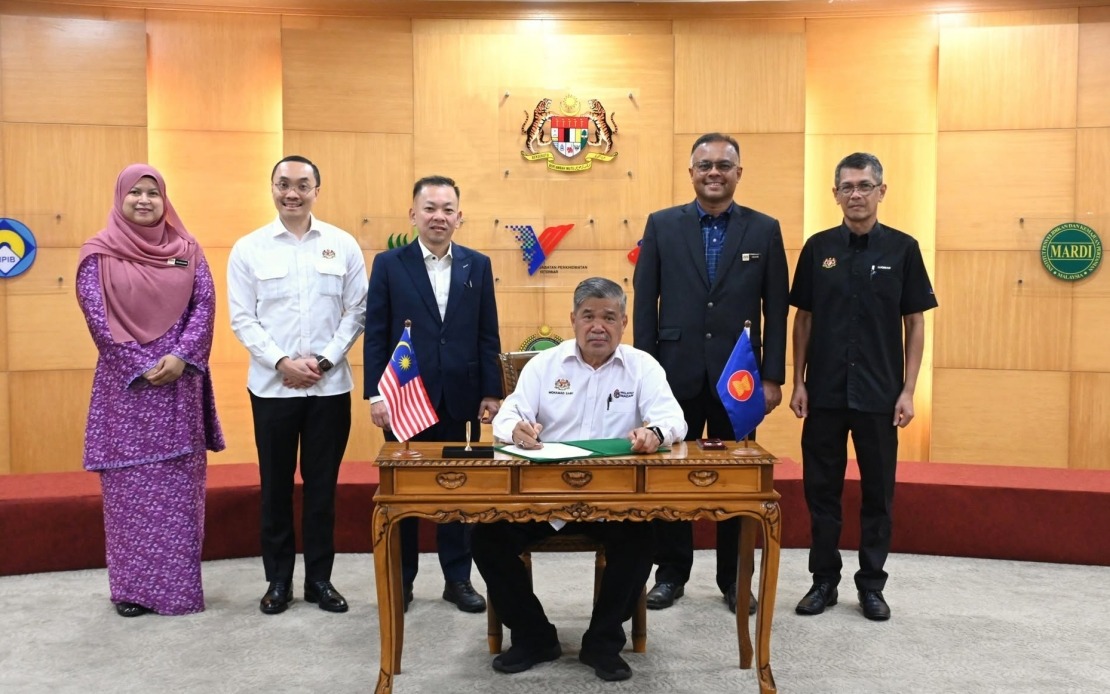
Malaysia has positioned itself at the centre of a transformative regional agricultural framework by signing two significant Memoranda of Understanding that promise to reshape trade dynamics and sustainability practices across Southeast Asia. Agriculture and Food Security Minister Datuk Seri Mohamad Sabu inked both agreements during the ASEAN Ministers on Agriculture and Forestry meeting, marking a strategic pivot towards deepening cooperation on food systems resilience and market competitiveness in the face of mounting global pressures.
The first agreement, the ASEAN Cooperation in Agriculture and Forest Products Scheme, establishes a multilateral framework binding all ASEAN member states around five interconnected pillars. These foundational elements encompass bolstering regional food security infrastructure, dismantling trade barriers for agricultural and forestry goods, catalysing private sector investment flows, ensuring sustainable stewardship of natural resources, and harmonising ASEAN's collective voice in international agricultural negotiations. This architecture reflects growing recognition that individual national capacity cannot adequately address supply chain vulnerabilities or market pressures in the contemporary trading environment.
Within this scheme, Malaysia assumes leadership responsibilities that underscore its economic weight in the region. The Ministry of Plantation and Commodities has been designated as the Lead Country for orchestrating cooperative initiatives around palm oil and cocoa, sectors where Malaysian producers maintain significant competitive advantages and export volumes. Simultaneously, the Ministry of Agriculture and Food Security takes the helm for agri-food products, encompassing the diverse portfolio of commodities from livestock to horticultural goods that define Malaysia's agricultural export profile. This dual leadership structure acknowledges Malaysia's diversified agricultural base while positioning the nation as a strategic anchor for regional trade coordination.
The scheme's emphasis on joint strategic campaigns carries particular significance for Malaysian producers. By coordinating messaging and market strategies across ASEAN, member states can present a unified front in international forums where agricultural products face scrutiny from environmental advocates and competing producing nations. Palm oil, in particular, has faced persistent reputational challenges in Western markets despite scientific evidence regarding sustainable production methods. A coordinated ASEAN position strengthens Malaysia's ability to defend its commodity interests while negotiating international standards and market access conditions.
Beyond these defensive mechanisms, the agreement opens pathways for expanded market penetration across multiple product categories. Industrial crops, livestock products, medicinal herbs, and forest derivatives including mushrooms, specialty nuts, and wild honey stand to benefit from reduced intra-ASEAN trade friction. For Malaysian exporters, this translates into improved access to expanding middle-class consumer bases in neighbouring economies while reducing the logistical and regulatory complications that currently constrain regional commerce. The framework essentially creates a larger integrated market that can absorb greater volumes of Malaysian agricultural output.
The second MoU, negotiated between ASEAN as a collective and the People's Republic of China, introduces a different dimension focused on technological transfer and sustainability metrics. Operating across an eighteen-point cooperation agenda spanning five years, this bilateral framework targets agricultural productivity improvements through adoption of climate-smart technologies and practices. The agreement recognises that Asian agriculture faces intensifying climate pressures, from erratic monsoon patterns affecting crop yields to increased salinity in coastal farmland and proliferating pest populations in warming conditions.
Climate-smart agriculture represents the technological frontier where Malaysian farmers can enhance productivity while simultaneously reducing environmental footprints. The ASEAN-China cooperation facilitates knowledge transfer in low-carbon farming techniques, precision agriculture applications, and sustainable crop management that emerging research demonstrates can increase yields whilst minimizing greenhouse gas emissions and chemical inputs. For Malaysia, a nation already contending with deforestation concerns and carbon accounting scrutiny, this partnership offers legitimate pathways toward demonstrating environmental stewardship alongside agricultural development.
The agreement's provisions extending to sustainable forest management hold particular relevance for Malaysia's efforts to balance economic activity with conservation commitments. Tropical forest ecosystems provide irreplaceable environmental services, yet Malaysia continues to face international pressure regarding forest cover changes. Formalised cooperation on forest protection standards, combined with technology sharing from Chinese partners advancing reforestation methodologies, creates frameworks for demonstrating that commercial forestry and ecosystem preservation need not prove mutually exclusive.
Disaster resilience mechanisms embedded within the partnership directly address Southeast Asia's mounting climate vulnerability. Flood and drought events have devastated harvests across the region with increasing frequency, yet agricultural insurance systems remain underdeveloped across much of ASEAN. Chinese expertise in scaling agricultural insurance products, particularly given that nation's vast farm populations and experience managing climate volatility, offers transferable lessons for Malaysian policymakers seeking to stabilise farmer incomes and supply chain predictability. Similarly, cross-border pest and disease control coordination becomes increasingly vital as climate change extends the geographical range where agricultural pests thrive and pathogens spread.
Research collaboration and trade information-sharing provisions create infrastructure for evidence-based policymaking and market transparency. Malaysian agricultural researchers gain formal channels to access Chinese advances in crop science, aquaculture, and soil management, whilst Malaysian market intelligence reaches Chinese agricultural planners seeking reliable commodity suppliers. This bidirectional information flow reduces asymmetries that traditionally disadvantage smaller producers and developing economies in international agricultural commerce.
For Malaysian policymakers and farmers, these agreements represent concrete mechanisms for navigating the complex interplay between market expansion, climate adaptation, and sustainability compliance. The regional framework acknowledges that ASEAN nations possess greater collective bargaining power and shared interests in defending agricultural commodity prices and market access than individual countries operating in isolation. Simultaneously, the China partnership opens technological and financial resources that domestically-funded innovation cannot replicate at scale within Malaysia's fiscal constraints.
The timing of these agreements also reflects strategic recalibration in ASEAN agricultural policy following pandemic-era supply chain disruptions and growing protectionism in developed markets. By strengthening intra-ASEAN trade linkages and securing technology partnerships with a major regional power, Malaysia and its neighbouring economies reduce dependence on unpredictable Western markets while building resilience through diversified trading relationships. For Malaysian agricultural producers, this translates into more reliable market access, better risk management tools, and pathways toward productivity improvements necessary for competing in increasingly demanding global supply chains.

