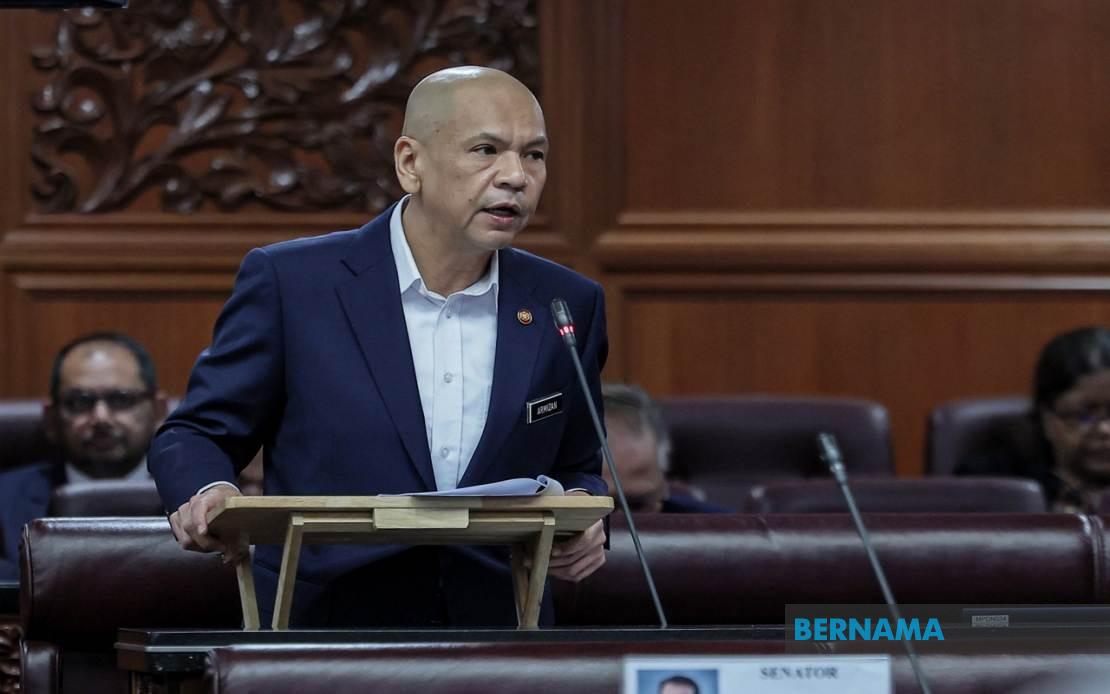
Malaysia's legislative push to fortify its competition framework gained momentum this week as two significant amendment bills reached parliament for initial consideration. The Competition (Amendment) Bill 2026 and the Competition Commission (Amendment) Bill 2026, both overseen by the Domestic Trade and Cost of Living Ministry, were tabled for first reading in the Dewan Rakyat, with Minister Datuk Armizan Mohd Ali indicating both measures would progress to second reading during the current parliamentary session.
The Competition (Amendment) Bill 2026 represents a substantial recalibration of Malaysia's approach to market regulation under the existing Competition Act 2010. At its core, the amendment seeks to modernise and strengthen the investigative and enforcement machinery available to the Malaysia Competition Commission, the nation's primary competition authority. This reflects growing recognition that MyCC requires more robust tools to navigate an increasingly complex and digitalised economic landscape where anti-competitive behaviour can manifest in novel ways that earlier legislation did not anticipate.
One particularly significant change involves broadening the regulatory perimeter. Currently, the Competition Act 2010 constrains MyCC's oversight to commercial activities, but Clause 3 of the amendment would extend coverage to encompass all economic activities. This expansion carries profound implications for sectors previously outside formal competition scrutiny, including state-owned enterprises, public utilities, and government-linked corporations. For Malaysian businesses, this means the competitive environment will become more comprehensively regulated, potentially affecting pricing, market entry, and commercial conduct across previously insulated sectors.
Clause 7 grants MyCC significantly expanded investigative capacity by enabling the commission to demand information and documents from any individual or entity, including government bodies, during market reviews. This power is particularly relevant to Malaysia's ongoing struggles with monopolistic practices and cartels in essential sectors. The ability to compel disclosure from state agencies suggests the government intends MyCC to operate with genuine independence when investigating potential breaches, regardless of whether state actors are implicated.
A new enforcement mechanism appears in Clause 13, which criminalises the deliberate destruction, concealment, or alteration of evidence or data intended to obstruct MyCC's work. This addition addresses a practical enforcement gap where sophisticated actors might previously have destroyed documentation without facing direct legal consequences. By making such conduct an explicit offence, the amendment aims to preserve investigative integrity and deter attempts to conceal competitive misconduct.
The parallel Competition Commission (Amendment) Bill 2026 focuses on enhancing MyCC's institutional capacity and decision-making structures. Clause 8 clarifies MyCC's advisory role toward government agencies and regulatory bodies on competition matters, essentially codifying what may have previously operated as informal guidance. This formalisation could strengthen competition considerations in policy-making across telecommunications, energy, transportation, and other regulated sectors where MyCC insights prove valuable.
Clause 10 introduces flexibility by permitting MyCC to delegate functions and powers to its chairman, internal committees, officers, and staff. This decentralisation of authority enables the commission to operate more nimbly, particularly when handling multiple investigations simultaneously or responding to urgent competition concerns. For a regulator managing an economy as diverse as Malaysia's, such operational flexibility is essential to responsiveness.
Perhaps most symbolically, Subclause 12(a) transfers appointment authority for MyCC officers from the minister to the commission itself, acting on recommendations from the chief executive officer. This structural adjustment represents a meaningful step toward institutional autonomy, a hallmark of effective competition authorities internationally. While Malaysia's MyCC has operated with considerable independence in practice, embedding this principle in statute strengthens its protection against political interference and enhances credibility with market participants and international observers.
These amendments respond to evolving pressures on Malaysia's competition regime. Southeast Asia's digital economy boom, characterised by e-commerce platforms, fintech services, and data-driven business models, has outpaced regulatory frameworks designed for traditional commerce. Meanwhile, Malaysia's integration into regional and global supply chains means competition practices increasingly affect trade relationships with partners who demand robust enforcement. The amendments position MyCC to address digital monopolies, cross-border cartels, and complex vertical arrangements that earlier competition law struggled to capture.
For Malaysian businesses, the changes carry mixed implications. Legitimate enterprises operating transparently face minimal additional compliance burdens; the amendments primarily strengthen enforcement against genuinely anti-competitive conduct. However, companies previously operating in lightly-regulated sectors now face competition scrutiny. State-owned enterprises and government-linked companies must increasingly justify their market positions and pricing decisions against competition principles rather than relying on protected status.
Regionally, Malaysia's legislative direction aligns with competition law evolution across Southeast Asia. Thailand, Indonesia, and Vietnam have similarly modernised their competition frameworks to address digital economy challenges and expand enforcement capacity. These amendments suggest Malaysia is maintaining pace with regional standards while positioning MyCC as a credible enforcement partner in regional trade discussions.
The amendments also reflect lessons from past competition cases where MyCC encountered procedural obstacles or insufficient powers. By expanding investigative scope, criminalising evidence destruction, and clarifying advisory relationships with other regulators, the bills address practical enforcement gaps that became apparent during complex investigations. This evidence-based legislative approach suggests policymakers have closely studied MyCC's operational experience before drafting amendments.
With second reading scheduled during the current parliamentary session, these bills are likely to advance relatively smoothly, suggesting cross-party support for strengthening competition enforcement. Once enacted, they will substantially reshape how Malaysian markets operate, expanding the competition authority's reach while enhancing its autonomy and practical investigative capabilities. For consumers, the potential benefits include more competitive pricing and greater market access; for businesses, the imperative is clear: ensure compliance with competition principles now applies across virtually all economic activity.