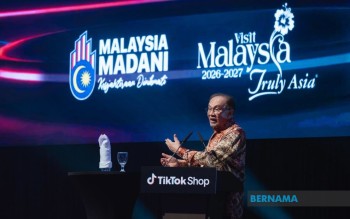
Malaysia is strengthening its approach to foreign investment by implementing stricter vetting procedures designed to ensure incoming companies genuinely contribute to the nation's economic development and job creation. Prime Minister Datuk Seri Anwar Ibrahim made this position clear on August 20 while speaking at the TikTok Shop Summit 2026 in Kuala Lumpur, signalling a shift toward more selective approval processes that prioritise the country's broader prosperity over merely attracting capital inflows.
The Ministry of Investment, Trade and Industry has flagged a concerning trend: numerous enterprises have established operations in Malaysia primarily for warehousing and transit activities while generating negligible employment or economic contribution. Anwar revealed that his government has already halted some such operations and is now systematically evaluating pending applications through a more rigorous lens. This represents a pragmatic recalibration of Malaysia's traditionally business-friendly stance, reflecting growing tensions between openness to global commerce and protection of domestic interests.
The impetus for this review stems partly from the explosive growth of cross-border e-commerce platforms. Foreign retailers utilising channels like Temu and Pinduoduo have flooded Malaysia's consumer market with ultra-cheap imported goods, undercutting local suppliers and retailers. During the TikTok summit, a participant posed direct questions about these platforms and whether the government was taking adequate measures to level the playing field for Malaysian businesses. Anwar's response acknowledged the inherent contradiction: Malaysia benefits from being positioned as an open, free-trade economy, yet unrestricted market entry has created genuine challenges for local enterprises unable to compete on price alone.
Anwar articulated a nuanced concern about what he characterised as modern dumping practices. International sellers leveraging digital platforms can offer artificially low prices specifically designed to capture market share, a strategy that may be economically unsustainable long-term but devastates local competitors in the short to medium term. The proliferation of such operations undermines the competitive environment that Malaysian small and medium enterprises require to flourish, creating an asymmetrical marketplace where foreign players operate without equivalent obligations to invest in local ecosystems.
Particularly troubling to the Prime Minister are shell companies that adopt local business names while selling exclusively imported merchandise. The example he provided illustrated the problem starkly: enterprises registering as coffee shops or traditional food businesses while importing all their inventory wholesale. These entities extract value from Malaysia's market access and digital infrastructure without contributing to local agricultural production, small-scale manufacturing, or traditional supply chains. Such arrangements represent a form of economic arbitrage that benefits foreign operators at the expense of genuine domestic businesses and their workers.
Anwar highlighted another manifestation of the same dynamic: large multinational logistics operators leasing warehouse space at Port Klang while employing minimal Malaysian staff and purchasing no local products or services. These high-volume operations occupy crucial infrastructure and generate property rental revenue, but they function essentially as pass-through facilities for foreign commerce. They exemplify how international capital can establish a footprint in Malaysia while remaining deliberately disconnected from the broader domestic economy, a pattern particularly damaging when multiplied across numerous enterprises and sectors.
The government has indicated that enforcement mechanisms are already mobilising to address these practices. Officers have begun taking action against operations deemed to provide insufficient local benefit, signalling that policy discussions are already transitioning into concrete administrative measures. However, the announcement of a comprehensive review process suggests the current enforcement capacity may not be adequate to the scale of the challenge, necessitating more systematic upstream intervention through investment approval mechanisms.
For Malaysia's business community, particularly retailers and manufacturers in traditional sectors, this policy direction offers some reassurance. Small enterprises have faced mounting pressure from cross-border platforms offering goods at prices that appear unsustainable given local labour costs and regulatory compliance expenses. By tightening screening criteria, Anwar's administration is attempting to create breathing room for domestic competitors while still maintaining the country's reputation as a destination for legitimate foreign investment that genuinely intends to build operations within Malaysia rather than merely exploit its market access.
The challenge for policymakers will be calibrating this approach finely enough to attract genuine foreign direct investment while excluding parasitic operations. Foreign companies that commit to local hiring, supply-chain development, and technology transfer represent the model Malaysia seeks to encourage. The distinction between legitimate international business and extractive operations requires sophisticated assessment that goes beyond simple approval-or-rejection decisions, demanding continuous monitoring and willingness to revoke privileges from entities that fail to meet implicit or explicit undertakings.
Regionally, Malaysia's repositioning reflects broader Southeast Asian concerns about the trade-off between digital commerce liberalisation and protection of local business ecosystems. Other nations in the region grapple with similar challenges as Chinese platforms and international e-commerce giants penetrate their markets. Anwar's articulation of these concerns and the announcement of tighter controls may influence discussions across ASEAN and contribute to emerging regional frameworks for managing digital commerce in ways that balance openness with equitable distribution of economic benefits.
The Prime Minister's statements also carry implications for Malaysia's international trade relationships and investor perception. While stricter investment screening might deter some operators, particularly those relying on regulatory arbitrage, it should not significantly impact serious investors committed to substantial operations. Malaysia's competitive advantages—its strategic location, developed infrastructure, skilled workforce, and political stability—remain attractive to multinational corporations pursuing genuine expansion. The distinction Anwar is drawing is between welcome investors and unwelcome arbitrageurs, a framing that most legitimate operators should endorse.
Moving forward, implementation will prove critical. The investment approval process must develop clearer criteria for assessing local economic benefit, with transparent methodologies that business applicants can understand and comply with. Without such clarity, there is risk that valuable investments could be delayed or discouraged by regulatory uncertainty. The government must balance legitimate screening with maintaining Malaysia's reputation as a predictable, rule-based business environment that respects contractual commitments and avoids arbitrary decision-making.

