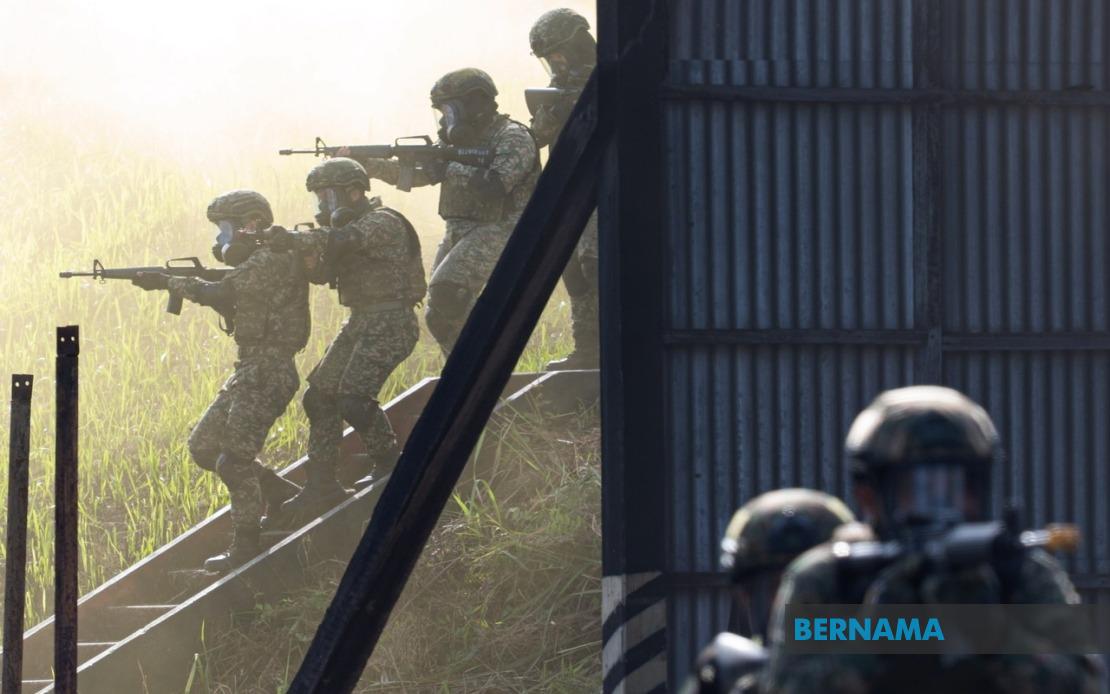
Prime Minister Datuk Seri Anwar Ibrahim has pledged that the government will pursue a substantially higher defence budget for 2027, signalling a continued commitment to strengthening the Malaysian Armed Forces' operational capacity and safeguarding personnel welfare. Speaking in Melaka on August 7, Anwar, who simultaneously holds the Finance Minister portfolio, stressed that elevated investment in defence infrastructure and readiness represents a fundamental necessity for preserving national stability, which he characterised as Malaysia's most invaluable resource.
The decision to boost defence spending reflects a strategic understanding that military preparedness cannot be reactive. Anwar emphasised that security threats materialise unpredictably, necessitating that defence capabilities remain constantly maintained rather than hastily assembled in response to emerging crises. This forward-looking philosophy underpins the government's determination to allocate substantially more resources to the Defence Ministry, a reversal of the austerity measures that characterised earlier administrations.
Significantly, the MADANI Government has already expanded defence allocations by more than 35 per cent over the preceding three years, a substantial commitment that Anwar acknowledged has received insufficient public recognition. Despite this considerable increase, he lamented that widespread awareness of these investments remains limited, partly because defence spending often generates controversy rather than public celebration. The prime minister articulated frustration that expressions of patriotic support ring hollow when military equipment deteriorates or procurement processes become ensnared in scandal and inflated commissions.
The prospective 2027 budget increase will target multiple critical areas. Personnel welfare improvements represent a cornerstone of the initiative, encompassing upgraded residential quarters for service members and their families, construction of a modern military hospital, and investment in essential infrastructure including water supply systems at bases across the country. These investments acknowledge that military effectiveness depends not merely on weapons systems but fundamentally on the morale and living conditions of personnel who operate that equipment.
Procurement integrity constitutes another major focus. Anwar explicitly called for military acquisitions to proceed through systematic, transparent processes devoid of profiteering or the payment of excessive commissions to intermediaries. This direct reference to historical procurement controversies signals a determination to distinguish the current government's defence spending from patterns that previously enriched well-connected agents at the expense of genuine military capability. The emphasis on procurement transparency reflects sustained pressure from civil society and opposition voices regarding historical defence contracts.
Economic conditions have improved sufficiently to enable this defence investment surge. Anwar cited Malaysia's strengthening currency, expanding foreign direct investment flows, and controlled inflationary pressures as factors creating fiscal space for elevated defence expenditures. The ringgit's improved performance against major currencies reduces the cost of acquiring imported military equipment, effectively stretching defence dollars further than in preceding years when currency weakness complicated acquisition strategies.
The government's ability to fund higher defence allocation without severely constraining other budgetary priorities demonstrates the fruits of improved macroeconomic management. Anwar's dual role as Prime Minister and Finance Minister places him in a position to balance competing demands—defence readiness, social welfare, infrastructure development, and debt reduction. The explicit commitment to defence signals that national security considerations weigh heavily in budget trade-off calculations.
Budget 2027 will be formally presented to Parliament on October 9, providing the next opportunity for detailed scrutiny of defence allocations by elected representatives. This parliamentary tabling offers opposition parties and government backbenchers occasions to interrogate specific defence spending proposals, ask questions about procurement methodologies, and debate whether allocation levels appropriately reflect national security threats.
At the Melaka event, Anwar announced supplementary support for military-linked institutions, allocating RM147,000 to the Armed Forces Family Welfare Association and RM1 million for maintaining mosque and prayer facilities at four military installations: Terendak, Sungai Udang, Masjid Tanah, and Bukit Beruang. These announcements demonstrate attention to holistic soldier welfare considerations encompassing religious observance and family support systems, recognising that military morale extends beyond operational equipment to encompass quality-of-life dimensions.
The defence budget initiative must be contextualised within Malaysia's strategic environment. The country faces multiple security considerations ranging from maritime territorial disputes, particularly in the South China Sea, to internal security challenges including transnational crime and extremism. Neighbouring military modernisation programmes by regional powers create competitive pressures driving Malaysia's own defence investment calculations. Higher defence allocation allows Malaysia to maintain credible deterrent capabilities while avoiding arms race dynamics that could prove economically unsustainable.
For Malaysian readers, the defence budget commitment represents a statement of government priorities regarding national security vis-à-vis other spending categories. Elevated defence investment may constrain resources available for healthcare, education, or infrastructure projects, raising questions about optimal budget allocation among competing national needs. The government evidently believes that defence readiness ultimately protects the foundations upon which prosperity and social development depend.
Regionally, Malaysia's defence spending decisions carry implications for Southeast Asia's security architecture. As a middle-power nation and ASEAN participant, Malaysia's military capabilities influence regional balance-of-power calculations and contribute to collective security arrangements within the association. Higher defence investment signals Malaysia's intention to maintain credible military capabilities and active regional security participation, reinforcing commitments to multilateral frameworks and territorial integrity.

