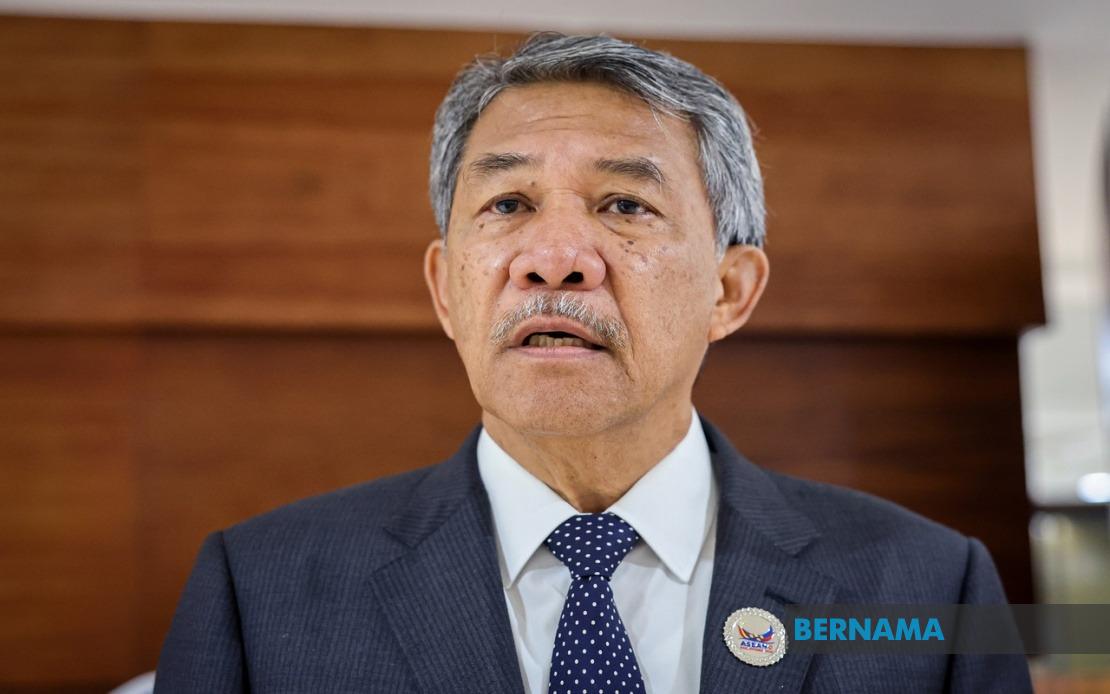
Foreign Minister Datuk Seri Mohamad Hasan announced in Manila on July 21 that ASEAN member states have entrusted Malaysia with coordinating the regional organisation's engagement with Turkiye, a development that underscores Malaysia's diplomatic influence within the bloc. The dual decisions—accepting Turkiye as a Dialogue Partner and naming Malaysia as the coordinator—emerged from proceedings at the 59th ASEAN Foreign Ministers' Meeting and associated ministerial conferences held in the Philippine capital.
The acceptance of Turkiye as a Dialogue Partner represents a significant expansion of ASEAN's external partnerships and reflects the bloc's growing outreach to non-Asian nations with substantial strategic interests in the region. Turkiye's new status grants Ankara elevated access to ASEAN deliberations and joint mechanisms, though it stops short of the deeper institutional integration afforded to full dialogue partners such as the United States, China, and Japan. The decision carries particular weight given ASEAN's historically measured approach to expanding its partnership architecture, with the bloc maintaining stringent criteria for admitting new external partners.
Mohamad stressed that ASEAN's acceptance of Turkiye followed an exhaustive evaluation process conducted across multiple institutional levels, including the secretariat, foreign ministers, and working officials. He emphasised that ASEAN maintains a moratorium on new memberships and new dialogue partnerships, meaning proposals must clear exceptionally rigorous hurdles before proceeding to formal approval. The criteria established by member states are designed to ensure that new partners share ASEAN's commitment to regional stability, respect for the bloc's founding principles, and engagement with the ASEAN-led regional architecture.
Malaysia's role as country coordinator carries substantial responsibility. As the designated liaison, Malaysia will facilitate bilateral and multilateral interactions between Turkiye and ASEAN member states, coordinate policy positions, and ensure coherent messaging across the bloc's various institutional forums. This appointment reflects confidence in Malaysia's diplomatic capacity and its standing within ASEAN, particularly given that Malaysia held the ASEAN Chair in 2025 and had actively championed Turkiye's candidacy during that tenure. The coordination role effectively extends Malaysia's influence over regional diplomacy with a strategically important Eurasian power.
Turkiye's new status as a Dialogue Partner aligns with Ankara's broader pivot towards Southeast Asian engagement. Turkey has pursued deepened trade relationships, cultural exchanges, and defence partnerships with ASEAN nations in recent years, viewing the region as a critical arena for advancing its geopolitical interests and economic ambitions. With formal Dialogue Partner status, Turkiye gains structured access to ASEAN summits, ministerial forums, and working group meetings, enabling Turkish officials to shape discussions on maritime security, counterterrorism, trade, and other matters of mutual concern.
Simultaneously, ASEAN endorsed the United Kingdom's accession to the ASEAN Regional Forum, further broadening the bloc's engagement with major Western powers. The ARF, an ASEAN-centred multilateral mechanism established in 1994, serves as a venue for strategic dialogue on regional security issues involving major powers and regional states. The UK's entry into the ARF reflects post-Brexit Britain's reorientation towards Indo-Pacific engagement and ASEAN's openness to incorporating major economies into its security dialogue architecture.
During the plenary session chaired by Philippine Foreign Affairs Secretary Ma. Theresa P. Lazaro, ministers addressed the critical challenge of preserving ASEAN centrality amid intensifying geopolitical competition. ASEAN centrality—the principle that the bloc must remain the primary driver of regional diplomacy and rule-setting—has become increasingly contested as major powers vie for influence in Southeast Asia. Mohamad articulated a commonly held concern among ASEAN leadership that external actors may attempt to circumvent or undermine ASEAN-led mechanisms, thereby eroding the bloc's role as the region's diplomatic hub.
The ministers also discussed the ASEAN Community Vision 2045, an ambitious strategic framework intended to guide the bloc's development and integration efforts through mid-century. ASEAN Secretary-General Dr Kao Kim Hourn presented updated assessments of progress towards the Vision's objectives, which encompass deeper economic integration, enhanced connectivity, closer people-to-people ties, and strengthened institutional capacity. The Vision represents ASEAN's attempt to chart its own developmental trajectory independent of great power pressures, though implementation remains inconsistent across member states.
The broader geopolitical context framing these decisions cannot be overlooked. ASEAN operates within an increasingly uncertain international environment characterised by US-China strategic rivalry, renewed great power competition in Asia, and contested maritime claims in the South China Sea. Within this fraught landscape, ASEAN seeks to maintain equidistance from major powers while expanding its partnership portfolio with secondary powers such as Turkiye and the United Kingdom. This hedging strategy reflects the bloc's desire to preserve diplomatic flexibility and avoid being drawn into great power conflicts.
For Malaysia specifically, the coordinator role with Turkiye carries diplomatic benefits beyond ceremonial status. It positions Malaysia as ASEAN's principal interface with Turkish foreign policy, affording Malaysian officials additional channels for bilateral engagement and enhanced leverage in regional discussions. Given Malaysia's historical ties to the Muslim world and its sophisticated diplomatic apparatus, the assignment appears well-suited to Malaysian capabilities and interests. The role may also facilitate Malaysian efforts to position itself as a bridge between ASEAN and Muslim-majority nations, an identity Malaysia has cultivated over decades.
The decisions also carry implications for other ASEAN aspirants and external powers seeking deeper engagement with the bloc. ASEAN's measured acceptance of new partners suggests the organisation intends to remain selective about expanding its partnership architecture, guarding against partnership inflation that might dilute the significance of existing relationships. The rigorous criteria applied to Turkiye's candidacy establish benchmarks for future applicants and reinforce ASEAN's determination to shape its external relationships according to its own strategic judgments rather than external pressure.
Moving forward, Malaysia's coordination of ASEAN-Turkiye relations will require careful management of diverse national interests within the bloc while advancing shared objectives with Ankara. Success will depend on Malaysia's ability to build consensus among ASEAN members regarding Turkiye engagement priorities, facilitate constructive Turkish participation in ASEAN forums, and ensure that the partnership contributes meaningfully to regional stability and prosperity. The appointment reflects both Malaysia's diplomatic capabilities and ASEAN's confidence in Malaysian stewardship of this expanding external relationship.

