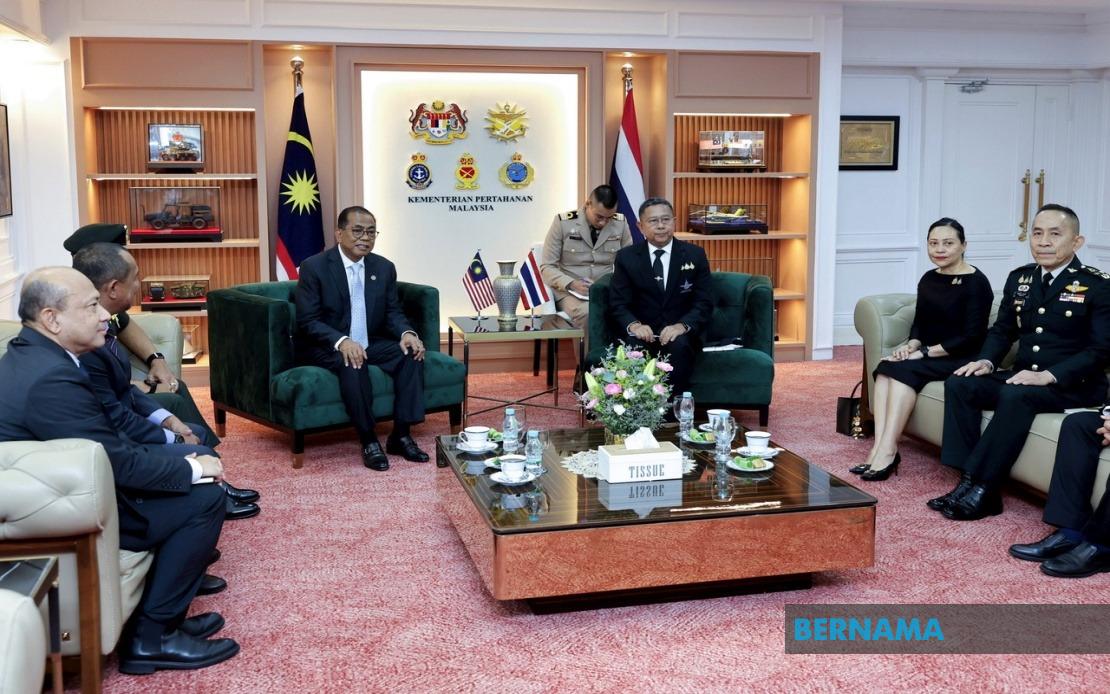
Malaysia has signalled its intention to intensify cooperation with Thailand's newly appointed Peace Dialogue Panel chief Thanut Suvarnananda, viewing the appointment as a constructive step toward resolving the longstanding instability affecting southern Thailand. Defence Minister Datuk Seri Mohamed Khaled Nordin made the declaration following an official visit by Thai Defence Minister Lieutenant General Adul Boonthumjaroen, underscoring the bilateral commitment to regional peace and security.
The announcement reflects Malaysia's sustained diplomatic engagement on one of Southeast Asia's most persistent security challenges. The southern Thailand conflict, which has claimed thousands of lives and displaced countless civilians over the past two decades, remains a critical concern for Malaysia due to its geographic proximity and the cross-border implications of violence and militant activity. By welcoming Thanut's appointment and pledging closer collaboration, Kuala Lumpur signals confidence that fresh leadership in Bangkok's peace framework could accelerate dialogue and potentially unlock progress on a negotiated settlement.
Mohamed Khaled articulated Malaysia's measured but supportive stance, emphasizing that his government views the new chief's appointment as facilitating the broader peace architecture. He stressed that while Malaysia serves a crucial intermediary role through its designated facilitator Datuk Rabin Basir, the substantive responsibility for resolving the conflict rests squarely with Thailand. This delineation is important—it demonstrates Malaysia's understanding that its role, however significant in convening and facilitating dialogue, cannot supersede Thai sovereignty over domestic security and military operations. Such restraint has historically been essential to maintaining Thailand's acceptance of Malaysian mediation.
Beyond the peace dialogue mechanics, the bilateral defence engagement addressed several practical security concerns affecting the shared border region. Mohamed Khaled disclosed that both nations have committed to stepping up joint efforts to combat smuggling and prevent the infiltration of armed elements across the Malaysia-Thailand frontier. These transnational criminal and militant networks represent a threat extending well beyond the southern Thailand conflict zone itself, with implications for stability throughout the broader region. The Malaysia-Thailand General Border Committee, the institutional vehicle for managing such coordination, will hold its 57th meeting in Malaysia this year, with an ambitious agenda encompassing border security, joint military operations, socio-economic development initiatives, and disaster management protocols.
The scope of this year's border committee meeting signals the comprehensive nature of Malaysia-Thailand security cooperation. Rather than narrowly focusing on the peace dialogue, the agenda reflects recognition that durable stability requires addressing multiple interconnected challenges simultaneously. Socio-economic development in the border regions is particularly significant, as poverty and limited opportunity have historically contributed to recruitment by militant groups and criminal enterprises. Joint disaster management protocols also reflect the reality that natural disasters recognize no international boundaries and require coordinated response capabilities to protect civilians and infrastructure on both sides.
Mohamed Khaled additionally reaffirmed Malaysia's support for Thailand's bilateral approach to resolving its separate maritime border dispute with Cambodia. By endorsing Thailand's preference for direct negotiation consistent with the ASEAN Way—which privileges non-interference, quiet diplomacy, and consensus-building—Malaysia positions itself as a stabilizing voice within the regional organization. The Defence Minister noted that this matter has been flagged to the Philippines in its capacity as 2026 ASEAN Chair, with the hope that Manila can facilitate de-escalation if tensions intensify. This multilayered diplomatic engagement demonstrates how regional security issues increasingly require coordination across multiple ASEAN institutions and mechanisms.
A notable concrete outcome of the defence ministerial meeting is an agreement to finalize a Memorandum of Understanding between the two countries this year aimed at strengthening regional security and deepening cooperation in defence industrial development. Such defence collaboration has expanded markedly in Southeast Asia in recent years as nations seek to modernize their military capabilities while building deeper institutional relationships with trusted partners. For Malaysia and Thailand, whose armed forces have developed considerable interoperability and institutional familiarity, a formalized MoU on defence industrial cooperation could yield practical benefits in terms of cost-sharing, technology transfer, and synchronized procurement decisions.
The bilateral meeting also served an important function in aligning Malaysia and Thailand's positions ahead of the ASEAN Defence Ministers' Meeting and the expanded ASEAN Defence Ministers' Meeting-Plus, both scheduled for the Philippines. These gatherings provide forums where Southeast Asian defence establishments engage with dialogue partners including the United States, China, India, Japan, and Russia on regional security architecture, maritime safety, counterterrorism, and emerging challenges such as cyber security. By coordinating their approaches beforehand, Malaysia and Thailand can ensure greater coherence in ASEAN's collective messaging and advance shared interests more effectively.
The emphasis on Malaysia's facilitating role rather than a directing one reflects the delicate political dynamics underlying the southern Thailand peace process. Previous peace initiatives have faltered partly because key stakeholders—particularly various Thai-Malay Muslim insurgent groups—view external mediation skeptically if it appears to compromise Thai sovereignty or impose solutions from outside. Malaysia's successful positioning as an honest broker has derived substantially from its willingness to respect Thai sensibilities on sovereignty while still creating space for dialogue. The appointment of Thanut Suvarnananda, assuming he brings energy and credibility to the peace dialogue panel, could provide the institutional platform for moving negotiations beyond current stalemates.
For Malaysia specifically, achieving stability in southern Thailand carries direct implications for domestic security and economic development. Militant groups operating across the border have occasionally conducted attacks in Malaysian border states, and the uncontrolled cross-border movement of armed elements threatens Malaysian citizens in Sabah, Sarawak, and Peninsular Malaysia alike. Furthermore, instability in Thailand's south constrains regional trade and investment flows, as security concerns deter companies from establishing operations in areas perceived as high-risk. A successful peace process in southern Thailand would yield substantial dividends for the entire region, making Malaysia's diplomatic investment in the peace dialogue an investment in its own stability and prosperity.
The trajectory of Malaysia-Thailand defence cooperation evident in these recent announcements suggests both continuity and evolution in bilateral relations. While the core security challenges—militant insurgency, cross-border crime, maritime boundary management—remain largely constant, the institutional mechanisms for addressing them are becoming more sophisticated and comprehensive. The 57th GBC meeting, the planned MoU on defence industrial cooperation, and the commitment to working with a new peace dialogue chief collectively point toward a relationship that, despite occasional friction, remains fundamentally cooperative and forward-looking. As regional security challenges evolve and new powers expand their influence in Southeast Asia, the Malaysia-Thailand partnership will likely become even more valuable as an anchor of stability within ASEAN.

