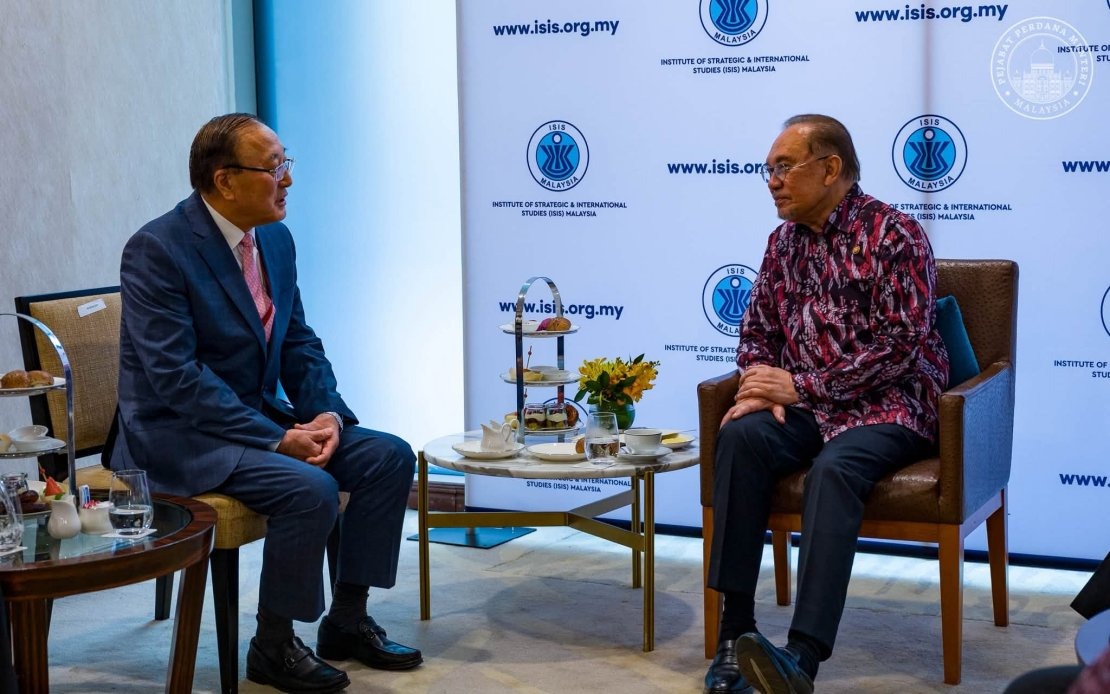
Prime Minister Datuk Seri Anwar Ibrahim has signalled Malaysia's commitment to deepening its partnership with the Boao Forum for Asia (BFA), identifying eight key areas where the two sides can collaborate more effectively to address pressing regional challenges. The announcement came during a bilateral meeting with BFA secretary-general Zhang Jun in Kuala Lumpur, where both parties discussed the evolving geopolitical and economic landscape facing Asia and the wider world.
The decision to expand cooperation reflects Malaysia's strategic positioning within regional frameworks at a time of considerable uncertainty. The Prime Minister highlighted trade and investment as foundational pillars of this enhanced relationship, recognising that strengthening economic ties can provide stability in an increasingly volatile global environment. Beyond conventional commercial engagement, the partnership will encompass digital transformation and artificial intelligence—areas where Southeast Asia must rapidly build capability to remain competitive internationally.
Energy transition represents another critical dimension of the proposed collaboration. As Malaysia and other Asian economies navigate the shift towards sustainable power generation while managing developmental needs, the BFA's convening power and cross-border expertise can facilitate knowledge transfer and investment in renewable technologies. This alignment with global climate commitments also positions Malaysia as a responsible actor in the region's energy security conversation, addressing both immediate economic concerns and long-term environmental sustainability.
Food security emerges as a particularly pertinent focus area for Southeast Asia, where supply chain vulnerabilities have become increasingly apparent. The region's growing population and rising consumption patterns create mounting pressure on agricultural systems, making coordinated approaches to productivity, resilience and equitable distribution essential. Through BFA mechanisms, Malaysia can contribute to and benefit from regional solutions that strengthen the entire supply ecosystem.
Education and talent development initiatives underscore a forward-looking dimension to this partnership. By collaborating on skills enhancement and human capital development, Malaysia positions itself within a broader Asian network committed to preparing workforces for technological change and global competition. This investment in people reflects recognition that sustainable prosperity depends on continuous adaptation and capability-building across all economic sectors.
Anwar's framing of the partnership emphasises dialogue and inclusiveness as strategic assets in a multipolar world. Rather than viewing regional cooperation narrowly through bilateral or transactional lenses, the Prime Minister positioned it as essential infrastructure for managing geopolitical tensions and economic disruptions. This philosophy acknowledges that no single nation can effectively address challenges ranging from artificial intelligence governance to energy security in isolation, and that institutional frameworks like the BFA provide valuable platforms for consensus-building.
The timing of this announcement reflects Malaysia's broader diplomatic strategy. With tensions between major powers affecting global supply chains and investment patterns, regional groupings that emphasise dialogue and mutual benefit become increasingly valuable. The BFA, which brings together government officials, business leaders and academics, offers a non-confrontational space where Asian nations can explore common interests without the rigid constraints of formal alliances or international organisations.
Anwar's dual role as Prime Minister and Finance Minister lends particular weight to the economic dimensions of this cooperation. His personal engagement signals that Malaysia views the BFA partnership not as peripheral engagement but as central to national economic strategy. This approach suggests that financial institutions and investment mechanisms will play a prominent role in translating the announced cooperation into tangible outcomes for Malaysian businesses and workers.
The emphasis on regional resilience carries specific meaning in the Southeast Asian context. The region has experienced multiple shocks—from financial crises to pandemic disruptions to supply chain fragmentation—that have tested institutional and economic structures. Building greater resilience through cooperation in technology, energy, food systems and human capital helps insulate the region from future external pressures while creating positive-sum outcomes where all participating nations benefit.
The BFA's involvement in facilitating this cooperation is significant for Malaysia's standing within broader Asian conversations. The forum serves as a bridge-builder among nations with competing interests, and Malaysia's active participation enhances its profile as a thoughtful, solutions-oriented partner. This positioning becomes increasingly important as Southeast Asian nations navigate great power competition and seek to maintain strategic autonomy.
Looking forward, the success of this enhanced partnership will depend on translating announced cooperation into concrete mechanisms, funding arrangements and measurable outcomes. Establishing working groups on specific sectors, identifying pilot projects and creating accountability frameworks will determine whether this partnership delivers tangible benefits to Malaysian citizens and enterprises. The breadth of the announced agenda suggests ambition, but implementation capacity remains critical.

