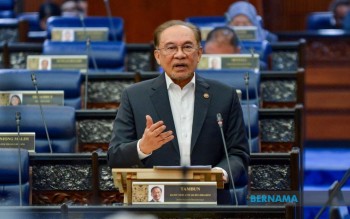
The Malaysian government has committed to examining the feasibility and implementation of establishing a national petroleum reserve stockpile, a move designed to fortify the nation's capacity to withstand international energy shocks and geopolitical instability. Prime Minister Datuk Seri Anwar Ibrahim announced this strategic initiative following the inaugural National Energy Council Meeting of 2026, underscoring Kuala Lumpur's growing concern about energy vulnerability in an increasingly unpredictable global landscape.
The decision reflects broader recognition within Malaysia's leadership that reliable energy access underpins economic stability and national prosperity. As supply chains remain fragile and tensions between major powers continue to threaten international trade routes, governments across the region are reassessing their energy independence strategies. A strategic petroleum reserve would serve as a buffer against sudden price spikes or supply interruptions, protecting Malaysia's economy from external shocks while providing decision-makers with crucial flexibility during crises.
This initiative sits within Malaysia's comprehensive energy transition framework, embodied in the National Energy Transition Roadmap (NETR). The government's multifaceted approach combines immediate resilience measures with longer-term sustainability objectives, recognising that energy security and environmental responsibility are complementary rather than contradictory goals. By pursuing both secure fuel supplies and cleaner energy sources simultaneously, Malaysia seeks to navigate the complex demands of modern energy policy without sacrificing either security or climate commitments.
Renewable energy deployment has accelerated considerably, with installed capacity reaching 31 per cent as of December, demonstrating Malaysia's progress in reducing reliance on coal and diversifying its energy portfolio. This expansion has been facilitated by innovative financing mechanisms, particularly the Corporate Renewable Energy Supply Scheme (CRESS), which allows private enterprises to procure renewable power directly. The integration of Battery Energy Storage System (BESS) technology with CRESS marks an important advancement, addressing the intermittency challenges that have historically limited renewable energy deployment in Southeast Asia.
Beyond electricity generation, Malaysia's transportation sector is undergoing significant transformation toward sustainable fuels. The nationwide rollout of B15 biodiesel represents a pragmatic transition strategy, allowing existing infrastructure to serve cleaner purposes while the market adapts. This incremental approach contrasts with more aggressive electrification timelines pursued elsewhere, reflecting Malaysia's need to balance environmental goals with economic feasibility across diverse regions and economic activities. The planned expansion of Petronas' biofuel production hub in Pengerang, Johor, will anchor Malaysia's position in the growing Southeast Asian biofuels market.
Public transportation electrification, meanwhile, is progressing steadily across urban and interurban networks. The deployment of 250 electric buses represents significant investment in urban air quality and long-term operating cost reduction, while the 800-kilometre rail electrification programme addresses mobility in congested metropolitan corridors. These initiatives particularly benefit major cities like Kuala Lumpur and Penang, where air quality and traffic congestion remain persistent challenges. However, extending electrified public transport to secondary cities and smaller towns remains an ongoing challenge requiring sustained investment and planning.
Hydrogen technology development, positioned as a frontier energy solution, is being piloted through the Autonomous Rapid Transit (ART) system in Sarawak. This hydrogen hub's Phase 1 completion is scheduled for year-end 2026, positioning Malaysia alongside global leaders in hydrogen infrastructure development. Hydrogen's potential applications across industrial processes, heavy transport, and long-haul logistics make it strategically significant for an economy with substantial manufacturing and resource sectors. Success in Sarawak could catalyse broader hydrogen adoption across Malaysia and the region.
The confluence of these initiatives reveals a sophisticated understanding within Malaysia's government of energy security's multidimensional nature. Strategic reserves address immediate supply risks, while renewable deployment reduces long-term exposure to fossil fuel price volatility. Sustainable fuel transitions and electrification efforts prepare Malaysia for eventual carbon constraints and shifting global energy markets. This layered approach acknowledges that no single solution can address all challenges simultaneously, and that effective energy policy requires coordinated action across multiple fronts.
For Malaysia's economy and Southeast Asian neighbours, these developments carry significant implications. As the region's largest energy producer and a major regional economic hub, Malaysia's energy decisions influence commodity prices, investment flows, and supply chain stability throughout Southeast Asia. Establishing strategic reserves signals commitment to regional energy stability and may inspire similar policies among neighbouring countries. Furthermore, Malaysia's advancement in renewable technology, biofuel production, and hydrogen development creates opportunities for technology transfer and regional cooperation on clean energy challenges.
The geopolitical context driving these decisions cannot be overlooked. Ongoing tensions between major powers, climate-related disruptions to energy infrastructure, and the transition away from fossil fuels create genuine uncertainty about future energy availability and pricing. Countries without adequate reserves or diversified sources face potential economic disruption. Malaysia's proactive stance acknowledges these risks while positioning the nation to benefit from the clean energy transition through early investment in emerging technologies and sustainable infrastructure.
Investment requirements for executing this comprehensive energy transition remain substantial, necessitating continued public-private collaboration and potentially increased partnership with international development institutions. The government's coordination through the National Energy Council demonstrates institutional commitment, though successful implementation will depend on consistent funding, technical expertise, and regulatory frameworks supporting innovation. Public communication about these initiatives will also prove crucial, as energy transitions touch every citizen's daily life and require broad societal buy-in.
Moving forward, the strategic petroleum reserve study will require careful analysis of storage capacity requirements, optimal reserve locations considering geographical vulnerability, financial implications, and international coordination. Malaysia's position as both a significant oil and gas producer and an emerging clean energy leader means balancing these roles thoughtfully. The energy transition represents both challenge and opportunity, and Malaysia's integrated approach suggests the nation is determined to navigate this transformation while maintaining economic competitiveness and regional influence.

