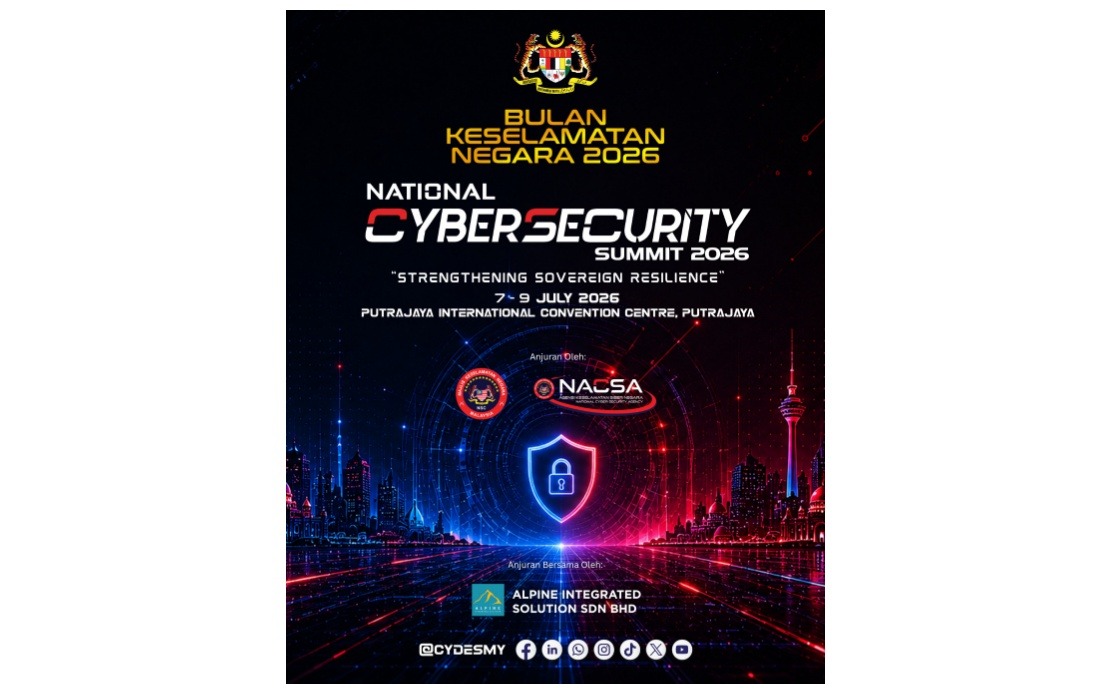
The National Cyber Security Agency under the Prime Minister's Department will convene the National Cyber Security Summit 2026 at the Putrajaya International Convention Centre from July 7 to 9, marking a significant milestone in Malaysia's efforts to fortify its digital infrastructure. The three-day gathering represents a strategic response to the nation's evolving cyber threat landscape and serves as a platform for coordinating national efforts across government, private sector and academic institutions.
The summit's timing holds particular significance following the Dewan Rakyat's approval of the Cybercrimes Bill 2026 on July 1. This legislative development establishes the legal foundation for enhanced cyber crime investigation and prosecution, complementing broader policy initiatives aimed at protecting Malaysia's digital ecosystem. The convergence of legislative action and this high-level summit demonstrates the government's integrated approach to cybersecurity governance and demonstrates commitment to addressing digital vulnerabilities systematically.
Organised under the banner "Strengthening Sovereign Resilience," the summit directly aligns with implementation of the Malaysian Cyber Security Strategy 2025-2030, a comprehensive national framework that outlines Malaysia's cyber defence priorities and operational objectives. This strategic alignment ensures that the summit's discussions, partnerships and outcomes directly feed into long-term policy execution and measurable cyber resilience improvements across critical national infrastructure sectors.
The event will feature an extensive programme of 41 high-impact sessions addressing diverse aspects of contemporary cyber threats and defence mechanisms. These sessions span specialised forums including cyber crime investigation techniques, information and communications technology security officer professional development, gender inclusion initiatives within the cyber workforce, and advanced technical workshops. This breadth reflects the multifaceted nature of modern cyber challenges, which increasingly transcend traditional sectoral boundaries and demand interdisciplinary expertise and collaboration.
Participation spans a deliberately broad coalition of stakeholders, with 96 speakers and panellists drawn from government agencies, law enforcement bodies, commercial technology firms, academic researchers and practising cyber security professionals. This diversity of perspective ensures that discussions encompass policy imperatives, operational realities, technological innovation and workforce development challenges. The involvement of 122 participating companies—comprising 78 Malaysian firms alongside 44 international enterprises representing seven countries—underscores both the domestic significance of the summit and its positioning within regional and global cyber security networks.
The summit is projected to attract approximately 3,000 participants combining conference delegates, trade visitors and industry professionals. The anticipated attendance figures reflect Malaysia's emergence as a regional cyber security hub and the private sector's recognition of the summit's value for professional networking, market development and exposure to latest technological solutions and policy frameworks. Additionally, 250 distinguished guests from government and institutional circles will attend, signalling high-level political and administrative backing for the initiative.
The summit will coincide with the formal launch of three major policy instruments under the National Security Council and NACSA umbrella. The National Security Policy 2026-2030 establishes overarching security governance principles, whilst the National Cryptography Policy—branded as MyKriptografi—and its accompanying action plan for 2026-2030 provide technical standards and implementation roadmaps for cryptographic systems across government and regulated sectors. The Artificial Intelligence Systems Cybersecurity Framework represents a pioneering regional effort to embed security considerations into artificial intelligence deployment and governance, addressing gaps that have emerged as AI systems increasingly underpin critical national systems.
Prime Minister Datuk Seri Anwar Ibrahim will formally launch these three strategic initiatives, reflecting their importance to the government's digital governance agenda and their integration into broader national development planning. This high-level endorsement signals that cyber security is treated as a core state function rather than a technical afterthought, and that the government views cyber resilience as fundamental to economic competitiveness and national sovereignty in an increasingly digitalised global environment.
The summit's framing as an accompanying event to National Security Month amplifies its messaging impact and situates cyber security within the broader national security continuum. This integration recognises that digital threats interconnect with traditional security concerns including critical infrastructure protection, financial system stability and government operational continuity. By positioning the cyber summit within this broader security context, policymakers emphasise that digital resilience underpins multiple dimensions of national interest and requires whole-of-society engagement.
For Malaysia, hosting a summit of this scale and calibre reflects the nation's determination to establish itself as a credible cyber security voice within Southeast Asia and the wider international community. The participation of international companies and regional representation demonstrates Malaysia's capacity to convene multinational discussions on digital security governance. This positioning carries commercial implications, as companies seeking regional cyber expertise and solutions increasingly look to established cyber security hubs, creating opportunities for Malaysian firms to expand market presence across neighbouring economies.
The summit also addresses critical workforce development needs within Malaysia's cyber security sector. Dedicated sessions focusing on women in cyber security reflect recognition that the field currently experiences significant gender imbalance, with women substantially underrepresented in technical cyber roles. By featuring and promoting female cyber security professionals at a national summit, Malaysia signals commitment to broadening the talent pipeline and challenging cultural barriers that may discourage women from pursuing technical cyber careers.
Moving forward, the outcomes, partnerships and frameworks established during this summit will likely shape Malaysia's cyber security trajectory over the coming years. The convergence of policy announcements, legislative passage and high-level summit proceedings creates momentum for implementation across government agencies and regulated sectors. Industry participants will calibrate their security investment and technology strategies based on policy signals and regulatory requirements articulated during the summit.

