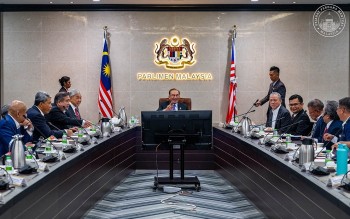
Prime Minister Datuk Seri Anwar Ibrahim has moved to shield Malaysia's manufacturing sector from mounting strain caused by ongoing global supply chain disruptions, instructing the Ministry of Investment, Trade and Industry and the Ministry of Economy to intensify engagement with affected manufacturers. The directive emerged from a National Economic Action Council meeting chaired by Anwar, who also holds the finance portfolio, signalling the government's commitment to proactive support as international logistics challenges reverberate through domestic production networks.
The timing of this intervention reflects growing anxiety within Malaysia's industrial base over sustained cost pressures that threaten competitiveness and operational viability. Supply chain fragmentation, fluctuating input costs, and logistical delays have created a challenging environment for enterprises dependent on just-in-time manufacturing and global trade networks. By positioning MITI and the Economy Ministry as intermediaries between government and industry, Anwar seeks to translate policy intention into tangible relief measures that address immediate pain points without delay.
The plastics industry emerged as the primary focus of government attention, a designation that underscores the sector's outsized importance to Malaysia's broader industrial ecosystem. According to Economy Minister Akmal Nasrullah Mohd Nasir, the plastics sector generated RM62.69 billion in sales during 2025, down from RM64.78 billion in 2024—a contraction that hints at underlying vulnerability despite the sector's nominal scale. This revenue base masks the sector's true significance as a critical enabler for multiple downstream industries.
Packaging represents the dominant application, commanding 45 percent of plastics sector output and serving as the backbone for Malaysia's substantial food processing and export industries. The electrical and electronics segment accounts for 29 percent, reflecting the nation's entrenched position in global E&E manufacturing supply chains. These two segments alone encompass nearly three-quarters of output, illustrating how vulnerability in plastics production transmits rapidly through interconnected supply ecosystems.
Beyond packaging and E&E components, the ripple effects extend into automotive manufacturing, medical devices, construction materials, and agricultural applications. Malaysia's position as a significant node in regional automotive supply chains means that cost pressures in plastics reverberate through the automotive sector, affecting both local assemblers and component suppliers. Similarly, the nation's growing medical devices cluster—serving both local and export markets—faces elevated input costs that compress margins and reduce pricing competitiveness against regional competitors.
The government's recognition of these interdependencies reflects a maturation of economic policymaking that acknowledges how modern manufacturing operates as an integrated whole rather than discrete sectors. A sustained disruption in plastics supply or pricing cascades through the entire production network, potentially undermining Malaysia's competitive position in precision manufacturing where the country has invested substantial capital and expertise.
The directive for continued engagement between MITI, the Economy Ministry, and industry representatives suggests the government will pursue a consultative rather than prescriptive approach. This strategy allows manufacturers to articulate specific constraints and identify targeted interventions—whether tariff relief, expedited import procedures, or financial support mechanisms—that address root causes rather than symptoms. Such collaborative problem-solving can prove more effective than blanket policies that fail to account for sectoral nuances.
Malaysia's manufacturing sector faces particular vulnerability given its dependence on imported raw materials and global distribution networks. Unlike resource-rich nations insulated by domestic supply, or developed economies with established alternative sourcing, Malaysian manufacturers operate on thinner margins with fewer fallback options. Global supply disruptions therefore impose asymmetric costs, threatening the viability of firms that have optimised operations for efficiency under normal conditions.
The broader context encompasses persistent inflation in shipping costs, semiconductor supply constraints affecting high-value manufacturing, and geopolitical fragmentation that increasingly divides global supply networks into regional blocs. These structural shifts, extending beyond temporary pandemic-related disruptions, require policy responses that enhance supply chain resilience while maintaining cost competitiveness. Government support for manufacturers must therefore focus on structural adaptation rather than temporary palliatives.
Anwar's intervention also carries political dimensions. As both prime minister and finance minister, he positions himself at the nexus of economic policymaking, demonstrating responsive leadership to business sector concerns. With manufacturing representing a substantial employment base and export revenue stream, maintaining sector health remains strategically important for broader economic growth targets and government legitimacy.
The focus on plastics carries additional significance given the sector's labour intensity and regional distribution. Plastics manufacturing facilities operate across multiple Malaysian states, particularly concentrated in Selangor and Johor, generating employment that extends through related transport, warehousing, and chemical supply industries. Sector distress would ripple through local economies beyond direct manufacturing employment.
Moving forward, the quality of engagement between government ministries and manufacturers will determine whether these interventions translate into sustainable relief. Successful outcomes require genuine listening to sectoral concerns, rapid decision-making authority at ministerial level, and willingness to implement unconventional support mechanisms if traditional approaches prove inadequate. The government's credibility with the manufacturing community depends substantially on translating statements of intent into measurable policy adjustments within reasonable timeframes.

